Strengthening Alliances: U.S., South Korea, and Japan Focus on Energy Cooperation
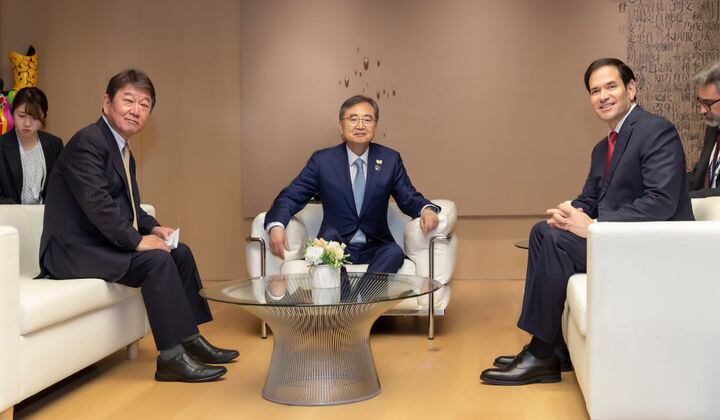
At the NATO summit in Ankara, Türkiye, U.S. Secretary of State Marco Rubio highlighted the importance of cooperation among the United States, South Korea, and Japan during a foreign ministers’ meeting. The gathering took place after nine months of discussions and marked a significant step in strengthening trilateral ties. Rubio expressed his satisfaction with the ongoing exchanges between Japan and South Korea, emphasizing that both nations are key allies whose partnership is vital for regional stability.
The three countries have also signed a Memorandum of Cooperation (MOC) to accelerate the deployment of small modular reactors (SMRs) in the Indo-Pacific region. This initiative aims to bolster energy security and promote sustainable development across the area.
A History of Challenges and Progress
Rubio acknowledged the historical challenges between South Korea and Japan, noting that their relationship has faced trials in the past. However, he pointed out that the two nations have built a more robust connection over the past three to four years. He emphasized that as close and important allies, the U.S. has worked diligently to support and strengthen this relationship.
President Lee Jae Myung, who previously criticized the Yoon Suk-yeol administration’s efforts to improve relations between South Korea and Japan, has taken a different approach since assuming office. His actions have helped ease concerns within U.S. political circles. Notably, Lee has expanded diplomatic engagement by completing “mutual hometown visits” and restoring shuttle diplomacy with Japanese Prime Minister Sanae Takaichi.
Historical Sensitivity and Future Collaboration
Rubio, known for his advocacy on historical issues, has long understood the complex nature of the relationship between South Korea and Japan. He specifically mentioned his previous calls for former Japanese Prime Minister Shinzo Abe to apologize for the comfort women issue. This awareness underscores the importance of addressing historical grievances while focusing on future collaboration.
Regarding the recent SMR cooperation agreement, Rubio stressed the significance of energy security in today’s global landscape. He referenced events in the Strait of Hormuz and other regions to highlight how critical energy security is for international stability. According to him, the fruits of the trilateral cooperation will lead the way in developing safe and efficient future energy solutions, which will strengthen the economies of all three nations.
Japanese Foreign Minister Toshimitsu Motegi also emphasized the concrete efforts made by the three countries to enhance supply chains for critical minerals and address North Korea’s cyber threats. He expressed hope that the meeting would advance discussions on deepening bilateral cooperation further.
Expanding Access to Information and Resources
In addition to these diplomatic efforts, there are various membership programs aimed at providing access to news and publications. For instance, a 5900 won membership offers readers a reduced rate of 2900 won. Another option includes a 55000 won package that allows access to eight newspapers and magazines. Subscribers can also receive 7000 points, which can be used like cash for shopping, making it an attractive choice for those looking to save money while staying informed.