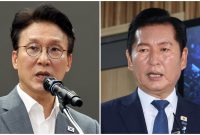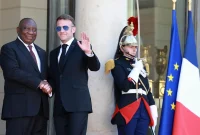
The Somali Federal Government has initiated a contentious one-year extension of its term, delaying elections until 2027, while its foreign supporters strive to prevent a constitutional and political crisis.
The tenure of President Hassan Sheikh Mohamud concluded on May 15, 2026, with the extension leading to demonstrations by opposition groups and neighboring states.
Supporters have expressed worries that the dispute regarding constitutional changes might increase political conflicts in a nation already struggling with violence.
The European Union and the World Bank stated they are closely observing the situation, with Brussels highlighting that the circumstances “present challenges” for its relationship with Mogadishu. The EU, however, confirmed it will not sever connections with Mogadishu regarding this issue.”The EU is aware and closely monitoring events in the country, including the constitutional changes passed by the Federal Parliament,” said Carlo Zarcone, the EU’s press officer for Trade and Development and Foreign Affairs.”Although the situation involves complexities, the EU remains dedicated to its involvement with the Federal Government of Somalia,” noted Zarcone, who also holds the position of corporate affairs head at the Council of the European Union.
In March, Somalia’s Parliament passed a constitutional change that increased the presidential and parliamentary terms to five years, compared to the four years specified in the 2012 Provisional Constitution. This decision was opposed by opposition groups as well as regional states including Jubaland, South West, and Puntland.
Somalia’s new constitution aims to extend the president’s term and postpone the election. Somalia’s main bilateral donors, such as the US, Turkey, the UK, the EU, and various European countries led by Germany and Sweden, are concerned about this development, which could impact the nation’s political future as it strives to move from a guided democracy towards a one-person, one-vote electoral system in the upcoming elections.
A British diplomatic representative stated that London continues to be involved as the penholder for the African Union’s peacekeeping mission (Aussom), yet expressed worry over the conflict between regional states and the central government “raises concerns”.
The capital city of Mogadishu, where the Federal Government is based, felt a sense of relief last week when envoys from the United States and the United Kingdom extended an invitation to Somali government and opposition figures for a gathering at the Halane Compound, which serves as the headquarters for African Union peacekeepers and numerous foreign diplomatic missions.
The primary opposition group, the Somali Future Council, was represented by opposition leader Sharif Sheikh Ahmed and Puntland President Said Abdullahi Deni, and this group comprises the Somali Salvation Forum (SSF) along with the federal member states of Jubaland and Puntland.
The Somali administration was led by President Mohamud and Salah Ahmed Jama, the Deputy Prime Minister. However, for two days, both parties remained firm in their stances regarding the constitution, electoral procedures, and federal matters.
The opposition urged the government to put on hold the revised constitution, the electoral laws it issued, the election commission it set up, and the concentration of power in Mogadishu under the federal system, which has led to some federal state leaders, like Abdiaziz Laftagareen, being removed in the South West region, while Puntland and Jubaland have halted collaboration with Mogadishu.
Mohamud, on the other hand, emphasized that the new constitution has followed proper procedures and provides the country with what the citizens require to choose their leaders through universal voting.
The International Monetary Fund (IMF) and the World Bank, which are Somalia’s primary multilateral donors, support various initiatives. These two organizations played a key role in advancing Somalia’s economic and governance reforms, enabling Mogadishu to receive debt relief exceeding $5 billion.
Now, they are concerned that a political crisis might diminish the positive sentiment.
A representative from the World Bank stated to The EastAfrican that the organization remains dedicated to assisting Somalia in advancing its development goals, while also keeping a close eye on the circumstances.
Experts claim the postponement of the election is more concerning than donors acknowledge. The moves by the World Bank and the EU are the most crucial to monitor, while the US has a less prominent role. “Donors are now confronted with a challenge regarding how to interact with the Federal Government after May 15, when its term was scheduled to end according to the 2012 Constitution,” stated Partha Moman, an analyst specializing in Somalia and Eastern Africa.
Moman, a doctoral student in international relations at the London School of Economics, stated that revoking recognition is improbable, although donors might adjust their support and communication to avoid seeming to favor one side. “This stance will be significantly shaped by whether the situation on the ground intensifies or if the FGS continues to manage the process,” he further noted.
Some believed the achievements made so far would encourage partners to seek dialogue, in order to prevent the country from returning to chaos. “Having kept the deadlock in place through Wednesday and Thursday, U.S. and British diplomats facilitating the parties are anticipated to push for a resolution that benefits the Somali people,” said Sadik Bihi, a political analyst in Mogadishu.
Previously, comparable crises were prevented through a political agreement that largely enabled the nation to employ an indirect voting system rooted in the clan formula. Mohamud has opposed the clan system, contending that it excludes citizen involvement.
There has been turmoil resulting in the final date. On Sunday, police in Mogadishu disrupted a protest led by opposition groups who were also protesting claims of residents being evicted from a district in Mogadishu.
Eviction protests and the May 15 ‘day of destiny’ in Somalia On May 13, a faction of opposition politicians called the National Coalition for Change (NCfC) stated that Somalia needs to engage in discussions to prevent the crisis. “A comprehensive and inclusive approach, involving all key stakeholders is crucial for achieving valid and long-lasting results,” the NCfC mentioned in an open letter addressed to Somalia’s international allies.
The group committed to offering “a friendly model of elections,” which they claim should take place on schedule and be rooted in equitable competition to “avoid further division and guarantee a peaceful leadership change.” By Thursday night, the UK was attempting to mediate between the federal government and the opposition groups, which also involve some state leaders who are currently in conflict with the federal authority.
On March 9, President Hassan Sheikh Mohamud enacted the contentious amendment into law, only 68 days prior to the end of his term. This action led to a conflict over authority between the federal government and the regional states. On March 30, the Somali national army took control of Baidoa, the largest city in the South West State, removing state President Abdiaziz Hassan Mohamed Laftagareen.
Two weeks prior, Laftagareen stated that his administration had cut off relations with the federal government after Parliament’s amendment and the President’s approval.
The Information Ministry in Mogadishu blamed the South West State for “inciting political tension” after it rejected the amendment.
The conflict has involved former president Mohamed Abdullahi Farmajo, who in 2021 tried to prolong his own term before yielding to pressure from donors and the opposition.
Farmaajo now claims that May 15, 2026, is the final valid day of Hassan Sheikh’s tenure, and is pushing the current leader to support a broad-based electoral system.
Opposition presidential candidates supported Farmajo’s stance, releasing a forceful statement that opposed the extension. They argued that the 2012 constitution is the only valid framework and called for an open, unbiased electoral process that all parties agree upon.
Experts caution that Somalia’s dependence on outside assistance for security, education, healthcare, and funding could lead donors to pressure Mogadishu into reevaluating its decision to extend certain initiatives.
Mohamud faces pressure from multiple directions. A faction of opposition leaders based in Mogadishu, gathered under the Somali Salvation Forum (SSF), with former President Sharif Sheikh Ahmed at the helm, along with several ex-prime ministers, ministers, and lawmakers, have pledged to organize demonstrations on Saturday, May 16.
Somali MP files a lawsuit against the government at the EACJ concerning constitutional amendments. This demonstration might prolong an already tense conflict between President Mohamud’s administration and opposition figures regarding forced displacements, destruction of properties, and claims of land appropriation in Mogadishu.
Federal and Banadir regional authorities (whose area of responsibility covers Mogadishu and nearby regions) have justified the demolition activities as essential to recover public land, enhance city planning, and ensure stability in the capital.
At a press conference in Mogadishu on Wednesday, former President Ahmed stated: “President Mohamud, your previous remarks are documented, showing your acknowledgment that your time in office will conclude by May 15, 2026.” His position is supported by Farmaajo, once his opponent but now aligned in the SSF against a common political adversary.“That was the directive you received four years ago under the interim constitution that was broadly approved in 2012. Disregard the new constitution you orchestrated, which you claimed would extend your government’s term by an additional year,” Ahmed, who headed Somalia’s transitional federal government from 2009 to 2012, emphasized.
Former Prime Minister Hassan Ali Khaire stated, “By the end of May 15, the day after you (Mohamud) will be a former president, similar to Sharif Sheikh Ahmed and Mohamed Abdullahi Farmaajo. You (Mohamud) will hold the same status as previous leaders without any unique authority to govern the country as you desire.” Provided by SyndiGate Media Inc.Syndigate.info).