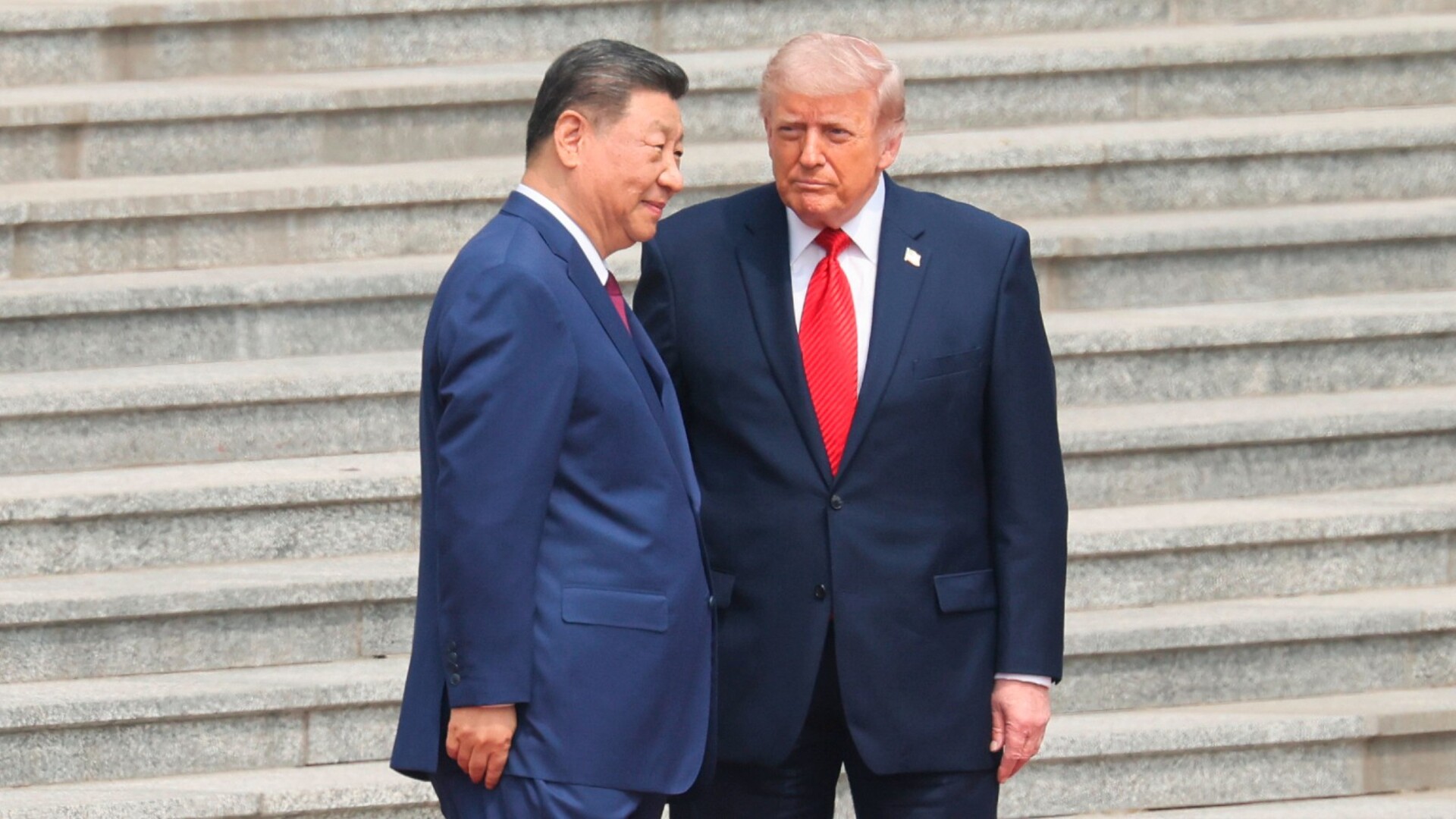
US President Donald Trump has returned to Washington following a two-day summit in China, where he engaged in high-stakes discussions with Chinese leader Xi Jinping in Beijing. The meeting was a significant diplomatic event, drawing attention from global media and political analysts.
During the talks, Trump emphasized that he did not make any commitments to President Xi regarding Taiwan, a sensitive issue that has long been a point of contention between the United States and China. His remarks underscored the delicate nature of US-China relations, particularly concerning regional security and trade policies.
In addition to the discussion on Taiwan, Trump also addressed the status of a $14 billion arms deal with Taiwan. He stated that he had not yet approved the deal, highlighting the careful consideration required for such a move, which could have implications for bilateral relations and regional stability.
The summit took place against a backdrop of growing economic and strategic competition between the two nations. While both leaders acknowledged the importance of maintaining a stable relationship, they also recognized the challenges that lie ahead. Trump’s visit to China marked a key moment in his administration’s foreign policy, reflecting the complex dynamics of international diplomacy.
Key points from the summit include:
- Trump’s emphasis on not making any commitments regarding Taiwan, signaling a cautious approach to this sensitive issue.
- The ongoing review of the $14 billion arms deal, which remains a subject of discussion and potential future action.
- The broader context of US-China relations, including trade negotiations and strategic interests in the Asia-Pacific region.
As the world watches closely, the outcomes of these discussions will likely shape the direction of US-China interactions in the coming months. Analysts suggest that while immediate agreements may be limited, the dialogue is essential for fostering mutual understanding and addressing shared challenges.
The summit also provided an opportunity for both leaders to highlight their respective domestic agendas. Trump used the platform to reinforce his stance on trade and national security, while Xi Jinping focused on China’s vision for economic growth and global influence.
With the conclusion of the summit, the focus now shifts to the implementation of any agreements reached and the continued engagement between the two nations. The path forward will require careful negotiation and cooperation to navigate the complexities of modern geopolitics.