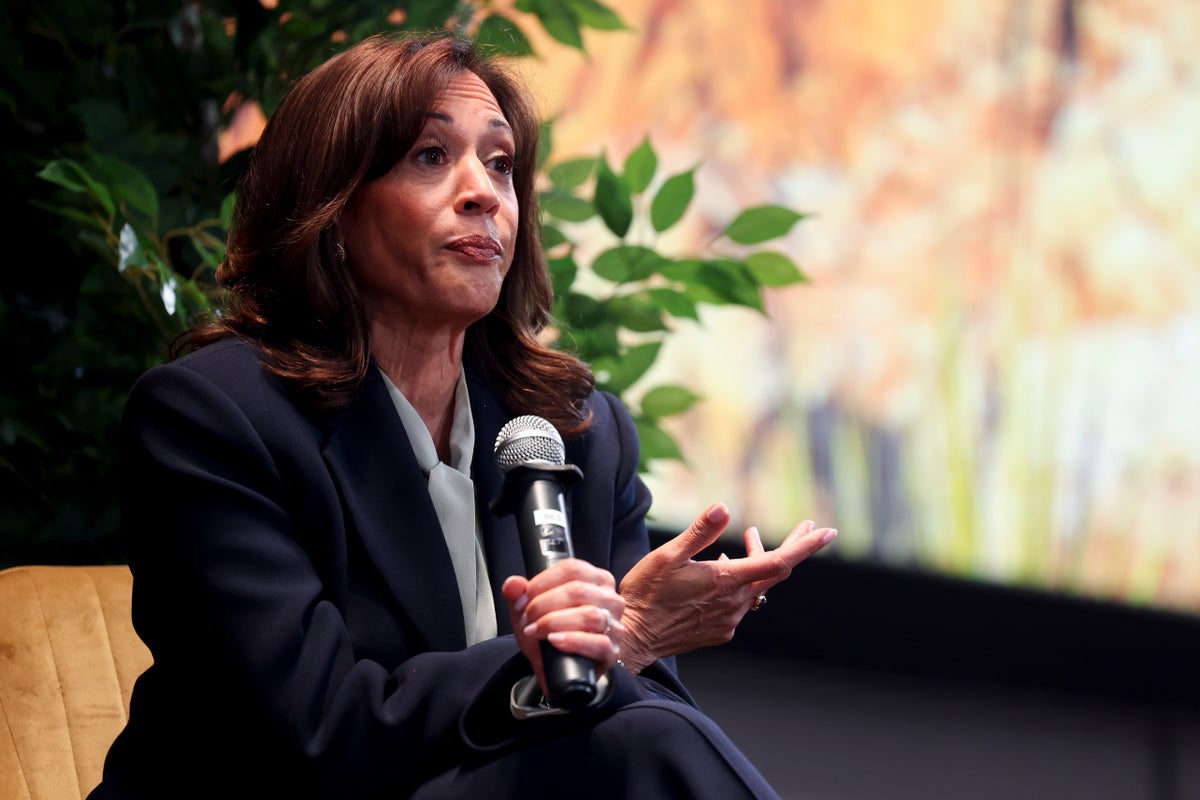
Kamala Harris, the former vice president of the United States, has strongly criticized the Supreme Court’s recent decision that permits states to redraw Black-majority congressional districts. She accused the court of enabling Republicans to “cheat” in the upcoming midterm elections, arguing that the ruling allows for a covert form of racial discrimination through political means.
Harris made these remarks during a call with the nonprofit organization Emerge, where she emphasized the implications of the court’s decision. “What they have done with this decision, by saying that the politics of redistricting is OK, is they are back-dooring racism through politics,” she stated. She further claimed that the court’s actions are an intentional effort to suppress the voices of voters.
This decision came in the case of Louisiana v Callais, which significantly weakened the 1965 Voting Rights Act. The ruling now requires voters who believe they were prevented from voting due to race to prove they were victims of “intentional discrimination.” This shift places a heavier burden on individuals seeking to challenge discriminatory practices.
During her conversation with Emerge, Harris also discussed the potential for Supreme Court reform, including the idea of expanding the number of justices. This proposal has been considered by Democrats since the passing of Justice Ruth Bader Ginsburg in 2020, which led to the appointment of a third conservative justice, resulting in a conservative majority on the court.
She highlighted several other issues, such as the push for statehood for Puerto Rico and Washington, D.C., and the need to reconsider the Electoral College system. “We’ve got to neutralize this red-state cheating,” she said. “There’s a brutality at play on the other side and a ruthlessness. And we need to play to win.”
Following the Callais ruling, Republican-led states in the South—many of which have at least one majority-Black district—quickly began adjusting their maps to favor the GOP before the midterms. In Tennessee, the only Black-majority district in central Memphis was eliminated, splitting the Democratic-leaning area into three separate districts. This move dilutes the political influence of Black voters across white Republican-leaning parts of the state.
Similar efforts are being made in Republican-controlled states like Louisiana, Alabama, Georgia, and South Carolina. Harris argued that the Supreme Court’s decision in Callais is part of a broader strategy by the GOP to “cheat” in the upcoming midterms, as some states have already begun redrawing electoral boundaries.
As the former vice president considers a presidential bid in 2028, she noted that voters are increasingly aware of the changes happening in the political landscape. “They’re paying attention to what’s happening with gas prices,” she said. “They’re paying attention to this war nobody wanted or asked for. They’re paying attention to inflation going up, unemployment going up.”
Harris claimed that Republicans are using a long-standing agenda to make elections more difficult, particularly for marginalized communities. “They are afraid of the power of the people,” she added.
Her comments sparked immediate backlash from Republicans, including House Speaker Mike Johnson, who labeled her and other Democratic officials as “institutional arsonists.” “It’s a dangerous thing, a dangerous gambit,” he said. “You don’t just blow up the system when you lose.”
“For the former vice president of the United States and a candidate for president to suggest that you should pack the Supreme Court or destroy these institutions because they lost is I just think outrageous,” he concluded.
Independent readers are known for their independent thinking and global perspective. They are not defined by traditional demographics but by their attitudes and values. In today’s fragmented world, they seek real facts and honest opinions from trusted sources. Empowered by information and inspiration, they take a stand for the causes they believe in.