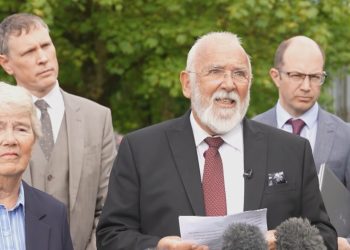
Accused of funding the mass murder of Tutsis, Kabuga was found ineligible to proceed with his trial due to suffering from dementia.
A suspect from Rwanda, who was charged in relation to the 1994 genocide, passed away in a hospital while being held in The Hague, Netherlands, according to a UN tribunal on Saturday. This occurred three years after the court determined he was no longer fit to proceed with the trial.
Felicien Kabuga, 91, faced charges of promoting and financing the large-scale slaughter of Rwanda’s Tutsi population. His court proceedings started in 2022, almost 30 years following the 100-day genocide that resulted in 800,000 fatalities.
In 2023, the judges determined that he was not fit to proceed with the trial due to dementia and indicated they would create a process to continue receiving evidence without the chance of convicting him.
Are you curious about the most significant issues and developments happening globally? Find the solutions withSCMP Knowledge, our latest platform featuring curated content including explainers, FAQs, analyses, and infographics, presented by our acclaimed team.
On Saturday, the UN International Residual Mechanism for Criminal Tribunals announced in a statement that Kabuga passed away while being treated in a hospital in The Hague, and the medical staff from the UN Detention Unit was informed right away.
A probe into his death has been initiated to determine the conditions surrounding his passing, according to the statement.
A warrant for Kabuga’s arrest was issued in 2013, with a reward of $5 million offered. He was captured in France in 2020, and his court proceedings began in 2022.
Kabuga was accused of genocide, inciting genocide, conspiring to commit genocide, along with persecution, extermination, and murder. He denied the charges. Should he have been found guilty, he could have received a maximum sentence of life in prison.
Following the court’s determination that he was not fit for trial, he continued to be held in custody, awaiting a decision regarding his temporary release to a state that is willing to take him within its borders.
His attorney stated that he would not go back to his native country, Rwanda, which had offered to accept him, due to concerns he might be treated poorly.
The statement that he was not fit for trial upset numerous genocide survivors in Rwanda, who believed his offenses warranted the highest possible punishment.
The massacre began on April 6, 1994, after the plane carrying President Juvenal Habyarimana was shot down and crashed in the capital, Kigali, resulting in the death of the leader, who, like the majority of Rwandans, belonged to the Hutu ethnic group. Kabuga’s daughter was married to Habyarimana’s son.
More Articles from SCMP
What is causing the increase in dismissals associated with disability discrimination in Hong Kong?
Wah Fu Estate Credit Union assists its community in saving funds
Can the Trump-class battleship genuinely prevent China from acting?
Fashion Edit: Brunello Cucinelli’s Mediterranea embodies the refined charm of a Sicilian summer
This piece was first published in the South China Morning Post (www.scmp.com), a top news outlet covering China and Asia.
Copyright (c) 2026. South China Morning Post Publishers Ltd. All rights reserved.