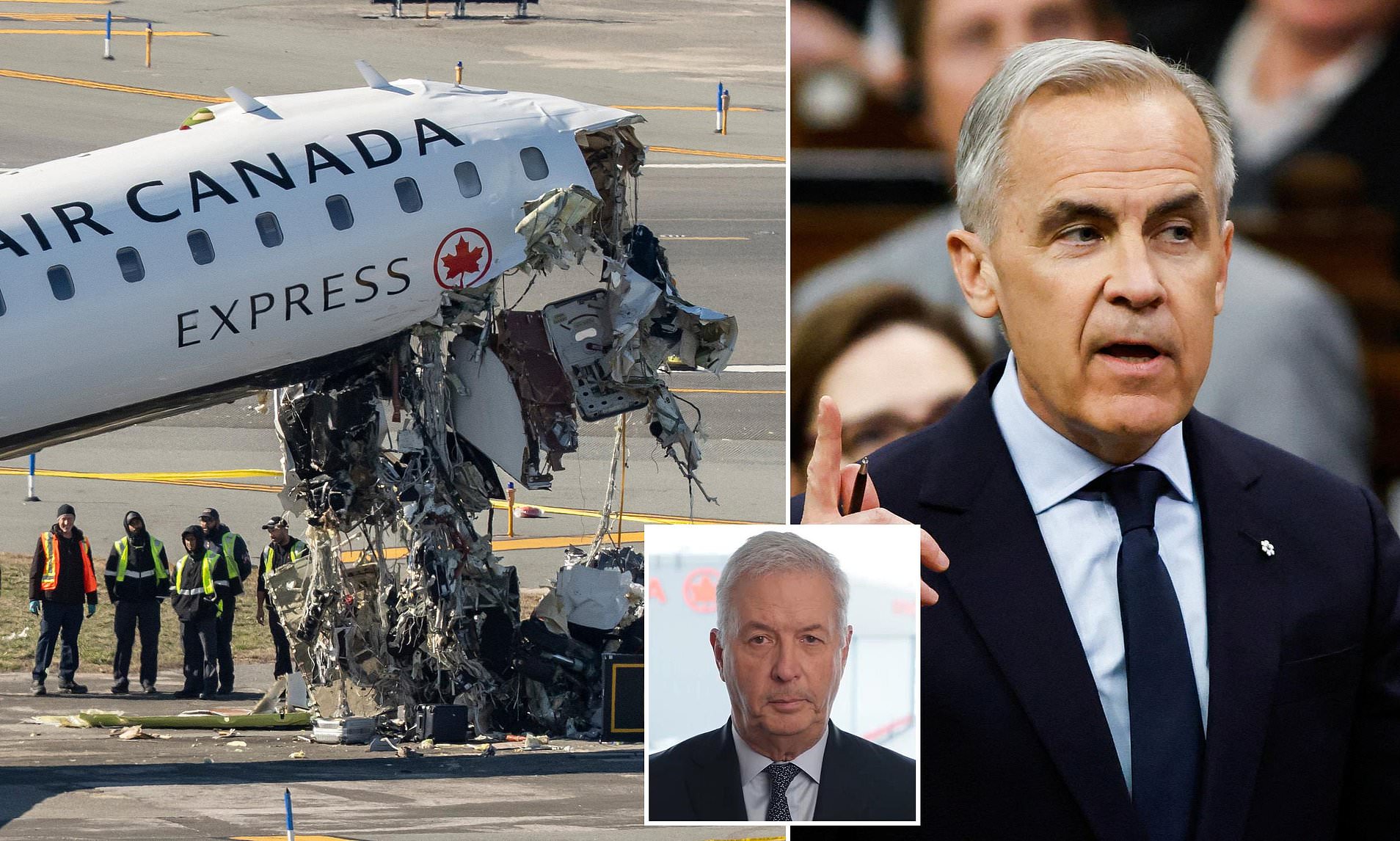
Air Canada CEO Faces Intense Scrutiny Over English-Only Condolence Message Following Fatal Crash
The chief executive of Air Canada, Michael Rousseau, has become the focal point of widespread criticism, including from prominent Canadian officials, following his delivery of an English-only video message expressing condolences for the victims of a fatal crash at New York’s LaGuardia Airport. The incident has ignited a fervent debate about the airline’s commitment to Canada’s bilingualism and the perceived lack of empathy in Rousseau’s public response.
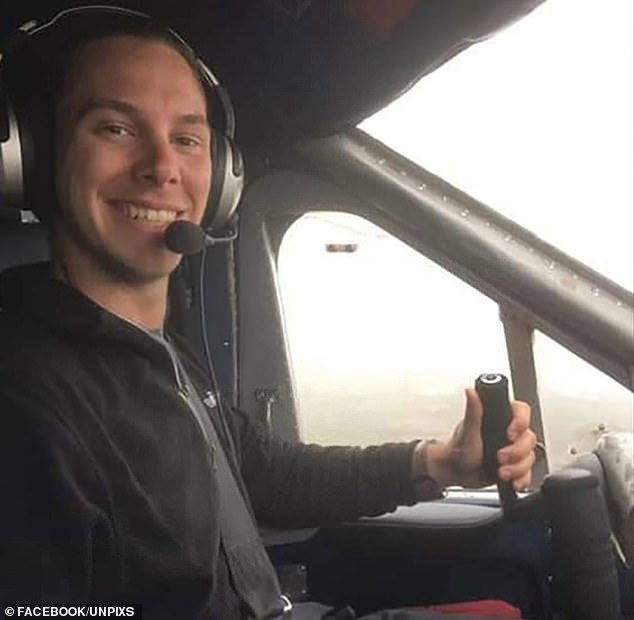
The tragedy unfolded when an Air Canada Jazz flight, en route to landing at LaGuardia, collided with a fire truck on the runway. The devastating impact resulted in the deaths of two pilots, Antoine Forest and Mackenzie Gunther, and injured approximately 41 other individuals on board. Among the deceased was Antoine Forest, a French-speaking pilot from Quebec.
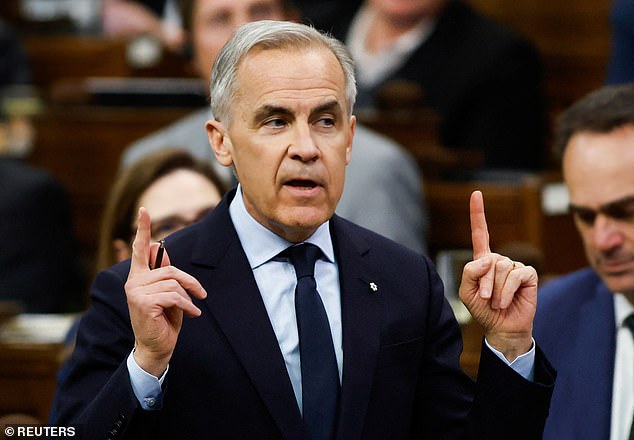
The controversy escalated when Michael Rousseau released a four-minute video addressing the incident. While the video included French subtitles, Rousseau himself spoke solely in English, interjecting only the French words “bonjour” and “merci.” This linguistic choice has been deemed unacceptable by many, particularly given Air Canada’s status as Canada’s largest airline, headquartered in Montreal, Quebec, a province where French is the primary language.
Canadian Prime Minister Mark Carney was among the most vocal critics, expressing profound disappointment. “We proudly live in a bilingual country,” Carney stated. “There are two official languages here and Air Canada has a special responsibility whatever the situation to communicate whatever the situation in both official languages. I am extremely disappointed by the message released by the CEO of Air Canada. It shows a lack of compassion, and we will be closely following his comments before the official languages committee as well as the comments coming from the board of Air Canada.”
Parliamentary Scrutiny and Calls for Resignation
The fallout from Rousseau’s video message led to him being summoned to testify before the nation’s parliament at their official languages committee. Quebec Premier François Legault also weighed in, recalling Rousseau’s promise to learn French upon his appointment as CEO in February 2021. “If he still doesn’t speak French today, it’s disrespectful to his employees and to his francophone customers,” Legault declared. “So yes, I think that if he doesn’t speak French, he should resign.”
Rousseau himself had previously described his French language proficiency as “fair,” and had commented that he had managed to live in Montreal for 14 years without needing to know the language, a statement that further fueled public ire.
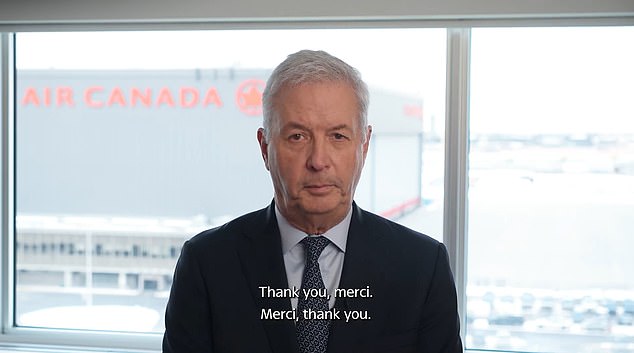
Following the significant backlash, Rousseau issued an apology and committed to undertaking French language lessons. “I admit that I made a mistake by not learning to speak French when I joined Air Canada and I am correcting that mistake at this point,” he informed the committee in 2022.
However, this apology did not quell the criticism. Yves-François Blanchet, leader of the federal Bloc Québécois, called for Rousseau’s removal from his position. “He should leave. He should acknowledge the fact that he doesn´t have the requisite respect for Quebec society,” Blanchet asserted. “There is a limit to the number of insults that one is supposed to stand.”
Air Canada’s Defense and Official Complaints
A spokesperson for Air Canada defended Rousseau’s decision, stating that his inability to speak French proficiently prevented him from conveying the sensitive message as effectively as he would have desired. The airline indicated that subtitles were used to ensure the message reached all audiences.
Despite this explanation, the Office of the Commissioner of Official Languages reported receiving hundreds of complaints regarding Rousseau’s video. Industry Minister Mélanie Joly emphasized the importance of empathy, noting that many victims and their families were francophones. “It is a question of moral leadership,” Joly commented.
Conversely, some, like former Conservative Cabinet minister Jason Kenney, suggested that the CEO should prioritize operational matters. Kenney proposed that the CEO’s limited time might be better spent focusing on safety and reliability rather than language training. Jean-François Roberge, the French Language Minister in Quebec, expressed his strong disapproval, stating, “After all these years in Quebec and Montreal, I think this shows contempt on Mr Rousseau’s part. It is unacceptable.”
The Tragic Crash and its Aftermath
The focus of the initial concern was the tragic crash itself. The Air Canada Bombardier CRJ-900 was landing at approximately 11:30 PM on a Sunday night when it collided with a fire truck. The fire truck had been granted permission to cross the runway to attend to an unrelated issue on another aircraft, where a pilot had reported an “odor” filling the cabin.
Audio recordings from air traffic control reveal a desperate attempt to avert the collision. Seconds before impact, an air traffic controller issued a frantic warning to the fire truck, “Truck One, stop, stop, stop!” Following the collision, the controller informed the Air Canada jet, “JAZZ 646, I see you collided with the vehicle. Just hold position. I know you can’t move. Vehicles are responding to you now.”
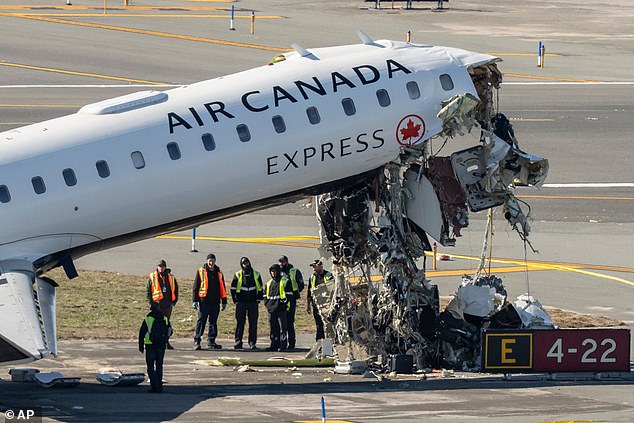
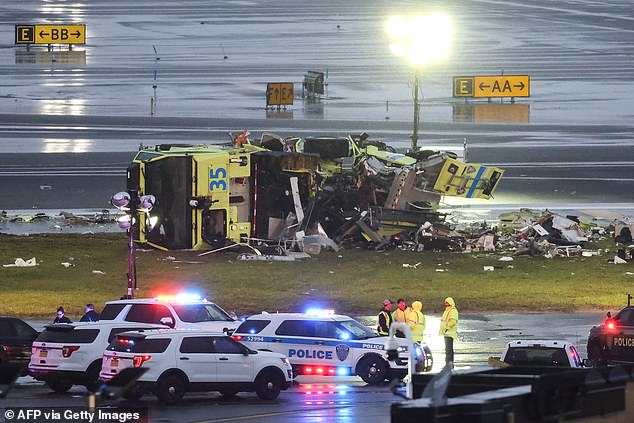
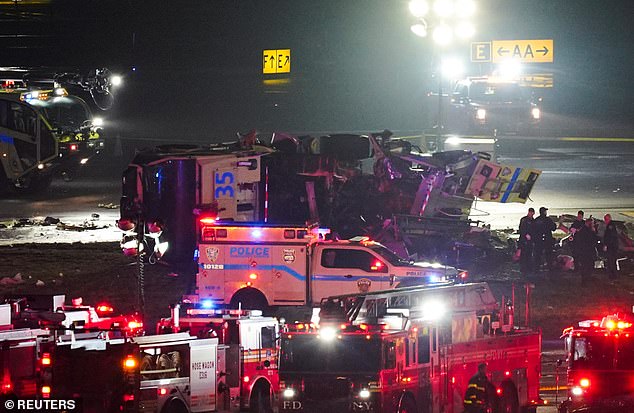
Experts noted that the potential death toll could have been significantly higher had the fire truck’s collision involved the aircraft’s fuel tanks. Images from the scene depicted the fire truck destroyed and the nose of the Air Canada plane severely damaged. One flight attendant, ejected from her jump seat during the impact, sustained injuries but is expected to recover fully.
The crash led to the grounding of all flights at LaGuardia until at least 2 PM ET on Monday, as emergency services worked to manage the scene. The National Transportation Safety Board (NTSB) has launched a comprehensive investigation into the cause of the accident.
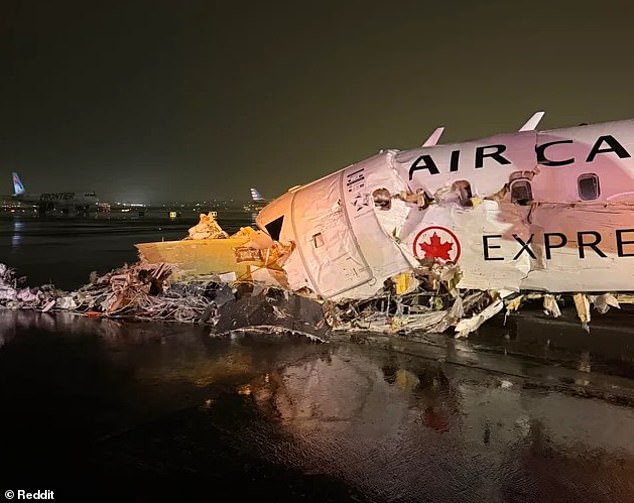
Reports from NBC News suggested that the air traffic controller involved was managing two positions simultaneously, highlighting a nationwide shortage of air traffic controllers. Passengers on board described the impact as a moment of sheer “chaos,” with the aircraft landing hard and then experiencing a violent jolt.
Passenger Accounts of the Impact
Jack Cabot, a passenger on the flight, recounted the terrifying experience. “The journey had been a ‘regular flight like always, but as we were arriving, we came down really hard,” he told Fox News. Cabot described the pilots’ forceful braking, followed by a severe impact moments later. “Everybody was flying everywhere, the plane started veering off left and right,” he recalled. “It was chaos, I mean it didn’t feel like there was anybody in control.”
The incident at LaGuardia, coupled with the controversy surrounding Air Canada’s leadership’s communication, has cast a long shadow over the airline, prompting a critical examination of its corporate responsibility and its adherence to Canada’s foundational principles of bilingualism.