Islamabad Mosque Attack Claims Dozens of Lives, Islamic State Claims Responsibility
A devastating suicide bombing at a Shiite mosque in Pakistan’s capital, Islamabad, during Friday prayers has claimed the lives of at least 31 worshippers and left 169 others injured. The attack, which occurred on the outskirts of the city at the Imam Bargah Qasr-e-Khadijatul Kubra mosque, is the deadliest in Islamabad since the 2008 Marriott hotel bombing. The death toll is tragically expected to rise.
The Islamic State group (Isis) has since claimed responsibility for the abhorrent act, underscoring the persistent threat of extremism in the region. The bombing took place during congregational prayers, a time when mosques are typically filled with a large number of faithful.
Eyewitness Accounts Paint a Grim Picture
Survivors recount a scene of chaos and terror. Muhammad Kazim, a 52-year-old worshipper, described an “extremely powerful” explosion that ripped through the building just as prayers were commencing. “During the first bow of the namaz [prayer ritual], we heard gunfire,” he stated. “And while we were still in the bowing position, an explosion occurred.”
Kazim, who hails from Gilgit-Baltistan and resides in Islamabad, managed to escape unharmed. However, he accompanied a wounded friend to the hospital. He noted the immense force of the blast, which caused significant structural damage, shattering windows and sending debris raining down. “When I got outside, many bodies were scattered… Many people lost their lives,” he lamented.
Another worshipper, Imran Mahmood, provided further details, suggesting a gunfight preceded the main detonation. He explained that a suicide attacker was attempting to advance into the mosque but was confronted by volunteer security personnel. “The suicide attacker was trying to move forward, but one of our injured volunteers fired at him from behind, hitting him in the thigh,” Mahmood recounted. The attacker then detonated the explosives.
The Aftermath and Emergency Response
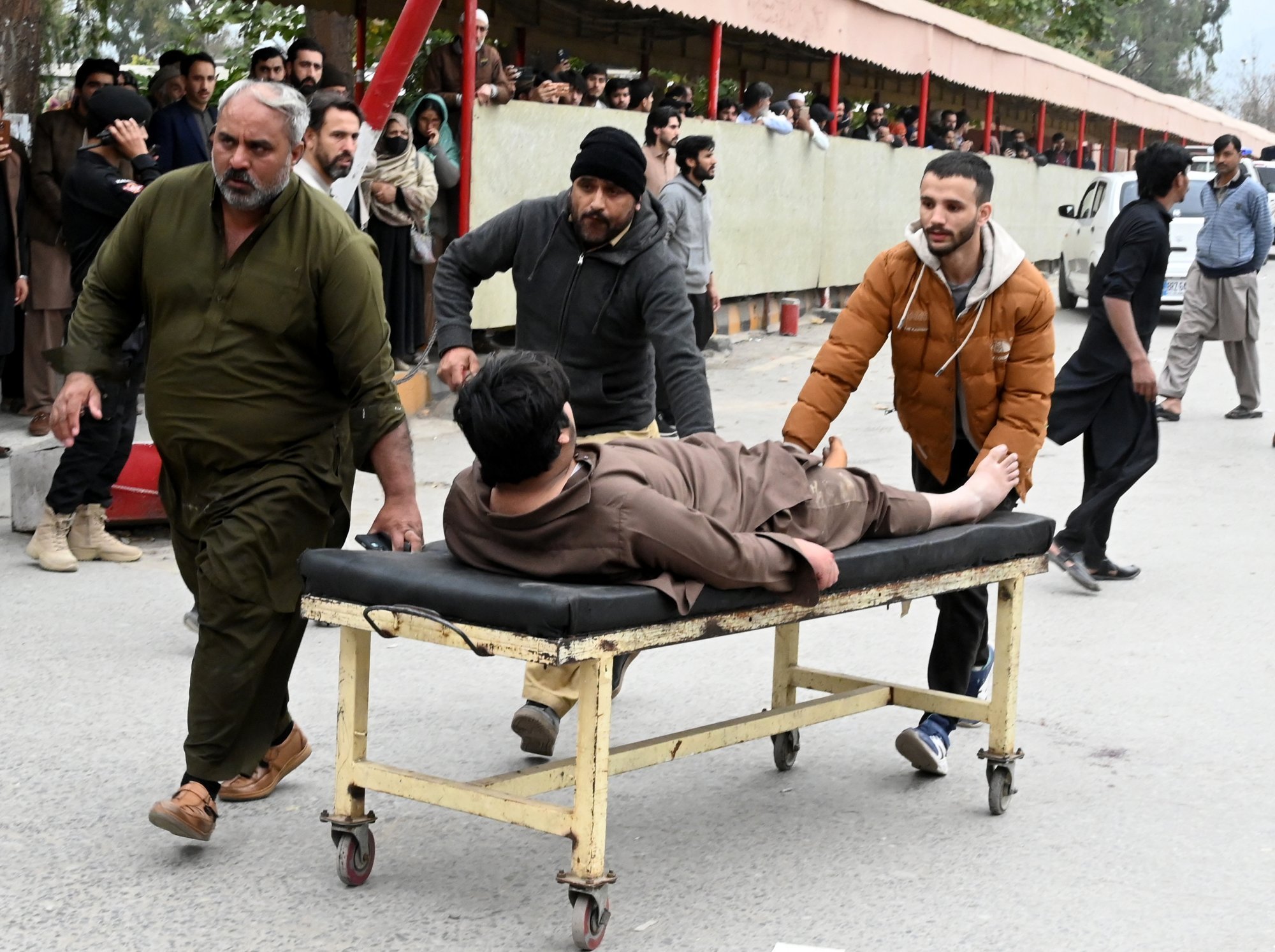
The immediate aftermath saw a desperate scramble for medical assistance. At a major hospital, numerous casualties, including children, were brought in on stretchers and carried by individuals. Medics and bystanders worked tirelessly to assist victims with blood-soaked clothing being unloaded from ambulances and private vehicles. The scene was one of profound grief, with friends and relatives of the wounded weeping and screaming.
Heavily armed security forces quickly cordoned off the mosque, where visible pools of blood stained the ground. Social media videos circulating after the attack depicted several bodies lying near the mosque’s entrance, with debris and the injured strewn across the red-carpeted prayer hall.
Official Condemnation and Broader Security Concerns
The Pakistani government has vehemently condemned the attack. Prime Minister Shehbaz Sharif issued a stern vow that those responsible would be apprehended and brought to justice. Deputy Prime Minister Ishaq Dar described the bombing as “a heinous crime against humanity and a blatant violation of Islamic principles.”
This tragic event occurs amidst a backdrop of intensifying insurgencies in Pakistan’s southern and northern provinces, which share borders with Afghanistan. Security forces have been engaged in ongoing battles against various militant groups.
Pakistan, predominantly a Sunni Muslim nation, has a Shiite minority population that constitutes approximately 10 to 15 percent of the country’s inhabitants. Shiites have unfortunately been frequent targets of sectarian violence throughout the region in the past.
The capital had previously experienced a significant attack in November, when a suicide blast outside a court resulted in 12 fatalities and numerous injuries. This marked the first such incident in Islamabad in nearly three years.
Beyond the capital, the security situation remains volatile. In Balochistan province, separatist insurgents launched attacks last week, resulting in the deaths of 36 civilians and 22 security personnel. In response, authorities reported that security forces killed nearly 200 militants during subsequent counter-operations.
The bombing at the Imam Bargah Qasr-e-Khadijatul Kubra mosque has cast a dark shadow over Islamabad, serving as a stark reminder of the persistent challenges faced by Pakistan in its fight against terrorism and extremism. The nation mourns its lost citizens and grapples with the enduring impact of such devastating violence.