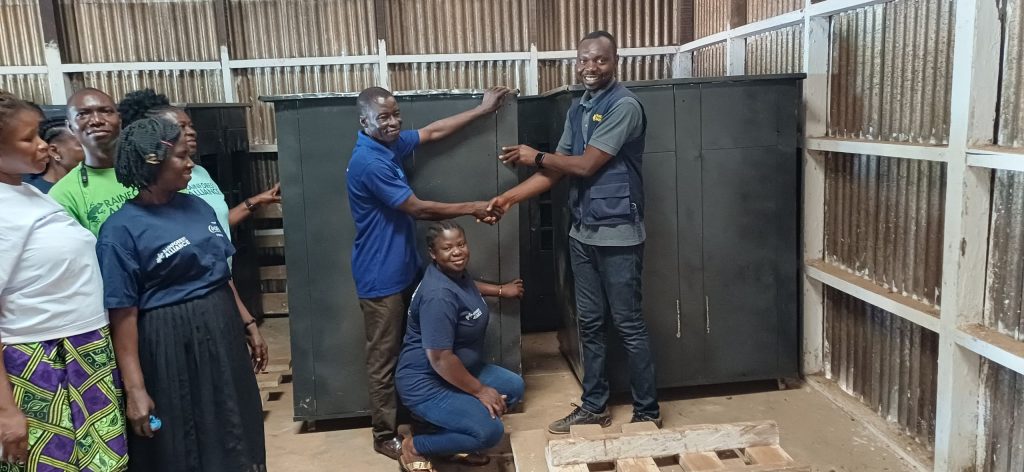
Rainforest Alliance, a prominent international non-governmental organization (NGO), has initiated a significant program in Ghana’s Western North Region aimed at bolstering the economic resilience of cocoa farmers. Through its strategically mobilised Resilient Fund, the organization has distributed essential startup kits to over 50 individual farmers and five Village Savings and Loans Association (VSLA) groups.
This impactful initiative targets farmers and VSLA groups located within the Bibiani-Anhwiaso-Bekwai Municipality, the Wiawso Municipality, and the Akontombra and Bodi Districts. The core objective of this support is to foster improved economic stability among cocoa farmers who are increasingly facing the adverse effects of challenging climatic conditions. Beyond economic empowerment, the program also seeks to secure enhanced livelihoods for these farmers and, crucially, to contribute to an increase in tree cover within the vital forest zones.
The comprehensive support package, valued at $65,000, encompasses a diverse range of items designed to facilitate income diversification and sustainable practices. These provisions include:
- Beehives: To encourage beekeeping, a sustainable source of income and a pollinator for surrounding flora.
- Baking Ovens and Flour: To support small-scale baking enterprises, allowing farmers to process and sell value-added products.
- Gas Cylinders: To provide cleaner and more efficient energy sources for various domestic and small business needs.
- Vegetable Seeds: To enable farmers to cultivate diverse crops for personal consumption and for sale in local markets.
- Knapsack Sprayers: To assist in the effective and efficient application of agricultural inputs, promoting better crop yields.
- Other essential items: Tailored to meet specific needs identified within the beneficiary communities, further enhancing income generation capabilities.
Mr. Kelvin Nartey, Senior Associate for Landscape and Communities at Rainforest Alliance, elaborated on the program’s vision. He stated that the initiative is fundamentally designed to elevate farmers’ income while simultaneously discouraging practices that could be detrimental to the forest ecosystem. “The presentation is to help provide additional livelihood support for cocoa farmers to improve their income and protect the forest for future generations,” Mr. Nartey emphasized, underscoring the dual benefit of economic upliftment and environmental stewardship.
Furthermore, Mr. Nartey highlighted that the commitment from Rainforest Alliance extends beyond the initial distribution of kits. Beneficiary farmers, along with others in the region, will continue to receive ongoing coaching and specialized training support. This continuous development is facilitated through the LandRise project, a collaborative effort generously funded by the Coca-Cola Foundation. This sustained engagement ensures that farmers are equipped with the knowledge and skills necessary to maximize the benefits of the provided resources and adapt to evolving challenges.
The tangible impact of this support was recognized by Mr. Isaac Brafi, Landscape Management Board Chairman, who formally received the items on behalf of the beneficiaries. He expressed profound gratitude to Rainforest Alliance for both the training and the material support. “These will help them generate additional income to support their families, which I believe will motivate them to help protect the forest,” Mr. Brafi remarked, articulating the anticipated positive ripple effect of the program. The enhanced income generation is expected to foster a greater sense of ownership and responsibility towards forest conservation among the farming communities.
Echoing this sentiment, several other beneficiary farmers shared their perspectives with local news outlets. They unanimously conveyed that the provided support would be instrumental in diversifying their income streams, thereby reducing their sole reliance on cocoa farming. This diversification is a critical strategy for building resilience against market fluctuations and the unpredictable impacts of climate change, ultimately leading to more stable and improved livelihoods. The initiative represents a holistic approach to sustainable development, integrating economic empowerment with environmental preservation for the long-term benefit of both the communities and the precious forest resources they depend on.