BASF Inaugurates Mega-Complex in China Amidst Global Economic Headwinds
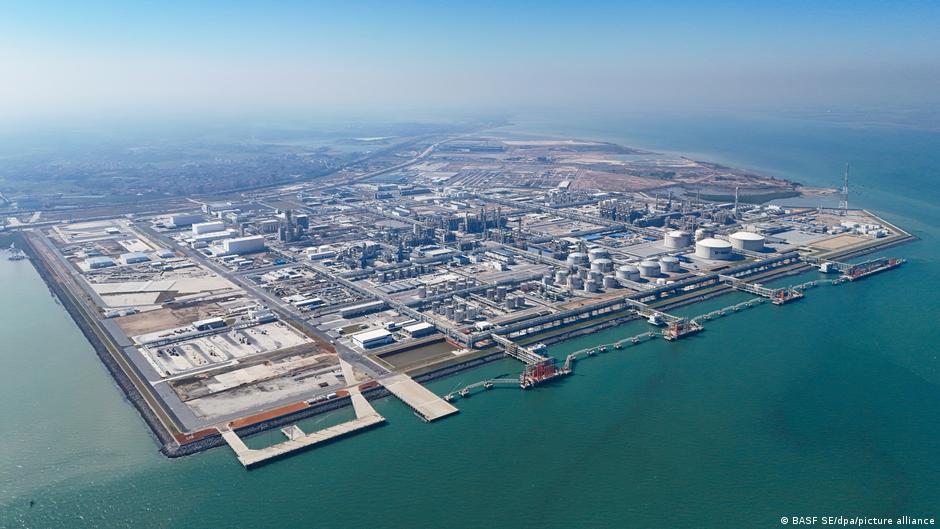
German chemical giant BASF has officially opened a colossal new production complex in Zhanjiang, China, marking its largest-ever investment. The €8.7 billion ($10 billion) facility, situated in the southern Guangdong province, spans approximately four square kilometers and consolidates numerous chemical production units. This significant expansion into the world’s largest chemical market comes at a time of considerable scrutiny for the company, both domestically and internationally.
The move has sparked a dual controversy. Firstly, it coincides with BASF implementing significant job cuts in its home country, with redundancies affecting operations in Ludwigshafen and Berlin. This outsourcing of German jobs to lower-cost regions like India and China has drawn criticism. Secondly, the investment raises questions about bolstering China’s economic influence at a time when the German government is actively encouraging businesses to “de-risk” their global operations, particularly concerning their reliance on China.
BASF has long argued that its presence in China is crucial for future profitability. CEO Markus Kamieth recently stated that China “remains the market offering the greatest growth for our industry,” highlighting the nation’s strong focus on new industries, renewables, and the green transition as significant opportunities for an innovative chemical company.
The German chemical industry, in general, has faced challenges in maintaining competitiveness against its Chinese counterparts. BASF has cited high energy and labor costs, coupled with regulatory burdens in Germany, as key factors contributing to these difficulties.
The decision to invest heavily in China also runs counter to the German government’s broader strategy of economic diversification. While many German companies, including automotive giant Volkswagen, have historically prioritized potential short-term profits in China, there is growing awareness of the risks associated with the country’s business practices and its Communist-led economic system. Beyond potentially more lenient environmental regulations, labor laws in China can also offer advantages to large corporations.
However, the investment is not without its own inherent risks. Last year, BASF withdrew from two joint ventures in the Xinjiang region after its local partner faced accusations of human rights abuses against the Uyghur population. The new Zhanjiang site is expected to employ over 2,000 individuals, producing a wide array of chemicals for sectors including transport, consumer goods, and electronics, with the primary target market being China itself. Globally, the Zhanjiang complex is now BASF’s third-largest operational site, trailing only its facilities in Ludwigshafen, Germany, and Antwerp, Belgium.
Iran Conflict Casts a Long Shadow Over Global Economies, Says Defense Minister
Germany’s Defense Minister, Boris Pistorius, has described the ongoing conflict in Iran as a “catastrophe for the world’s economies.” Speaking during a visit to Australia on Thursday, Pistorius emphasized Germany’s willingness to mediate a ceasefire and reiterated that Berlin was not directly involved in the conflict.
“The effects are already clear after just a little more than two weeks,” Pistorius remarked in Canberra, standing alongside his Australian counterpart, Richard Marles. He stressed the urgent need for a diplomatic solution, directing this message primarily at Iran but also acknowledging the role of the United States.
Pistorius made it unequivocally clear that Germany’s involvement would be limited to facilitating peace efforts and not to military participation. “We were not consulted beforehand. It is not our war, and, therefore, we don’t want to get sucked into this war, to make this crystal clear,” he stated.
The conflict’s impact on global economic stability is a growing concern, with rising energy prices and supply chain disruptions already being felt worldwide.
Domestic Concerns: Economic Sentiment Wanes, Housing Prices Continue Upward Trend
Back in Germany, economic sentiment has shown a notable decline in March, largely attributed to the repercussions of the Iran war. Chancellor Friedrich Merz has posited that “the best way to combat high prices is to end the war in Iran,” underscoring the interconnectedness of geopolitical events and domestic economic well-being.
Adding to the list of economic challenges, German housing prices have continued their upward trajectory, registering further increases in 2025. This persistent rise in the cost of accommodation presents a significant challenge for many households.
In other domestic news, a Berlin court has handed down jail sentences to four members of the Islamist terror group Hamas. The individuals were found to be operating and planning potential attacks within Europe.
Meanwhile, environmental activism continues to be a prominent feature of public discourse. In Berlin, Greenpeace organized a climate protest to voice criticism of Germany’s continued reliance on fossil fuels, advocating for a more robust transition to green energy alternatives.
As the day progresses, the newsroom in Bonn remains abuzz, tracking the latest developments and providing comprehensive coverage of these significant national and international events.