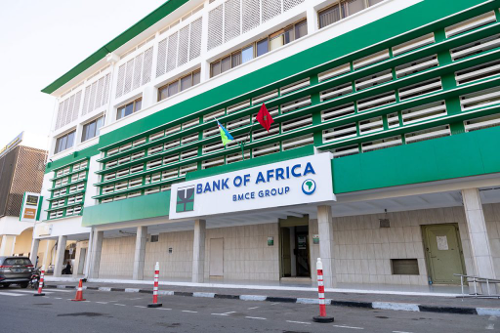
Bank of Africa Niger Suspends Dividend Amidst Steep Earnings Decline
Bank of Africa Niger (BOAN) has announced a significant departure from its established dividend policy, opting not to distribute any dividends for the 2025 financial year. This decision, slated for shareholder approval at the upcoming annual general meeting on April 3rd, stems from a sharp contraction in the bank’s earnings, attributed to a challenging economic and financial landscape.
The bank’s board of directors explicitly stated that “The results for the 2025 financial year do not allow for the payment of a dividend.” This marks a notable shift after several consecutive years of consistent dividend payouts to shareholders.
Financial Performance in Sharp Decline
The financial figures for the 2025 fiscal year paint a stark picture of reduced profitability. Net income plummeted to 409.26 million FCFA, a dramatic decrease from over 5 billion FCFA recorded in 2024. This represents a staggering decline of 91.8%.
Several key factors contributed to this precipitous drop:
- Lower Net Banking Income: The bank experienced a 1.2% decrease in its net banking income, a core revenue stream for financial institutions.
- Increased Operating Costs: Concurrently, operating expenses rose by 3.9%. This escalation was partly influenced by exceptional tax charges, further eroding profitability.
- Eroded Return on Equity: The return on equity (ROE) saw a significant decline, falling to a mere 1.05% from 11.39% in the preceding year. This indicates a substantial reduction in the bank’s ability to generate profits from shareholder investments.
Broader Economic Headwinds Impacting Operations
Beyond internal financial performance, Bank of Africa Niger is contending with a deteriorating economic environment within Niger. The aftermath of the 2023 coup has led to sanctions that have demonstrably weighed on overall economic activity. This broader economic fragility has had a direct impact on the banking sector.
Key challenges include:
- Rising Non-Performing Loans (NPLs): The banking sector as a whole is witnessing an increase in non-performing loans, signaling growing credit risk among borrowers.
- Shrinking Loan Portfolio: For BOA Niger specifically, its loan portfolio contracted by 20.9% year on year, reflecting a more cautious lending approach and potentially reduced demand for credit amidst economic uncertainty.
Strategic Capital Preservation
In response to these adverse conditions, the bank’s board has made the strategic decision to allocate the entirety of its net profit towards reducing accumulated losses. Following this adjustment, the bank’s retained earnings remain in a deficit position, standing at 1.8 billion FCFA. This move prioritizes strengthening the bank’s financial foundation over immediate shareholder returns.
Key Insights and Future Outlook
The decision by Bank of Africa Niger to suspend its dividend underscores the significant pressures currently impacting banking profitability, particularly within fragile macroeconomic environments. For BOA Niger, a confluence of factors – weakened lending activity, escalating credit risk, and heightened operating costs – has compressed earnings to a point where preserving capital has become paramount.
The rise in non-performing loans serves as a clear indicator of broader economic stress, where businesses and households are grappling with diminished liquidity and decelerated growth. In such challenging circumstances, banks typically bolster their loan loss provisions, which directly reduces their reported net income.
The board’s resolution to retain earnings, rather than distributing dividends, is a deliberate strategy aimed at fortifying the bank’s balance sheet and maintaining crucial regulatory capital ratios. This approach is a well-established practice during periods of economic turbulence, especially in markets susceptible to political instability or external shocks.
Looking ahead, the bank anticipates a recovery in 2026. Projections indicate a potential pre-tax profit of 7.2 billion FCFA. However, this optimistic outlook is contingent upon a significant improvement in operating conditions. This includes a rebound in net banking income, a reduction in operating costs, and a mitigation of credit risk.
For investors, this situation serves as a potent reminder of how sensitive bank earnings are to macroeconomic variables and asset quality. This is particularly true in frontier markets, where economic and political shocks can have an immediate and profound impact on the performance of the financial sector.