KTM Under Fire: Allegations of ‘De-Restricted’ Enduro Bikes Surface in Major Investigation
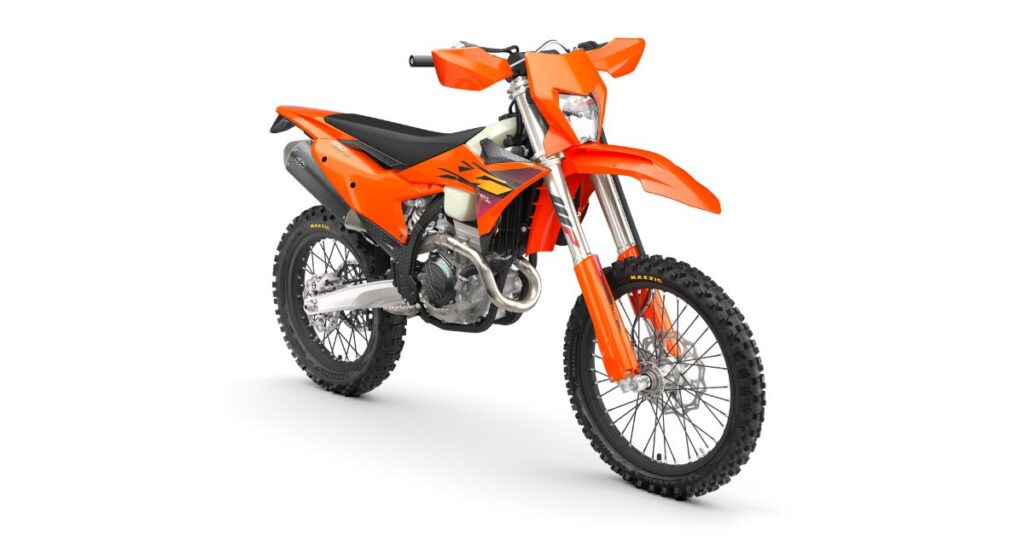
KTM, the renowned Austrian motorcycle manufacturer, is facing serious scrutiny following a comprehensive investigation that suggests some of its road-going Enduro models, along with those from its associated brands Husqvarna and GASGAS, are deliberately manufactured with power and sound restrictions. These restrictions, it’s alleged, are solely to help the bikes pass stringent European emissions tests.
The investigation, a collaborative effort spanning six months, involved the French newspaper Le Monde, several other European media outlets, and the NGO Climate Whistleblowers. Researchers visited over a dozen KTM dealerships across six European countries to gather evidence and testimonies.
The Core Allegation: A Factory-Secret Compromise
According to the findings, the practice involves KTM fitting its Enduro motorcycles with specific exhaust systems and engine configurations designed to meet emissions standards like Euro 5+. However, the investigation claims these settings significantly impede the bike’s performance, rendering them less functional for their intended purpose.
The crucial step, the investigators allege, occurs at the dealership level. Before the motorcycles are handed over to customers, dealers are reportedly instructed to remove these temporary restrictions. This process effectively unlocks the bike’s full power and sound potential, transforming it from a compliant road machine into a high-performance off-road vehicle.
Dealer Testimonies Paint a Revealing Picture
Testimonies from dealers across Europe seem to corroborate these claims. A French KTM dealer, speaking anonymously, described the practice as an “open secret” within the industry. They stated that the restrictions are a necessary evil to pass European tests and anti-pollution regulations. “All our motorcycles come restricted as standard, but we have to remove the restriction for the engine to work,” the dealer reportedly said. “KTM delivers them with a different exhaust system. We immediately change the entire configuration. The restricted mode is just to pass European tests and anti-pollution standards.”
Similar accounts have emerged from dealers in Germany, Milan, and even Britain, all sharing remarkably consistent stories. This widespread confirmation suggests a systemic approach rather than isolated incidents.
Confirmation from Within: A Sales Manager’s Revelation
The investigation reportedly gained further traction when investigators spoke with a KTM sales manager at the 2026 Brussels Motor Show. This individual is said to have confirmed KTM’s direct involvement in the process, revealing that the company supplies dealers with specific parts intended for these modifications.
The sales manager allegedly explained the rationale behind the practice: “Buying the restricted motorcycles is not the goal; they don’t work well. The motorcycles are designed derestricted, with full power, then we put on another homologation exhaust to comply with the Euro 5+ emissions standards, with catalytic converters that strangle the motorcycle so it doesn’t pollute too much.”
They went on to detail the subsequent dealer action: “Then, the dealers derestrict them. It’s just to pass the standards; after that, we put the right parts back on. It’s still KTM equipment; we provide it with the motorcycle. Well, this isn’t information we give to everyone, because it’s a bit of a scam.” This statement strongly implies that KTM is not only aware of the de-restriction but actively facilitates it through its supply chain.
KTM’s Response: Denial and a Caveat
In response to the allegations, KTM has issued a statement on its global website, vehemently denying any wrongdoing and asserting that it is not involved in such practices.
However, the company’s statement includes a crucial admission: these motorcycles can be converted for competition purposes by authorized dealers at the customer’s request, even after purchase.
While this doesn’t explicitly confirm the practice of factory-fitted restrictions being removed by dealers to meet emissions tests, it does acknowledge that de-restriction can and does occur. KTM stresses that such conversions render the motorcycle illegal for use on public roads. “At the customer’s request, these machines can be configured by the authorized dealer for competition and off-road use after purchase,” the statement reads. “Buyers of our enduro machines are expressly informed that road approval expires upon conversion for competition use, and that the vehicle may no longer be used on public roads.”
Environmental Context and Market Share
KTM also sought to contextualise the environmental impact, noting that its Enduro motorcycles sold in Europe represent a mere 3% of its global sales. The company further cited a report from the German Federal Environment Agency, which reportedly states that motorcycles contribute only 0.3% of CO2 emissions in Germany. Enduro competition motorcycles, given their limited annual usage, are said to represent a tiny fraction of this already small percentage.
The investigation has cast a significant shadow over KTM’s operations, raising questions about transparency and compliance within the motorcycle industry. The conflicting narratives between the investigative findings and KTM’s official denial are likely to fuel further debate and scrutiny in the coming months.