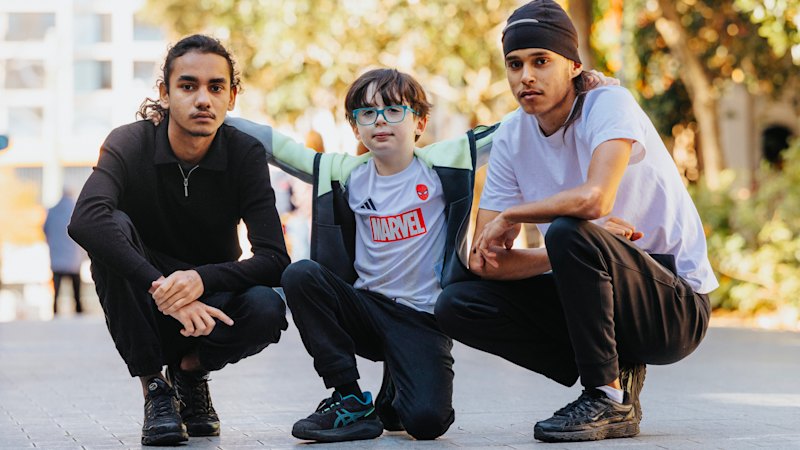
Indigenous Teens Allege Racial Discrimination in Superdry Store, Family Takes Legal Action
Two Indigenous teenagers, cousins Kanye Jarrett and Russell Edwards, have spoken out about their experiences with racial profiling, detailing instances where they claim to have been followed by security or questioned by police during visits to Sydney. Their recent encounter at a Superdry store in Sydney’s Central Park Mall has led their family to take the clothing company to Federal Court, alleging racial discrimination.
Indigenous teens Kanye Jarrett and Russell Edwards are accustomed to racial profiling. When the Coffs Harbour cousins visit Sydney, they say they are followed by security or questioned by police.
They were recently accused of breaking into their uncle’s home, and made to lie on the ground in their boxers. But when the pair were allegedly kicked out of a Superdry store in Sydney, they decided enough was enough – their family is taking the company to Federal Court over alleged racial discrimination.
The Superdry clothing chain, a global brand with over 200 stores including 14 in Australia, is operated locally by Brand Collective under a licensing agreement. The company was founded in the UK in 2003 by Julian Dunkerton and James Holder. It’s worth noting that James Holder was recently convicted in the UK for rape and sentenced to eight years in prison, having resigned as a company director in 2016.
The incident in question occurred on December 14th, when 18-year-old Kanye Jarrett and 15-year-old Russell Edwards were shopping with their uncle, criminal lawyer Joe Correy, and Correy’s eight-year-old son, Stanley. While the Correys are not Indigenous, they are also named as plaintiffs in the legal action, asserting they experienced discrimination by association. The Superdry store at Central Park Mall in Chippendale has since ceased operations.
Allegations of Targeted Treatment
According to the family, their experience in the Superdry store began the moment they walked in. They allege that staff members immediately huddled together, appearing to discuss them, and subsequently began following them throughout the store. When Kanye Jarrett entered a fitting room, security personnel reportedly arrived and asked the group to leave the premises without providing any explanation.
“I felt like shit. They just kicked us out for nothing,” Jarrett recounted, expressing his distress. He added, “Getting discriminated [against] like that, this can’t just keep happening. It happens not just to me, but other Aboriginals too.”
Turning Frustration into Action
Initially, Joe Correy considered not escalating the situation to avoid a public scene. However, he soon realised he possessed the necessary resources and expertise to set a precedent and challenge such behaviour. Following the incident, Correy provided a statement to the police and formally lodged a complaint with the Australian Human Rights Commission.
Despite the commission’s attempts at conciliation, the matter was not resolved. The case is now proceeding to the Federal Court, where the family is expected to seek both financial damages and broader injunctive relief against the retailer.
“I wanted to show them you can direct that distress and frustration into doing something proactive and show them what they can do in that situation,” Correy explained, emphasising his motivation to create positive change. “It’s our responsibility to try and make things a bit better.”

The family said as soon as they walked into the store, staff huddled, seemingly to talk about them. They allege staff then began following them. When Jarrett stepped into a change-room, security arrived and asked them to leave without giving a reason.
“I felt like shit. They just kicked us out for nothing,” Jarrett said.
“Getting discriminated [against] like that, this can’t just keep happening. It happens not just to me, but other Aboriginals too.”
Correy’s initial reaction was not to make a scene, but he realised he had the contacts and the know-how to set an example. Outside the store, Correy provided a statement to police and lodged a complaint with the Australian Human Rights Commission.
The commission’s conciliation process was unsuccessful, and the case is proceeding to the Federal Court, where the family is expected to seek damages and broader orders against the retailer.
“I wanted to show them you can direct that distress and frustration into doing something proactive and show them what they can do in that situation,” Correy said.
“It’s our responsibility to try and make things a bit better.”
“These proceedings raise deeply concerning allegations about the way young people were treated.”
Lawyer Patrick Turner
The incident has also prompted important conversations about race and discrimination with Correy’s eight-year-old son, Stanley. The young boy reportedly understood that his cousins were targeted because they are Aboriginal, describing the experience as “really annoying.”
For Kanye Jarrett and Russell Edwards, the incident has had a significant emotional impact. They expressed reluctance to leave their homes and voiced concerns about returning to Sydney. Their grandmother has noted that they have become increasingly isolated since the event.
Legal Significance and Business Responsibility
The family is being represented by Patrick Turner, a principal lawyer at Maurice Blackburn Lawyers. Turner described the case as “legally significant,” highlighting the serious nature of the allegations.
“These proceedings raise deeply concerning allegations about the way young people were treated in what should be an ordinary, everyday setting,” Turner stated.
He further explained that the case will scrutinise how existing legal obligations under the Racial Discrimination Act, which mandate the equal provision of goods and services without prejudice, are applied in practice. It will also examine the proactive steps businesses must undertake to ensure their staff receive adequate training and are held accountable for their actions.
“Cases like this can play a critical role in reinforcing community standards and ensuring that discrimination, in any form, is not tolerated,” Turner added, underscoring the broader societal implications of the legal challenge.
In response to the allegations, a spokesperson for Superdry stated that the company and Brand Collective are dedicated to fostering a safe, respectful, and inclusive environment for all customers and employees. However, they declined to comment on specific legal matters.