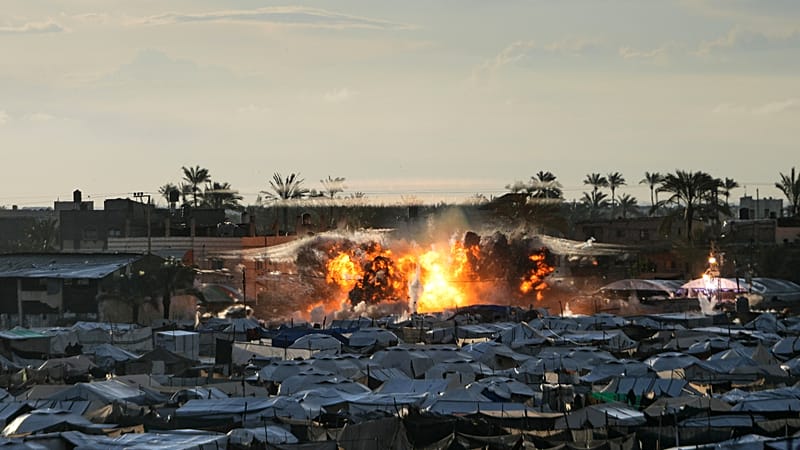
Deadly Airstrike Hits Gaza’s Displacement Hub, Underscoring Peril for Civilians
A recent Israeli airstrike on the central Gaza city of Deir al-Balāḥ on March 26 has resulted in casualties and heightened fears for the thousands of displaced Palestinians seeking refuge in the area. The attack, which occurred near tents sheltering families uprooted by months of relentless conflict, claimed at least one life and injured seven others, according to reports from Al-Aqsa Hospital.
The incident in Deir al-Balāḥ is particularly significant given the city’s evolving role as a crucial sanctuary for those forced to flee their homes. As the war has intensified and spread, areas designated for temporary shelter are increasingly becoming targets, exposing vulnerable populations to further danger. This latest strike underscores the grim reality that no location within Gaza is entirely safe, even for those who have already endured immense loss and displacement.
Witness accounts shared with The Associated Press paint a harrowing picture of the moments leading up to the strike. Individuals claiming to be from the Israeli military reportedly contacted people in the area, issuing warnings to move approximately 500 metres away shortly before the attack. Despite these advisories, the impact of the strike was not contained. Several individuals sustained injuries from flying debris after they had gathered in a nearby vicinity to observe the aftermath of the explosion. The precise target of the airstrike remains unclear, and as of the initial reports, the Israeli military had not provided an immediate comment on the incident.
The ongoing conflict has led to widespread displacement across the Gaza Strip, with a significant portion of the population repeatedly forced to relocate. This constant uprooting exacerbates existing challenges, leading to severe overcrowding, a deepening sense of insecurity, and immense psychological distress among civilians. Attacks occurring in close proximity to tent camps, which now house a substantial number of families, serve as a stark reminder of the precarious conditions under which these civilians are forced to live. The fear of further strikes and the constant threat of violence contribute to an environment of extreme vulnerability, making daily life an ongoing struggle for survival.
The Deepening Humanitarian Crisis
The airstrike in Deir al-Balāḥ is a symptom of a much larger and worsening humanitarian crisis gripping Gaza. The sheer scale of displacement has overwhelmed existing infrastructure and resources, creating desperate living conditions. Families are often crammed into makeshift shelters, with limited access to basic necessities such as food, clean water, and medical care. The psychological toll of continuous displacement and the constant threat of violence is immense, particularly for children who are bearing the brunt of this protracted conflict.
Overcrowding and Strain on Resources:
The influx of displaced persons into areas like Deir al-Balāḥ has placed an unprecedented strain on already scarce resources. Existing shelters are overflowing, and new ones are being established in ad-hoc fashion, often in exposed locations. This overcrowding makes it difficult to maintain hygiene, increasing the risk of disease outbreaks.Psychological Trauma:
The repeated experience of fleeing one’s home, witnessing destruction, and living under constant threat inflicts profound psychological trauma. Children, in particular, are vulnerable to developing anxiety, depression, and post-traumatic stress disorder. The lack of safe spaces and opportunities for normalcy further compounds these mental health challenges.Erosion of Safety:
The fact that even areas designated for shelter are not immune to attacks signifies a critical erosion of safety for the civilian population. This perceived lack of sanctuary intensifies fear and makes it increasingly difficult for individuals to find a sense of security or stability.
The international community continues to call for an immediate ceasefire and unhindered humanitarian access to Gaza. However, the reality on the ground suggests that the path to peace and stability remains fraught with challenges. The targeting of areas near displacement camps, as evidenced by the Deir al-Balāḥ incident, highlights the urgent need for greater protection for civilians and accountability for actions that endanger them. The ongoing violence and displacement are not merely statistics; they represent individual stories of loss, suffering, and an unyielding struggle for survival in a landscape defined by conflict. The international community’s response and the actions of all parties involved will be critical in determining the future well-being of the people of Gaza.