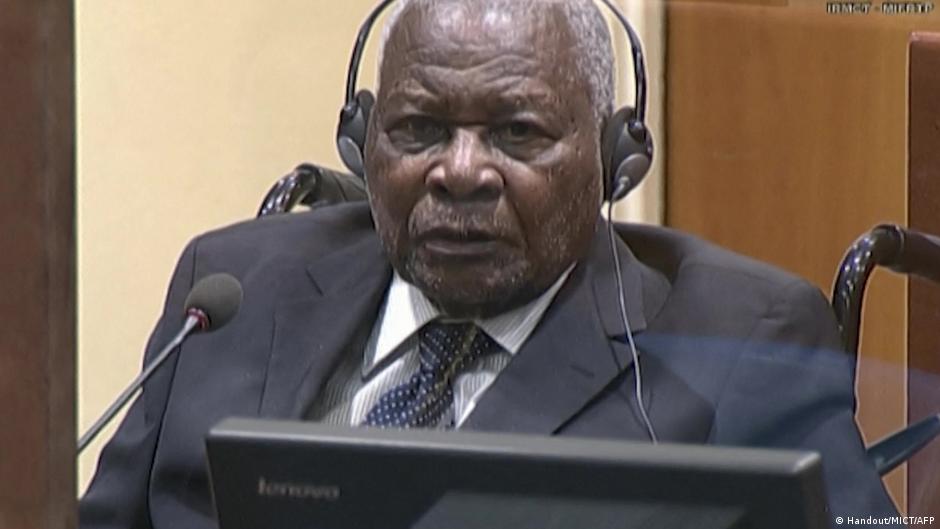
Felicien Kabuga from Rwanda was previously among the most sought-after fugitives globally. He faced allegations of promoting and financing the 1994 genocide.
Felicien Kabuga, a person under investigation for his role in the 1994 Rwanda genocide, has passed away while in detention, according to a UN tribunal on Saturday. He was 93 years old.
The court, the United Nations International Residual Mechanism for Criminal Tribunals (IRMCT), stated that it had initiated an investigation into the conditions surrounding his death.
Who was Felicien Kabuga?
Kabuga was previously among the most sought-after criminals globally.
He faced allegations of supporting and financing the massacres that occurred from April to June 1994, during which Hutu extremists killed over 800,000 Tutsis and moderate Hutus within 100 days.
The massacre began following the downing of a plane carrying Rwandan President Juvenal Habyarimana over the capital, Kigali, on April 6, 1994, resulting in the death of the Hutu leader.
Kabuga was a close associate of Habyarimana and his political organization.
Fleeing for years
Kabuga avoided capture for over 20 years following the genocide, utilizing a series of fake passports and supported by a group of former Rwandan associates.
A warrant for his arrest was issued in 2013, with a $5 million reward offered.
He was eventually apprehended in 2020 in France andextradited to The Hague.
The trial commenced in 2022. Kabuga faced charges including genocide, incitement to commit genocide, conspiracy to commit genocide, along with persecution, extermination, and murder.
Prosecutors claimed that Kabuga, who was once one of Rwanda’s wealthiest individuals, was the main force behind Radio-Television Libre des Mille Collines (RTLM), which encouraged ethnic Hutus to murder Tutsis.
He pleaded not guilty.
Why was he considered unsuitable to face trial?
Kabuga, however, was subsequently deemed unsuitable to face trial due to dementia.
The choice upset numerous genocide survivors in Rwanda, who believed his offenses warranted the highest possible punishment.
Kabuga was also considered too unwell to return to Rwanda.
Without any nation willing to take him in, Kabuga stayed at the UN facility in The Hague.
Edited by: Sean Sinico
Author: Srinivas Mazumdaru (with AFP, AP, Reuters, dpa)