Former Nairobi Governor Mike Sonko Celebrates Court Victory, Gains Access to KSh537 Million
The Court of Appeal of Kenya has delivered a significant ruling, clearing the way for former Nairobi Governor Mike Sonko to access over KSh537 million that had been frozen for years. The appellate court dismissed an application by the Assets Recovery Agency (ARA), effectively upholding a prior High Court decision and marking a major victory for the former governor after a protracted legal battle.
The ruling, delivered on Wednesday, March 25, saw the appellate court refuse to grant a stay on the funds, which had been frozen since 2020 as part of investigations into alleged proceeds of crime. This decision brings a sense of relief and closure for Sonko, who has been embroiled in legal challenges for approximately six years.
Sonko’s Joyful Reaction to the Ruling
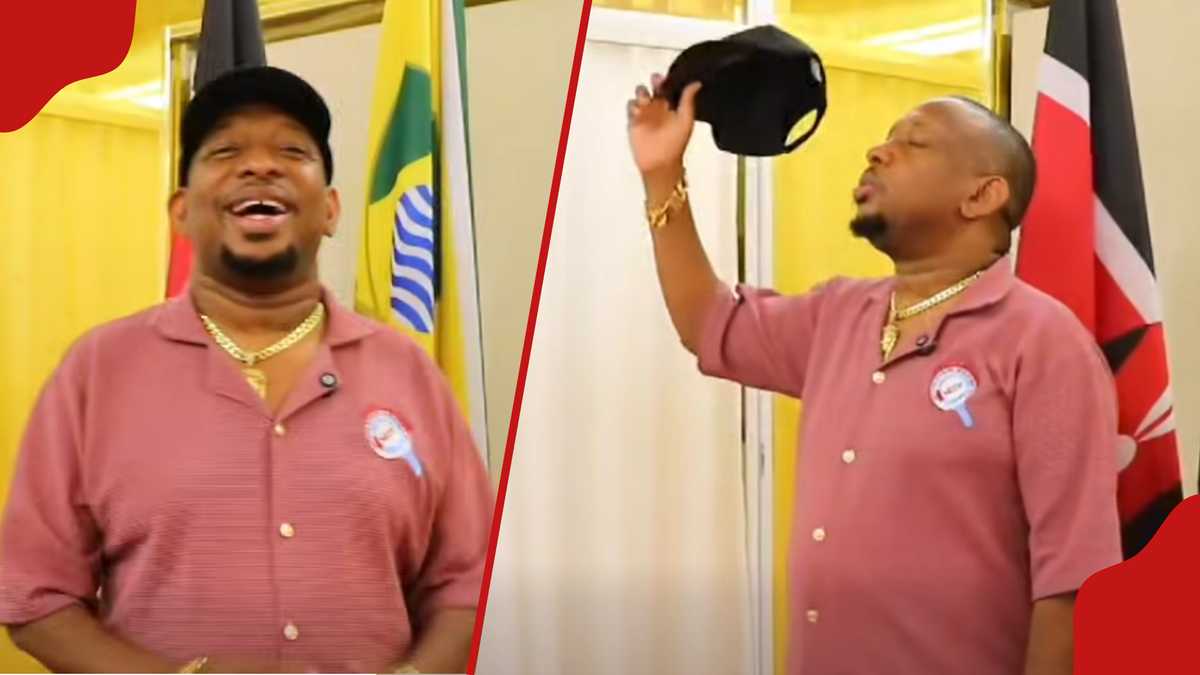
Moments after the Court of Appeal’s decision, Mike Sonko took to social media to express his profound gratitude and elation. In a video that quickly gained traction online, the former governor was seen joyfully singing a popular Swahili worship song, waving his cap in a clear display of celebration. He repeatedly voiced his thanks, signalling his deep appreciation for the favourable judgment.
Speaking following his public display of joy, Sonko reflected on the arduous legal journey, characterising the ruling as a monumental personal triumph after enduring years of uncertainty. He highlighted the protracted nature of the dispute, noting that legal proceedings had dragged on for six years, with repeated court appearances and appeals filed by the ARA whenever a judgment favoured him.
“I don’t want to say much,” Sonko stated. “You know why I thank God and why I am at peace today. I thank God for the great miracle, despite all the suffering that has been there. Each time justice prevails in court, those Asset Recovery people rush to file an appeal, and this has gone on for the last six years.”
A Cautious Approach to Accessing Funds
Despite regaining legal control over the substantial sum, Sonko indicated that he would not be rushing to withdraw the money. He explained that the funds are currently held in fixed deposit accounts across various financial institutions. This suggests a deliberate and cautious approach as he navigates the post-ruling landscape.
Furthermore, Sonko acknowledged that the legal process might not be entirely concluded, noting the ARA’s potential to escalate the matter to the Supreme Court. “Even now, I know they have the right to move to the Supreme Court,” he remarked. “I will not be in a hurry to withdraw my money, which is in different banks; fixed deposit accounts across various banks. My faith remains unshaken because I serve a faithful God who has never failed me. I thank God very much for these miracles, and I also thank those who prayed for me during the difficult times, because we came to see who our true friends were and who were not.”
Legal Basis for the Appellate Court’s Decision
The appellate court’s ruling was based on a well-established legal principle concerning the nature of court orders. A three-judge bench, consisting of Justices K. M’Inoti, E. C. Mwita, and B. Ongaya, declined to grant the ARA’s request for a stay of execution. They emphasised that courts are generally unable to suspend what is legally defined as a “negative order” – an order that merely dismisses a case without imposing any enforceable obligations on a party.
“It is a well-established principle that this Court will not issue an order of stay of execution where a court has merely dismissed a suit,” the judges stated in their ruling.
The bench concurred with the arguments presented by Sonko’s legal counsel, Harrison Kinyanjui. Kinyanjui had contended that the ARA’s application was legally flawed, particularly arguing that preservation orders issued under the Proceeds of Crime and Anti-Money Laundering Act (POCAMLA) automatically lapse once a matter has been conclusively determined on its merits.
Insufficient Evidence and Procedural Concerns
In their detailed judgment, the appellate judges highlighted a critical deficiency in the ARA’s case: the agency failed to present sufficient evidence directly linking the KSh537 million to the proceeds of crime. This finding strongly reinforced the initial decision made by High Court judge Sifuna on October 1, 2025, which had ruled in Sonko’s favour.
The court also expressed reservations about the underlying logic of the ARA’s application. It questioned why the agency sought a stay of execution when the existing legal framework already provides established mechanisms for the preservation of disputed funds during legal proceedings.
“The dismissal order cannot be enforced, and is not capable of execution… the High Court simply determined the suit,” the bench elaborated. The judges underscored that a dismissal order, by its nature, does not compel any party to undertake specific actions, making it inherently unenforceable. Consequently, the ARA’s application was dismissed, and costs were awarded to Sonko, further solidifying his legal standing after years of intense courtroom battles.