US Security Guarantees Tied to Donbas Concessions, Claims Zelenskyy
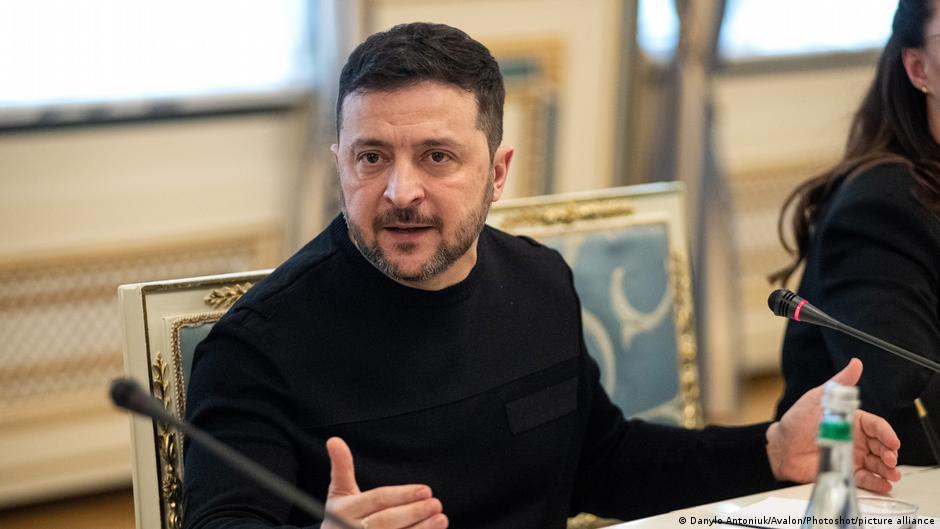
Ukrainian President Volodymyr Zelenskyy has asserted that the United States has linked the provision of future security guarantees to Ukraine with Kyiv’s willingness to withdraw from its eastern Donbas region. These remarks have reportedly been met with approval in Russia, which is currently intensifying its military operations.
The US’s stance, as described by President Zelenskyy, suggests that security assurances for Ukraine are contingent upon Kyiv relinquishing control over the entire eastern Donbas region to Russia. This development comes as a delegation of Russian lawmakers is en route to Washington for discussions with their American counterparts.
Kremlin spokesperson Dmitri Peskov expressed optimism regarding the visit, stating, “We hope that these first, cautious steps will contribute to the continued revival of our bilateral relations.” He added that President Vladimir Putin had outlined “the most important targets” for the delegation and would be kept “extensively informed.”
This parliamentary delegation’s trip occurs at a time when negotiations aimed at resolving Russia’s ongoing invasion of Ukraine, now entering its fifth year, appear to have reached an impasse. Despite three rounds of talks held in Abu Dhabi and Geneva earlier this year between US, Russian, and Ukrainian negotiators, a breakthrough remains elusive.
The Core Sticking Point: Donbas and Security Assurances
The primary obstacle in these negotiations remains Moscow’s unwavering demand that Kyiv cede the entirety of its industrially significant eastern regions of Luhansk and Donetsk. These territories are, for the most part, though not entirely, under the occupation of Russian forces.
Conversely, Kyiv is resolute in its objective to secure concrete security guarantees from its Western allies. These assurances are sought in both financial and military forms, intended to serve as a deterrent against any future resurgence of Russian aggression.
President Zelenskyy relayed to Reuters news agency on Wednesday, “The Americans are prepared to finalize these guarantees at a high level once Ukraine is ready to withdraw from Donbas.” Concurrently, the European Union’s High Representative for Foreign Affairs and Security Policy, Kaja Kallas, indicated that the bloc shares concerns regarding perceived pressure on Ukraine to cede territory.
Speaking on the sidelines of a G7 foreign ministers’ meeting in France on Thursday, Kallas described such an approach as “clearly a wrong approach.” She elaborated, “It is, of course, the Russian playbook of negotiations: demanding something that has never been theirs. This is a trap that we should not walk into.”
Understanding the Donbas: A Region of Strategic Importance
The Donbas region encompasses approximately 6,000 square kilometers (3,700 square miles), with a significant portion, largely within Donetsk, remaining firmly under Ukrainian control. This Ukrainian-held territory includes a crucial defensive line of heavily fortified towns such as Slovyansk, Kramatorsk, Kostyantynivka, and Pokrovsk.
President Putin has declared that control over the entire Donbas, along with the partially occupied Ukrainian regions of Kherson and Zaporizhzhia—a territory he refers to as “Novorossiya” or “New Russia”—is a fundamental objective of the Russian war effort and a prerequisite for any ceasefire.
Should Ukraine refuse to relinquish these territories, Putin has threatened to seize them by force. However, according to assessments by the Washington-based Institute for the Study of War (ISW), completing such an undertaking at Russia’s current rate of advance could potentially “take several years.”
President Zelenskyy emphasized to Reuters the importance of the eastern territories for Ukraine’s security, stating, “I would very much like the American side to understand that the eastern part of our country is part of our security guarantees.” He also suggested that the ongoing conflict involving the United States and Israel in the Middle East is influencing US President Donald Trump’s strategy towards Ukraine.
Middle East Conflict’s Ripple Effects on Ukraine
“The Middle East definitely has an impact on President Trump and his next steps,” Zelenskyy commented. “President Trump, unfortunately, in my opinion, is still choosing a strategy of putting more pressure on the Ukrainian side.”
The assertion by President Zelenskyy that Washington has linked security guarantees to territorial concessions in the Donbas has been favorably received in Moscow. Kirill Dmitriev, Putin’s special envoy, told Reuters that this development “can’t help but make us happy.”
The conflict in the Middle East is impacting Ukraine in other significant ways. President Zelenskyy has accused Russia of attempting to blackmail the United States by offering to cease sharing military intelligence with Iran in exchange for Washington cutting off its intelligence data to Ukraine.
“I have reports from our intelligence services showing that Russia is this and saying: ‘We will not pass on intelligence to [Iran] if America stops passing intelligence to Ukraine,'” Zelenskyy stated. “Isn’t that blackmail? Absolutely.”
While Russia has denied any involvement in assisting Iran, Zelenskyy has claimed that some Iranian drones utilized in attacks against US and allied military assets in the Middle East have contained Russian components.
Conversely, Ukraine has found opportunities arising from the Iran conflict. It has leveraged its hard-won expertise in drone warfare by offering its services to Gulf states that are facing attacks from Iranian “Shahed” drones, which Russia has extensively deployed in Ukraine over the past four years.
Potential Diversion of US Weapons to the Gulf
Adding to the complexities, a report in The Washington Post on Thursday indicated that the Pentagon is considering redirecting munitions originally designated for Ukraine to the Gulf region. This potential diversion stems from the strain on US military supplies caused by the war against Iran.
A Pentagon spokesperson informed the US newspaper that the Defense Department is committed to “ensure that US forces and those of our allies and partners have what they need to fight and win.”
Among the armaments that could reportedly be rerouted are critical air defense interceptor missiles, including Patriot missiles, which are currently the sole weapons capable of neutralizing Russian ballistic missiles.
According to President Zelenskyy, the US produces approximately 60 to 65 Patriot missiles per month, totaling around 700 to 800 annually. He noted, “And on the first day in the Middle East war, 803 missiles were used.”
Despite these concerns, NATO Secretary General Jens Stoltenberg has stated that the supply of US equipment to Ukraine remains consistent. President Zelenskyy also expressed gratitude to the Trump administration for maintaining supplies thus far.
“Deliveries to us were not stopped,” he said in his interview with Reuters. “But this supply of Patriot missiles is not as large as we need.”
Escalating Drone Warfare Between Russia and Ukraine
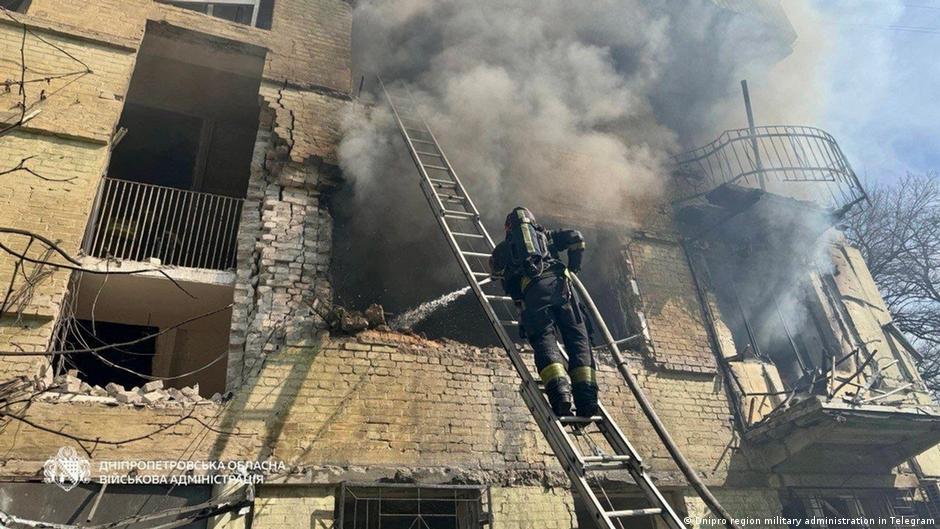
In parallel with these strategic developments, both Russia and Ukraine have engaged in drone strikes. In the early hours of Thursday, Russian attacks targeted four energy facilities in Ukraine’s southern Odesa region, resulting in power outages for thousands of residents.
The energy company DTEK reported extensive damage, stating on the Telegram messaging app, “The damage extensive, will take time.” While power was restored to 31,500 families in the region, an additional 33,400 remained without electricity.
Meanwhile, Ukrainian drones reportedly struck the Kirishi oil refinery in Russia’s northwestern Leningrad region. Regional governor Alexander Drozdenko confirmed the attack, noting that over 20 drones were intercepted but acknowledging that “There is damage in the industrial area.”
The Kirishinefteorgsintez oil refinery, one of Russia’s largest, halted processing on Thursday, according to two industry sources speaking with Reuters. These sources estimate that approximately 40% of Russia’s crude oil export capacity has been curtailed due to drone attacks, the seizure of shadow fleet tankers, and the closure of the Druzhba pipeline within Ukrainian territory.
Intensified Fighting in the Donbas
In the Donbas region itself, Russian troops are reportedly preparing for a new spring offensive against the fortified “Donetsk fortress belt.” Fierce combat is ongoing along the approximately 1,250-kilometer (750-mile) front line, according to Ukrainian Commander-in-Chief General Oleksandr Syrskyi.
Elina Beketova of the Washington-based Center for European Policy Analysis observed to the Associated Press that “Over the past weeks, the Russians have intensified pressure on the battlefield and in the air.”
Retired Vice Admiral Robert Murrett, deputy director of Syracuse University’s Institute for Security Policy and Law, added that Russia is experimenting with “new approaches” at the “tactical level,” including the integration of mechanized infantry and armored units into its offensive operations.