The Fragile Economy Under Global Pressure
Nigeria’s economy is facing a severe test as the ongoing conflict in the Middle East drives up global energy costs. This situation has exposed the vulnerabilities of an economy that is not only dependent on oil but also highly susceptible to external shocks. Aliko Dangote, the president of the Dangote Group, recently warned that a prolonged crisis could push parts of Africa into a situation similar to the economic retreat experienced during the COVID-19 pandemic. His warning highlights the gravity of the current moment and the need for urgent action.
The Oil Paradox
In theory, when crude prices rise due to tensions in the Middle East involving Iran, Israel, and the US, Nigeria should benefit from stronger export earnings. However, in practice, the opposite often occurs. Fuel pricing, exchange-rate vulnerability, and import dependence transmit global shocks directly into daily life. While the government may see an increase in revenue, citizens face harsher survival costs.
Dangote emphasized the lack of savings buffers in Africa, where millions live day-to-day. If they don’t work, they don’t eat. His reference to reduced work schedules was not about pandemic restrictions but about the unbearable cost of transport and energy in economies with large informal sectors and weak safety nets. Inflation can reach a point where mobility itself becomes an economic burden.
Fuel Price Pressures
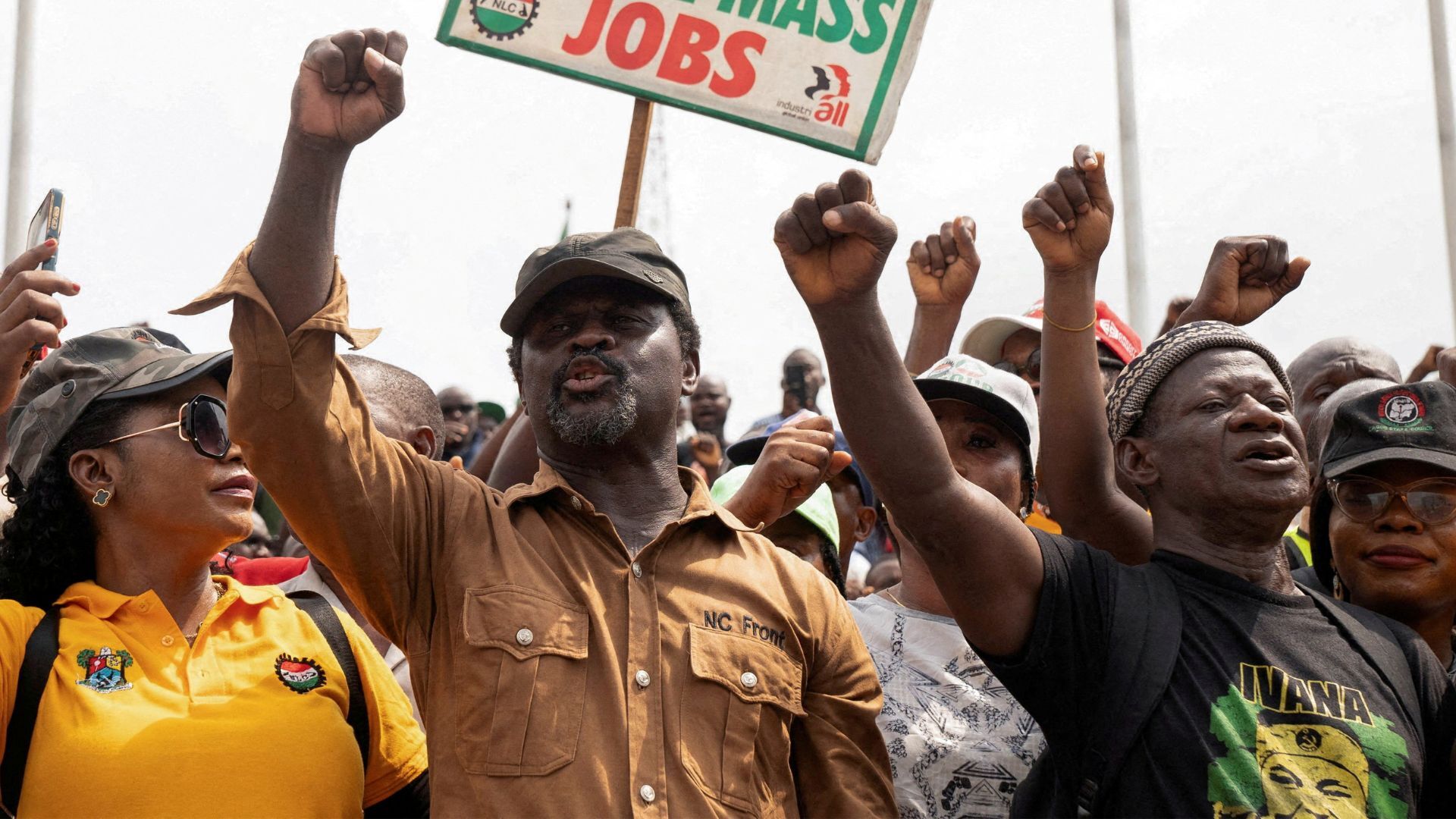
The crisis has driven petrol prices above N1,000 per litre, with some areas approaching N1,400 per litre. These price increases have a ripple effect: transport fares rise, distribution costs increase, food becomes dearer, and manufacturers pay more for generator fuel. Small businesses must decide whether to remain open, cut output, or absorb losses. In a country where unreliable electricity already forces self-generation, higher fuel prices operate like a tax on survival.
Dangote’s mention of barbers, bakers, and small-scale operators points to the most vulnerable economic zone: the lower middle and informal sectors, where earnings are thin, energy use is unavoidable, and pricing power is weak. A barber cannot keep raising prices without losing customers; a bread seller cannot pass every extra cost on; a small manufacturer cannot charge more without shrinking sales. Margins narrow, output softens, and employment becomes precarious.
Macroeconomic Transmission
Prof. Akpan Ekpo of the University of Uyo notes that pump price rises affect virtually every sector. Transport costs rise, agriculture becomes more expensive, and inflation gathers momentum. Energy shocks don’t stay at filling stations; they move through markets, supply chains, and household consumption. In an economy already weighed down by hardship, fuel-led inflation intensifies deprivation rather than merely inconveniencing consumers.
Prof. Godwin Owoh of the Society for Analytical Economics acknowledges that wars carry negative consequences for globally linked countries, even non-participants. Yet he sees an opportunity in crude oil moving from $80 to above $100 per barrel, and stronger revenue inflows for oil producers such as Nigeria. However, his optimism is qualified: Nigeria often lacks fiscal discipline to convert external windfalls into domestic stability.
David Adonri of Highcap Securities extends this caution. Rising crude prices may improve external revenue and upstream petroleum earnings, but gains may never reach households meaningfully. Since market reforms transferred cost burdens to consumers, inflationary effects likely dominate welfare effects. Macro gains coexist with micro distress; improvements in public revenue don’t automatically translate into social relief.
Exchange Rate and Trade Pressures
Geopolitical conflict pushes investors toward safe-haven assets, especially the US dollar. For Nigeria, this means renewed pressure on the naira. A weaker currency raises local import costs, deepens cost-push inflation, and complicates policy choices. The Middle East crisis is therefore not merely an oil-price story but also an exchange-rate, trade, and confidence story. Nigeria may earn more from crude yet still lose ground through currency weakness and higher import bills.
Agricultural exports, including cocoa, ginger, and sesame, are facing disruptions due to rising freight costs and shipping uncertainty. This undermines diversification efforts, which are presented as Nigeria’s route out of oil dependence. Analysts explained that when geopolitical instability drives freight costs higher, non-oil exporters face goods delays, margins shrink, and competitiveness weakens. The crisis thus inflates domestic fuel costs while complicating the expansion of non-oil trade.
The Dangote Refinery Dilemma
The most sensitive issue isn’t the war alone but the domestic policy battle around fuel import licensing and the Dangote Refinery’s role. Dangote’s reported threat to export all refined products if regulatory opacity persists introduces fresh risk. The refinery was expected to reduce Nigeria’s dependence on imported fuel and buffer against external shocks. An oil industry analyst, Mr. Jude Abang, warned that if unclear licensing practices or market structures tilted toward import interests, this asset would be undercut, thereby weakening one of Nigeria’s few safeguards.
According to Abang, the disagreement reveals downstream market problems: poor transparency, regulatory distrust, and competition for market share. “In times of global stress, this opacity proves costly, producers hedge, investors hesitate, and consumers pay through supply and price uncertainty,” he stated.
Ahmed Fashola of the Independent Petroleum Marketers Association argued that Nigeria should prioritize domestic refining and support Dangote, as local supply already cushions the country from far worse fuel shocks. The fact that Nigeria still feels pain doesn’t mean local refining has failed; it may mean the refinery has prevented a deeper crisis.
Yet policy incoherence risks turning an asset into instability. If Dangote redirects volumes abroad where demand is strong and policy signals clearer, Nigeria could face tighter domestic supply, renewed scarcity fears, and fresh upward pressure on pump prices. The irony would be severe: as Africa looks to Dangote Refinery as an alternative supply hub amid Middle East disruption, Nigeria itself could become more insecure if regulation fails to align with the national energy strategy.
Conclusion
The Middle East crisis exposes Nigeria’s vulnerability to external shocks and the unfinished business of domestic reform. The conflict has raised oil prices, freight costs, and inflation risks. But it also shows Nigeria now possesses a strategic instrument in local refining that could soften such shocks, if policy is transparent and coordinated. Dangote’s work-from-home warning speaks to social fragility; his export threat speaks to policy fragility. Together, they underline that when global turmoil meets domestic uncertainty, ordinary Nigerians trying to move, produce, trade, and eat bear the heaviest burden.