Hong Kong’s Stablecoin Strategy and the Future of Digital Finance
As Hong Kong prepares to issue its first stablecoin licences, much of the debate frames stablecoins in Hong Kong, China’s digital renminbi and US dollar-backed tokens as rival currencies competing on the same track. That comparison, however, risks missing the point.
While these instruments increasingly intersect across payments and cross-border settlement, they were not designed to solve the same problems. Hong Kong’s relevance in global finance has never rested on issuing a fiat currency. Its strength lies in free capital flows, regulatory credibility and its role as a connector between financial systems.
The objective of Hong Kong’s stablecoin strategy does not seem to be scale or mass retail adoption but whether stablecoins can operate within a tightly licensed framework that meets institutional standards on governance, reserve management, anti-money-laundering controls and financial stability.
Stablecoins in Hong Kong are therefore best understood not as consumer payment tools, but as regulated connectors – enabling capital to move between traditional finance and global onchain markets within a compliant environment. This mirrors its long-standing role as an offshore interface for capital and financial intermediation, a role that is becoming more relevant as digital assets mature.
The Role of E-Payments in Modernizing Hong Kong
After taxis, wet markets should adopt e-payments. Last week the taxi trade in Hong Kong began offering e-payment options. Better late than never.
I have always kept careful records of my cash spending. Since January 1, aside from taxis and purchases at wet markets, all my payments have been made with Octopus, Alipay, WeChat Pay, credit cards or other online platforms, each of which keep records of all transactions in its own way.
I do not wish to speculate on why taxi drivers had to be effectively compelled to adopt e-payments, but I am surprised that many vegetable, meat and fish vendors in our wet markets remain reluctant to go cashless.
It would be helpful if the government required all retail businesses to offer at least two cashless payment options, as taxis do. Hong Kong prides itself on being a leader in information technology, yet in terms of cash usage we lag behind mainland China. There, paying with cash is so uncommon that a customer offering notes can seem out of place.
I hope to see Hong Kong largely cashless before 2027.
Enhancing eHealth for Stroke Prevention
Enhance eHealth to support stroke prevention. We refer to “Hong Kong to expand scheme cutting stroke patient transfer time by 80 minutes” (March 11). As the stroke diversion pilot programme, which shows the city’s commitment to emergency care innovation, expands, we propose enhancing it through strategic eHealth integration.
Based on patients’ medical histories in eHealth records, a labelling system could be developed to identify individuals at high risk of stroke by leveraging machine learning models and big data, an approach being employed by at least one hospital in Singapore. These labels would help ambulance personnel arriving at emergency scenes make faster decisions about whether to transport patients directly to public hospitals equipped with relevant surgical facilities. Leveraging big data analytics on stroke risk factors could optimise government resource allocation across hospitals and regions.
These enhancements are contingent upon greater data sharing from private hospitals and clinics within the eHealth ecosystem. Currently, limited private sector participation constrains the system’s predictive capabilities. Enhanced data sharing would create a comprehensive stroke risk database, enabling proactive identification of high-risk patients and strategic resource deployment.
The current programme’s success provides a foundation for data-driven expansion that could transform Hong Kong’s stroke care from reactive to predictive.
Diverse Approaches to Digital Currencies
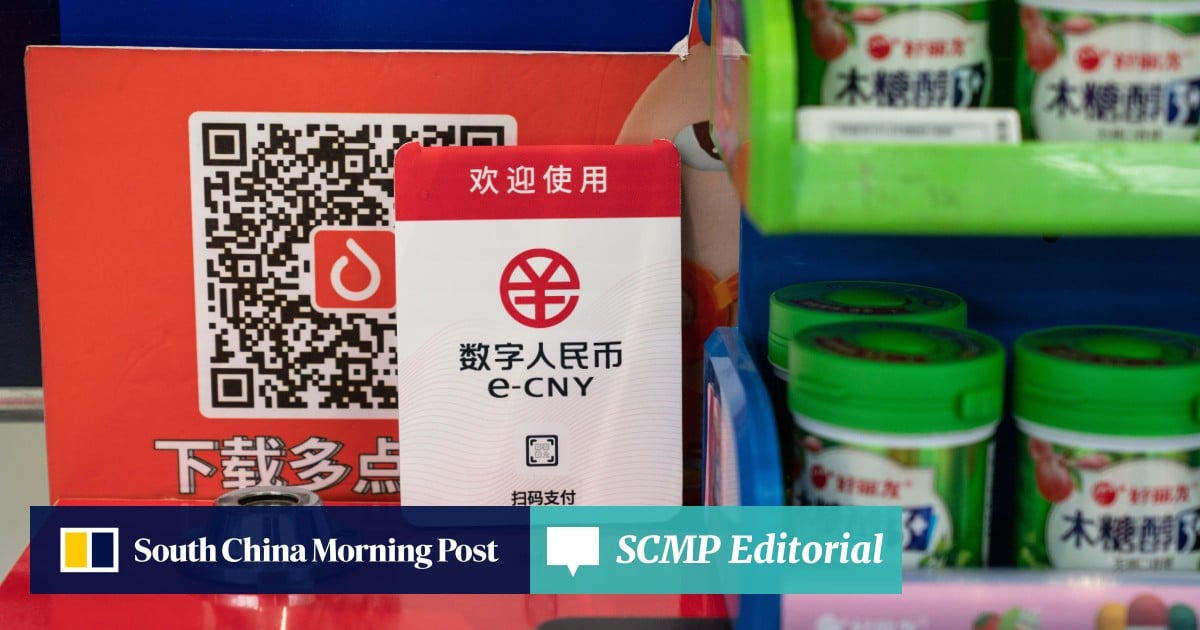
China’s digital renminbi follows a fundamentally different logic. From the outset, eCNY has been defined as a digital form of legal tender, equivalent to physical cash and issued by the central bank. Its deployment has focused on domestic, real-economy use cases such as retail payments and public services, where reliability, traceability and policy control are prioritised. Even as cross-border experimentation emerges, it remains an extension of sovereign monetary infrastructure.
US dollar-backed stablecoins represent a third model. They expanded organically through market adoption, mirroring how the dollar has long functioned globally – sustained by demand, liquidity and network effects over direct central bank distribution. Stablecoins extend that logic into the digital economy, acting as private-sector channels for dollar liquidity at a time when parts of the world are exploring local currency settlement and alternatives to dollar-centric rails.
These approaches operate at different layers of the financial system: Hong Kong emphasises regulated connectivity, China reinforces sovereign monetary control and the US extends market-driven distribution. Their overlap lies in application, not in underlying purpose.
This is why the digital currency landscape is unlikely to converge around a single model, but a layered system, where different instruments serve different functions – sometimes in parallel, sometimes in coordination.
Hong Kong’s stablecoin moment, then, is less about joining a race and more about defining its role: enabling the safe clearing, settlement and exchange of value across systems in a more fragmented, multicurrency digital world, rather than competing to define the currency itself.