Nepali Congress Grapples with Internal Strife Post-Election
Kathmandu, Nepal – The Nepali Congress, a major political force in Nepal, is once again embroiled in internal conflict following a disappointing performance in the recent parliamentary elections. Despite managing to maintain a degree of ideological unity leading up to the March 5 polls, the party is now facing significant turmoil, a stark contrast to its previous ability to navigate internal divisions.
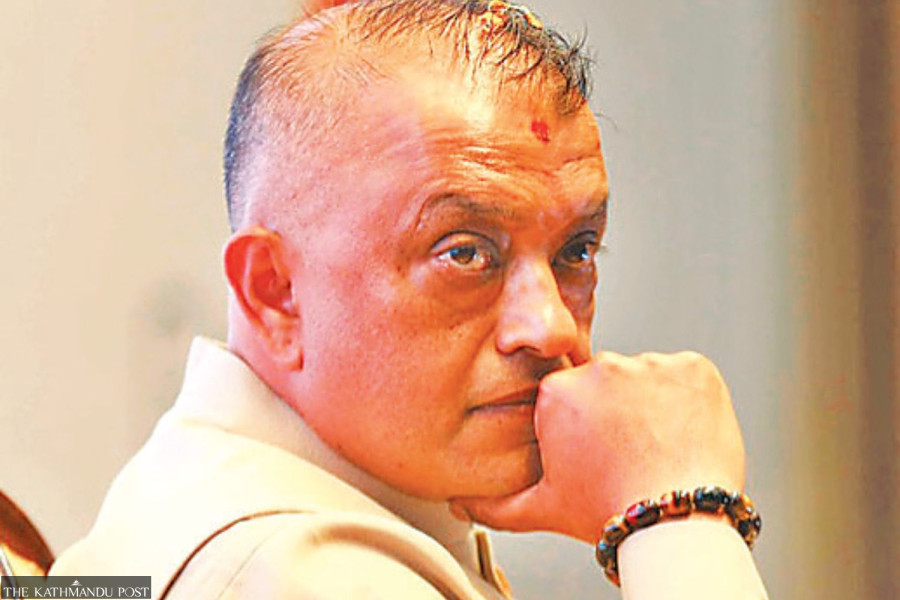
The snap elections, held in the aftermath of the September Gen Z uprising, saw the Nepali Congress secure 38 seats in the 275-member lower house, emerging as the second-largest party. However, this outcome represented one of the weakest showings in the party’s historical record. Adding to the party’s woes, its chief, Gagan Kumar Thapa, personally lost his election bid in the Sarlahi constituency 4.
In the wake of this electoral setback, Thapa, who had been elected party president at a special general convention in January, tendered his resignation on Thursday, citing moral responsibility for the party’s poor performance. However, a subsequent central committee meeting held on Sunday saw an unanimous rejection of his resignation. Committee members contended that the responsibility for the electoral defeat should be shared across the entire party organisation, rather than resting solely on the leadership. Furthermore, they argued that a change in leadership during a period of crisis would only serve to further weaken the party.
The central committee meeting, which concluded on Sunday, also designated the 15th general convention as its primary organisational objective moving forward. While no specific date has been set for this convention, it is now positioned as the party’s next significant internal undertaking.
Dissident Factions Charting Parallel Courses
Meanwhile, a prominent dissident faction, which had opposed the January special convention and is led by former president Sher Bahadur Deuba and influential leader Shekhar Koirala, has declared its intention to pursue parallel activities within the party structure. It is noteworthy that the current central committee, formed as a result of the special convention, does not include any representatives from this dissident group.
This faction has alleged that the central committee has unfairly placed blame on the former leadership for the party’s electoral defeat. In response, the Deuba faction, in conjunction with the Koirala camp, has resolved to conduct its own independent activities.
Review Highlights Internal Disagreements and Challenges
A preliminary review of the House of Representatives elections was presented at a meeting of the central working committee on Friday by Bishwa Prakash Sharma, the party’s Vice-President and coordinator of the central election mobilisation committee. With party president Thapa having resigned, Sharma presided over this crucial meeting. His review report identified several contributing factors to the party’s disappointing electoral performance, including the role played by Deuba loyalists.
Sharma’s comprehensive 27-point review of the party’s electoral defeat included a point highlighting that opposition to the special convention was a matter of individual freedom. Nevertheless, he strongly emphasized that Nepali Congress leaders and members should have actively supported candidates running under the party’s established “tree” symbol, irrespective of their personal disagreements with the special convention’s outcome.
He further elaborated on instances where some Congress members remained conspicuously silent and did not participate in campaigning for the party or its candidates. Sharma described this behaviour as “silent killing,” and noted that some individuals even actively sought to undermine the party’s efforts.
The review document stated: “This not only had a general impact on the party but also caused the greatest damage to the future political prospects of those individuals themselves. Questions of morality have been raised over such silence and inaction, and instances of non-cooperation are now under scrutiny within the party’s disciplinary framework.”
Key Figures and Their Roles in the Electoral Outcome
The report also shed light on the actions of key figures. Sher Bahadur Deuba, for instance, remained largely inactive in the lead-up to the polls after being denied a party ticket. He departed for Singapore for medical treatment a week prior to the election. While party president Thapa had made decisions regarding first-past-the-post (FPTP) tickets, it was reportedly Deuba who was instrumental in securing proportional representation (PR) tickets, according to party insiders. In the March 5 elections, 18 lawmakers were elected through the FPTP system and 20 through the PR system.
Factions Set to Nominate Their Own Candidates
Adding to the internal friction, a meeting of the Deuba-Koirala faction on Sunday resolved to field its own candidate in the upcoming race for parliamentary party leader. While the specific candidate has yet to be finalised, a leader from the faction indicated that Bhishmaraj Angdembe might be put forward. This move signals a direct challenge to the current leadership. “We will not allow the Thapa-Sharma leadership to unilaterally pick the parliamentary party leader. We will nominate our own candidate,” the faction leader stated.
Legal Challenges and Future Uncertainty
The Election Commission Nepal had officially recognised the new central working committee, elected through the special convention, on January 18. However, the Deuba faction has lodged a writ petition at the Supreme Court challenging this decision. A hearing on this matter is scheduled for April 5.
Min Bishwakarma, a prominent Deuba loyalist, confirmed that faction meetings, which were temporarily postponed in the party’s interest during the election period, will now resume. He indicated that a “central committee meeting” of the Deuba faction will be convened in the coming days. Bishwakarma further commented that with the question of legitimacy still pending in the court, it is natural for both factions to continue their respective activities until a final verdict is reached, underscoring the ongoing uncertainty within the party.