A Fateful Mission Over the Middle East
It’s early on a Friday morning, and the two-man crew of an F-15E Strike Eagle is conducting final checks before take-off. The pilot and weapons systems officer are preparing for a mission that will take them over 800 miles from their base in north-west Jordan, into the skies above Iraq and down into south-western Iran.
The F-15E Strike Eagle, known as a “bomb truck,” is a powerful aircraft capable of carrying up to 20,000lb of mixed air-to-ground and air-to-air weapons. Designed for both air-to-air combat and long-range ground attack missions, it is a critical asset in modern warfare.
Deployment and Preparation
Deployed to the Middle East from RAF Lakenheath in Suffolk last month, the American airmen had time to reflect on their mission. They had undergone rigorous training, including low-level flying exercises in South Wales and gruelling ‘conduct after capture’ training in the Arizona desert. The confidence of the pilot and weapons systems officer was likely bolstered by the fact that no US plane had been lost to enemy fire since the war began.
Once airborne, the focus was on the task at hand. The pilot monitored engine performance, fuel status, and avionics while maintaining regular contact with command. The weapons systems officer managed the complex radar, sensor, and defense systems.
The Attack and Ejection
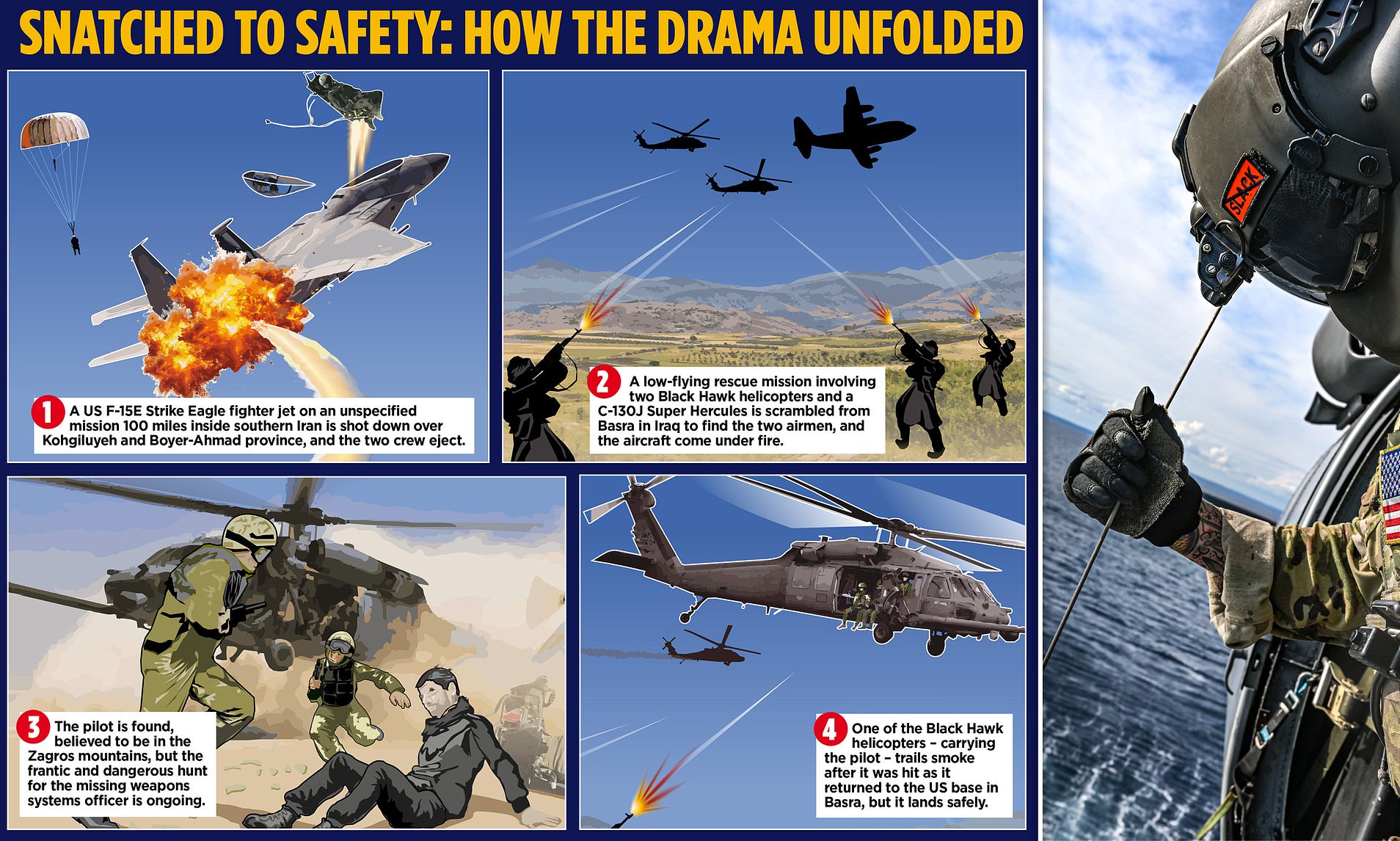
As the jet cruised at more than 1,800mph, it entered Iranian airspace. Officials indicated that the jet was heading towards the Strait of Hormuz when it was hit by a surface-to-air missile. Tehran claimed that a new air defense system was used to bring it down.
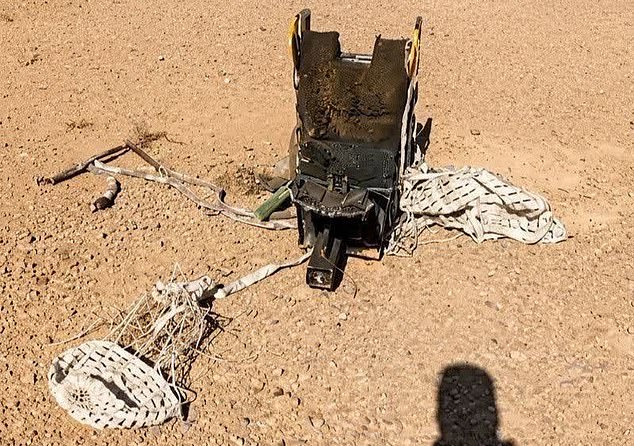
The pilot and weapons systems officer decided to bail out, pulling the ejection handles on their seats. They were propelled upwards by explosive charges, clearing the F-15 in a split second. The parachute deployment left them floating into enemy territory—the mountainous Kohgiluyeh and Boyer-Ahmad province, home to wolves, bears, and leopards.
Rescue Efforts
Ejection seats typically come equipped with survival kits and communications devices. The airmen, each armed with a pistol and a knife, likely established contact with a command center upon landing, possibly miles apart. The pilot activated a personal locator beacon, triggering an immediate search-and-rescue operation.
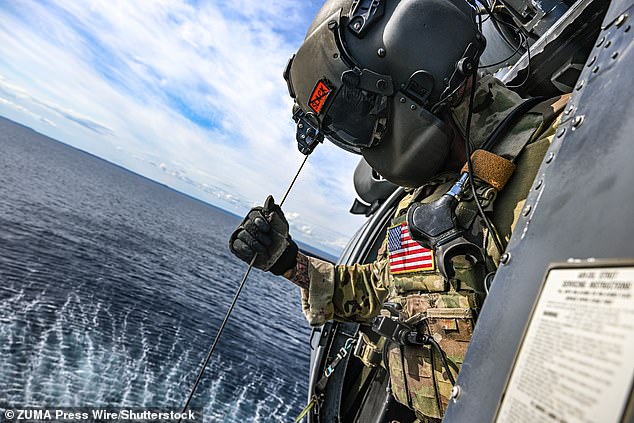
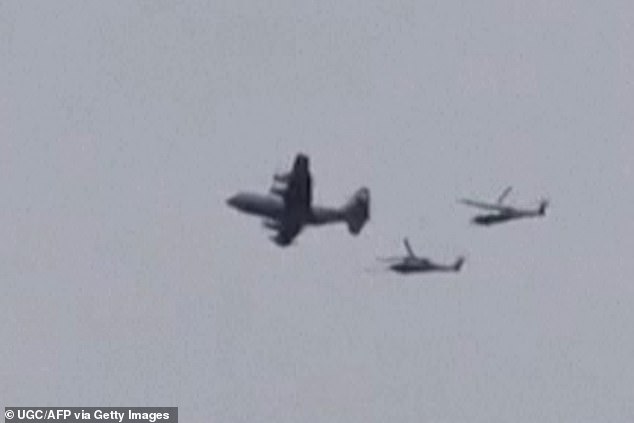
The hazardous mission involved Special Forces on the ground and Black Hawk helicopters scrambled from Basra in Iraq, accompanied by a C-130J Super Hercules. Indigenous groups in the area may have been previously contacted by US forces to create contingency plans for any rescues.
Challenges and Risks
Iranians filmed the aircraft over neighboring Khuzestan province and posted footage on social media, along with images of wreckage from the downed jet. Wreckage pictures published by Iran’s state broadcaster show the F-15’s wingtip and the top section of a vertical stabilizer.
Justin Bronk, a senior research fellow at the Royal United Services Institute in London, noted that the markings were consistent with those of the 494th Fighter Squadron based at RAF Lakenheath. However, the squadron is believed to have shifted to Jordan for the war.
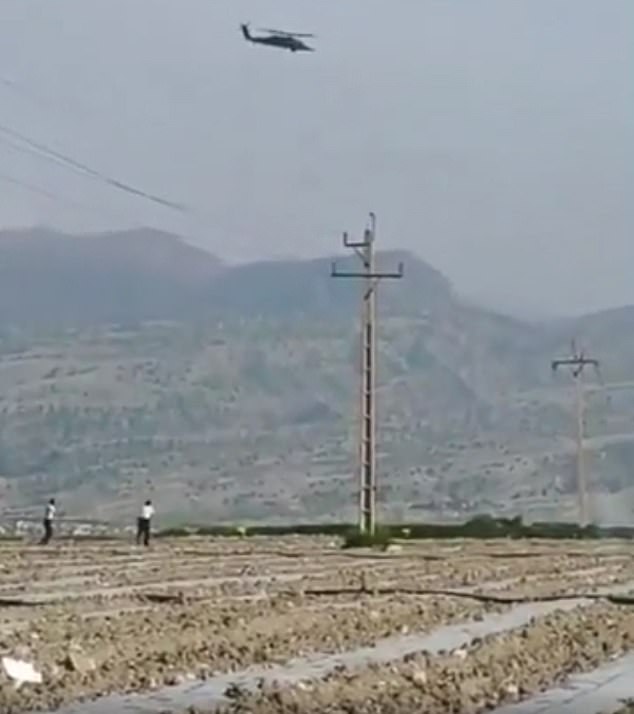
On Saturday, it was claimed that two Black Hawks and the C-130 Hercules fled the area during one rescue attempt after Bakhtiari tribesmen opened fire with rifles. Video clips on Iranian social media show civilians in traditional dress firing at low-flying aircraft in mountain valleys.
Para-Rescue Operations
Underscoring the mission’s risk, a Black Hawk was hit by ground fire but escaped to safety, while a second US military jet, an A-10 Thunderbolt II, was downed near the Strait of Hormuz, but the pilot was rescued.
US forces pinpointed the location of one of the F-15 crew, understood to be the pilot, in the Kohgiluyeh and Boyer-Ahmad province. But they needed to act quickly. Iranians were also closing in on him.
In a tense sequence of events lasting only minutes, US helicopters came under fire, but ‘para-rescue jumpers’ managed to reach the pilot first and scoop him to safety.
‘Harrowing and massively dangerous is an understatement,’ a former commander of a para-rescue squadron said of the mission. ‘This is what they train to do, all over the world. They are known as the Swiss Army knives of the air force.’
Para-rescuers are trained as both combatants and paramedics and go through one of the hardest selection processes in the US military. They receive specialized courses in battlefield medicine, complex recovery operations, and weapons.
Ongoing Search for the Second Airman
The F-15 pilot was found in the Zagros mountains, which have one of the largest nomadic populations on Earth. Determined not to let the other valuable propaganda prize— the weapons systems officer—slip from their grasp, the Iranians have offered a £50,000 reward (the average monthly income in the region is £200) to anyone who captures the airman alive.
They have sealed off an area in the province and are conducting a painstaking search. It is unclear why it is taking US forces longer to rescue the second airman, and with every passing hour, the prospect of reaching him before the Iranians grows slimmer.