
Ancient Deep-Sea “Wrinkle” Fossils Reveal Novel Microbial Life
A groundbreaking geological discovery in Morocco is prompting a significant re-evaluation of how scientists interpret signs of ancient life, particularly in the deep-sea environment. Researchers have unearthed remarkable “wrinkle” patterns preserved within Jurassic-era rocks, shedding new light on the capabilities of early microbial communities. These findings suggest that life in the sunless depths of the ancient oceans was more complex and chemically driven than previously understood.
The fossils were identified in the Tagoudite Formation, situated in the Central High Atlas Mountains near the village of Boumrdoul. The rocks themselves contain intricate small ridges and grooves, collectively termed wrinkle structures. These formations vary in size, measuring from a few millimeters to several centimeters across. Historically, such geological features have been predominantly associated with microbial life thriving in shallow, sunlit waters, where photosynthesis is a primary energy source.
However, the Moroccan discovery presents a starkly different scenario. The wrinkle structures were found embedded in rock layers that formed approximately 200 meters below the ocean’s surface. This depth places them far beyond the reach of sunlight, rendering photosynthetic activity an impossible explanation for their formation.
Rethinking Microbial Lifestyles
The implications of this deep-sea context are profound. Scientists have concluded that the presence of these structures at such depths strongly indicates they were not created by photosynthetic microbes. Instead, the evidence points towards a different energy pathway: chemosynthesis.
Chemosynthetic organisms are a class of microbes that derive their energy from chemical reactions, rather than light. This process is crucial for life in environments devoid of sunlight, such as hydrothermal vents and, as this discovery now confirms, the ancient deep ocean floor. The research highlights that, “given their paleodepth (~200 m), it is unlikely they were formed by photoautotrophic communities.”
A Window into the Early Jurassic Ocean
The rocks containing these ancient microbial traces date back approximately 182 million years, placing them firmly within the Early Jurassic period. During this epoch, geological conditions were conducive to the transportation of significant volumes of sediment and organic material into the deeper marine realms.
Periods of heavy rainfall are believed to have intensified the flow of sediments and organic matter into the ocean depths. These deposits, known as turbidites, are characteristically formed by powerful underwater currents that carry material downslope. As these sediments settled, they created the substrate upon which microbial communities could establish themselves.
To ascertain the biological origin of the wrinkle patterns, the research team employed a multifaceted approach. They subjected the rocks to rigorous examination using advanced microscopy techniques and detailed chemical analyses. These investigations revealed elevated concentrations of carbon directly beneath the wrinkled surfaces. This carbon signature is a widely recognized indicator of past microbial activity, providing compelling evidence for the biological genesis of the structures.
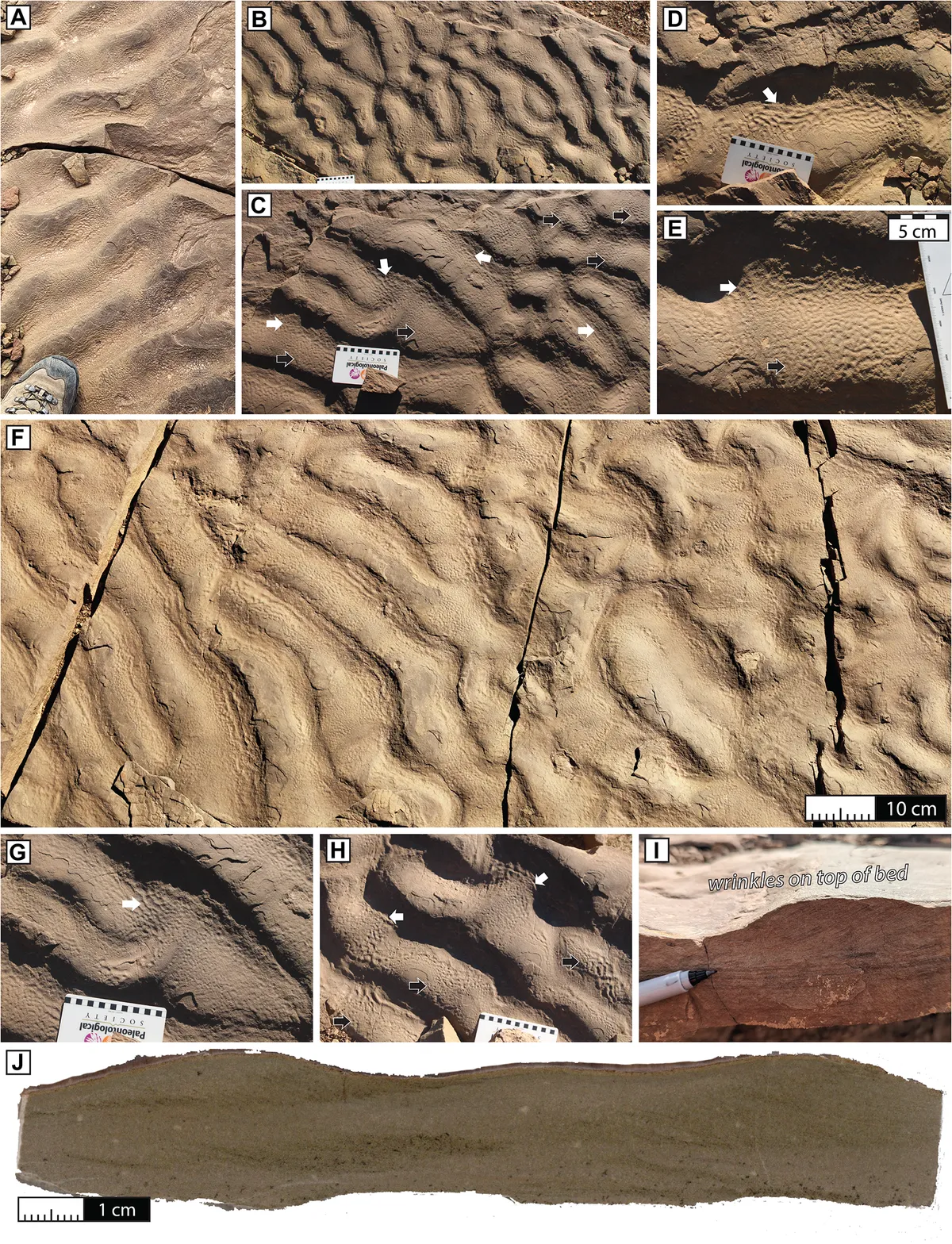
While the visual appearance of these deep-sea wrinkles bears a resemblance to those found in much older, shallow-water geological formations, their depth and distinct chemical composition tell a different evolutionary tale. The researchers propose that the microbes responsible for these formations likely subsisted on chemical compounds released from the decomposition of organic matter within the sediment. Specifically, sulfur compounds are considered a probable energy source for these ancient chemosynthetic communities.
Preservation in the Abyss
A significant factor in the remarkable preservation of these delicate microbial structures is also being explored. Typically, microbial mats, which are layered communities of microorganisms, are vulnerable to disruption by burrowing animals. However, in this particular ancient environment, it is theorized that the release of toxic chemicals during the organic matter decomposition process may have deterred such fauna. This protective effect would have allowed the microbial mats to solidify and become integrated into the geological record, preserving their distinctive forms for millions of years.
This discovery carries substantial scientific weight. It challenges the long-held assumption that wrinkle structures exclusively signify the presence of shallow, sunlit marine environments. The findings demonstrate that these patterns can also emerge in the perpetually dark and resource-scarce conditions of the deep sea, driven by alternative energy sources. The scientific team describes this as “a previously overlooked mode of preservation,” emphasizing that this revelation opens up new avenues for investigating the diversity and adaptability of ancient life in unexplored marine ecosystems. The study suggests that an expanded search for similar structures in deep-sea rock formations worldwide could reveal further insights into the hidden history of life on Earth.