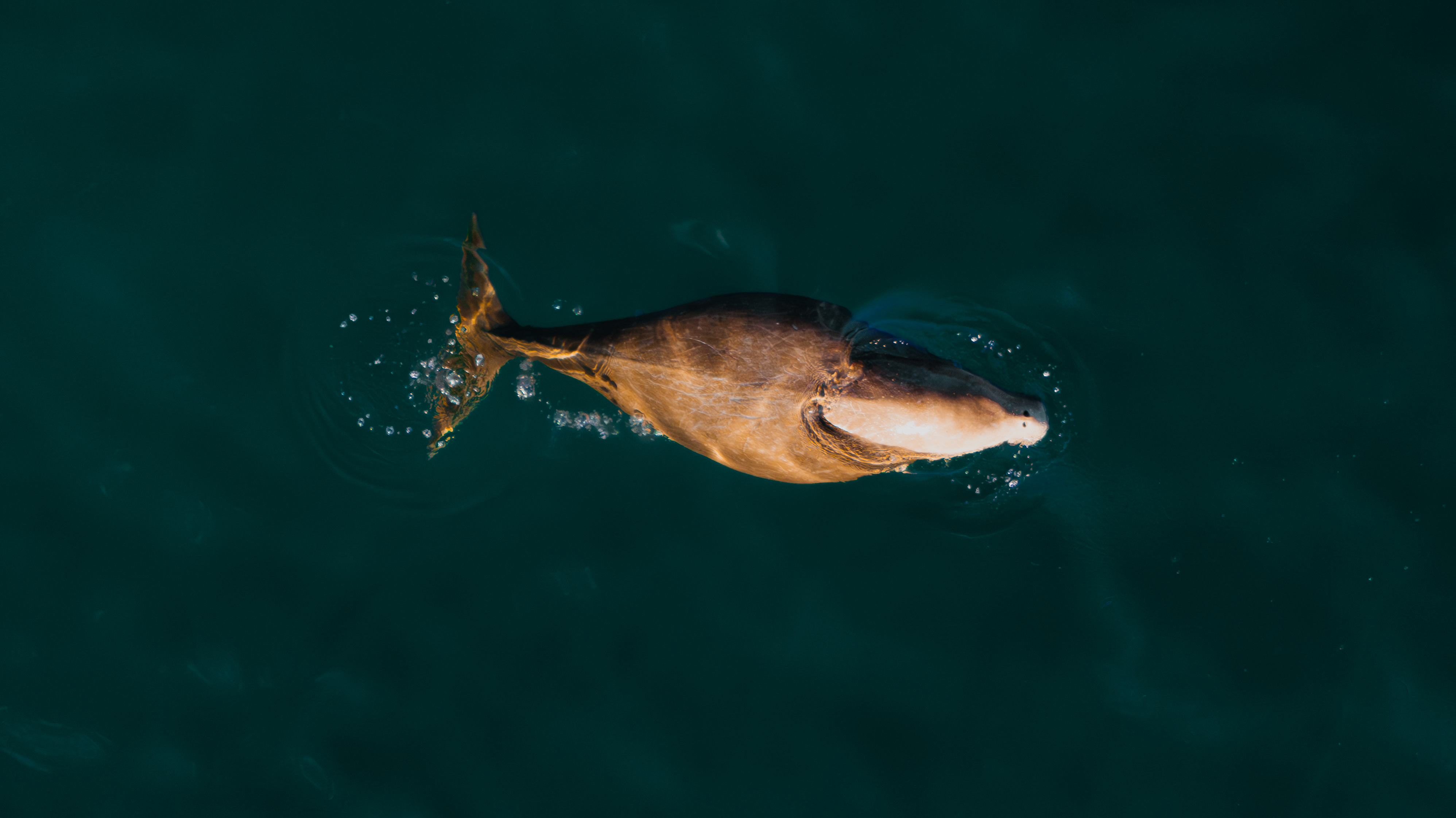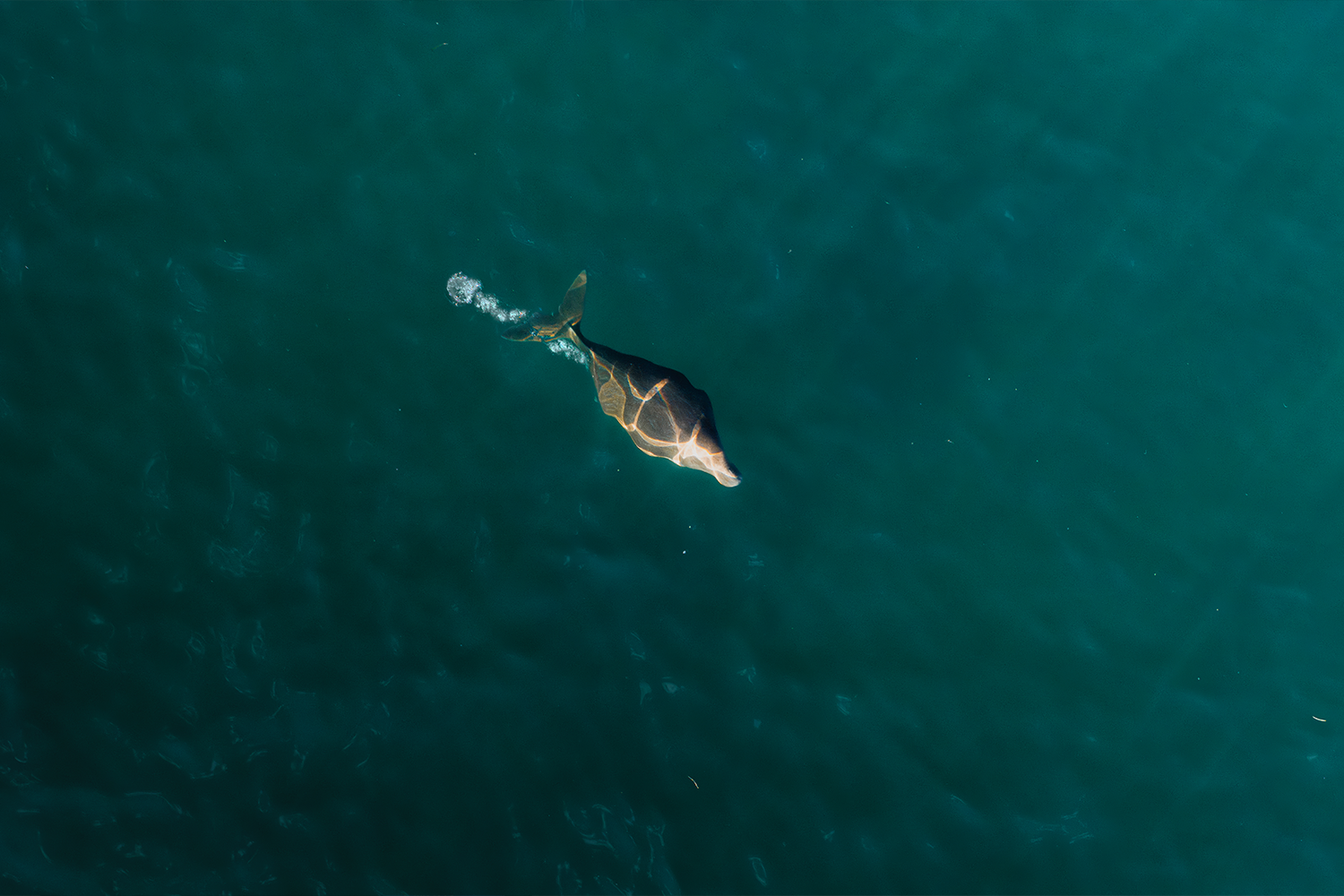
As a tourist boat made its way through Shark Bay on Australia’s west coast, the passengers were unaware of the extraordinary event taking place just a few metres away. Bubbles began to rise from two metres beneath the surface, and the creatures responsible could only be seen by the tour guide, who was observing them through his drone camera.
Jake Mason, from Shark Bay Eco Tours, described the experience as “completely fascinating” because he had never witnessed anything like it before. He was watching dugongs, a mysterious marine mammal that can grow up to three metres long — roughly the height of a basketball hoop — and weigh around 360kg, similar to a polar bear. Despite being “notoriously hard to spot,” Jake has spent the last three years searching for them, and while he has seen many over the years, this was the first time he had ever seen them releasing large amounts of bubbles.
Theory emerges as bubbles expelled from multiple dugongs
The bubbles were primarily coming from the animals’ rear ends, which intrigued both Jake and some of the world’s top dugong experts. The dugongs were feeding at depths of eight to nine metres, much deeper than usual in the region.
“It wasn’t all of them doing it, but some were surfacing with a trail of bubbles coming from their back end,” Jake said. “At first, I thought it might have been a coincidence, but the same dugong went down and a few minutes later did the same thing. When a second one did it too, I realized either they had a very gassy seagrass diet or something else was going on.”
Another species known to use bubbles for buoyancy
Human locomotion is studied in great detail, with recent advancements such as Adidas’ shoes helping athletes break the two-hour marathon barrier. In water, swimsuits designed to reduce drag have also helped athletes improve performance. However, when it comes to other aquatic animals, especially those that live underwater, there is still much we don’t know about how they navigate their environment.
Evidence suggests that manatees from Florida, which are related to dugongs, release gas to control their buoyancy and adjust their position in the water. They often use this method to sink again after surfacing. Although Jake couldn’t find any scientific studies supporting this theory, he wondered if the dugongs he saw were doing the same.
Experts weigh in on strange dugong behaviour
After reviewing images and video of the encounter, Professor Helene Marsh, a dugong specialist from James Cook University, noted that small amounts of bubbles also appeared to come from one animal’s nostrils. As a hind-gut fermenter, much of the gas released came from the colon via the anus.
“There are large pressure changes in the first 10 meters of water, and I expect this is affecting the dugong’s release of gases,” she told Yahoo News. “They are certainly known to pass a lot of wind.”
Renee Lambourn, who is studying buoyancy for her PhD, said it remains unclear whether dugongs use their digestive system and lungs to manage their movement in the water. “We have evidence that dugongs control their buoyancy by regulating the volume of air in their lungs before diving, but we have no evidence for gas in their digestive system,” she said.
She added that air trapped in the digestive system can expand as an animal reaches the surface, potentially requiring pressure to be released. “In terms of using their lungs and gas in their digestive system to fine-tune their position in the water like manatees do, it is plausible, but I have no evidence for this.”