
Bulgaria Makes History with First Eurovision Win
Bulgaria made history by securing its first-ever victory at the 70th edition of the Eurovision Song Contest, held in Vienna, Austria. The nail-biting final saw singer DARA triumph with her dance-pop track “Bangaranga,” which earned a total of 516 points. This result marked a significant milestone for the country, as it claimed the top spot over Israel’s second-place finish with 343 points.
The contest featured a vibrant lineup of 25 countries, each showcasing unique and often unconventional performances. Despite being considered strong contenders, Finland’s Linda Lampenius and Pete Parkkonen, along with Australia’s Delta Goodrem, were not the ones who ultimately took home the trophy. Instead, DARA’s energetic performance captured the hearts of both the judges and the public.
The competition was filled with a variety of eccentric entries, from Greece’s Akylas with his fast-paced track “Ferto” to Serbia’s chilling metal song “Kraj Mene” performed by LAVINA and Moldova’s intense rapper Satoshi with “Viva, Moldova!” These acts highlighted the diversity and creativity that define the Eurovision experience.
However, not all performances were met with enthusiasm. The UK’s representative, Look Mum No Computer, known as Sam Battle, received the dreaded “nul points” score in the public vote, finishing last. His performance of “Eins, Zwei, Drei” sparked mixed reactions, with some viewers expressing their disappointment on social media. One fan wrote, “I’m so sorry we entered this guys, honestly we all feel sick,” while another joked, “Not sure the [EU] will even let us rejoin after this.”
Controversy Surrounds Israel’s Participation
The build-up to this year’s Eurovision final was overshadowed by controversy surrounding Israel’s participation. Five countries— Ireland, Spain, Iceland, Slovenia, and the Netherlands—boycotted the event in protest against Israel’s actions in Gaza. Ireland’s broadcaster chose to air a Eurovision-themed episode of Father Ted instead of the final, while Spain opted for its own music special, The House of Music.
In Vienna, hundreds of people gathered for a demonstration called “No Stage for Genocide,” organized by Palestine Solidarity Austria. This event took place at Venediger Au, a park on the outskirts of the city, highlighting the growing concerns about the political implications of the contest.
Israel’s national broadcaster, Kan, faced criticism after encouraging viewers to “vote 10 times.” The organization was found to have violated the rules of the song contest by promoting its 2026 entry, Noam Bettan, through social media. Bettan finished in second place again, a result that has drawn scrutiny from critics.

DARA’s Vision for Bulgaria
Ahead of the contest, DARA shared her thoughts on what a win would mean for Bulgaria. She described it as “extraordinary” and emphasized the importance of the country being seen on a global stage. “We are a small country with an enormous cultural soul – ancient, complex, stubborn in the best sense,” she said. “We have a musical heritage that the world has barely scratched the surface of.”
DARA explained the meaning behind her winning song, “Bangaranga,” which originates from Jamaican slang. “It means uproar, commotion, a beautiful kind of disorder. It has this raw, phonetic power that bypasses translation – you feel it before you understand it.”
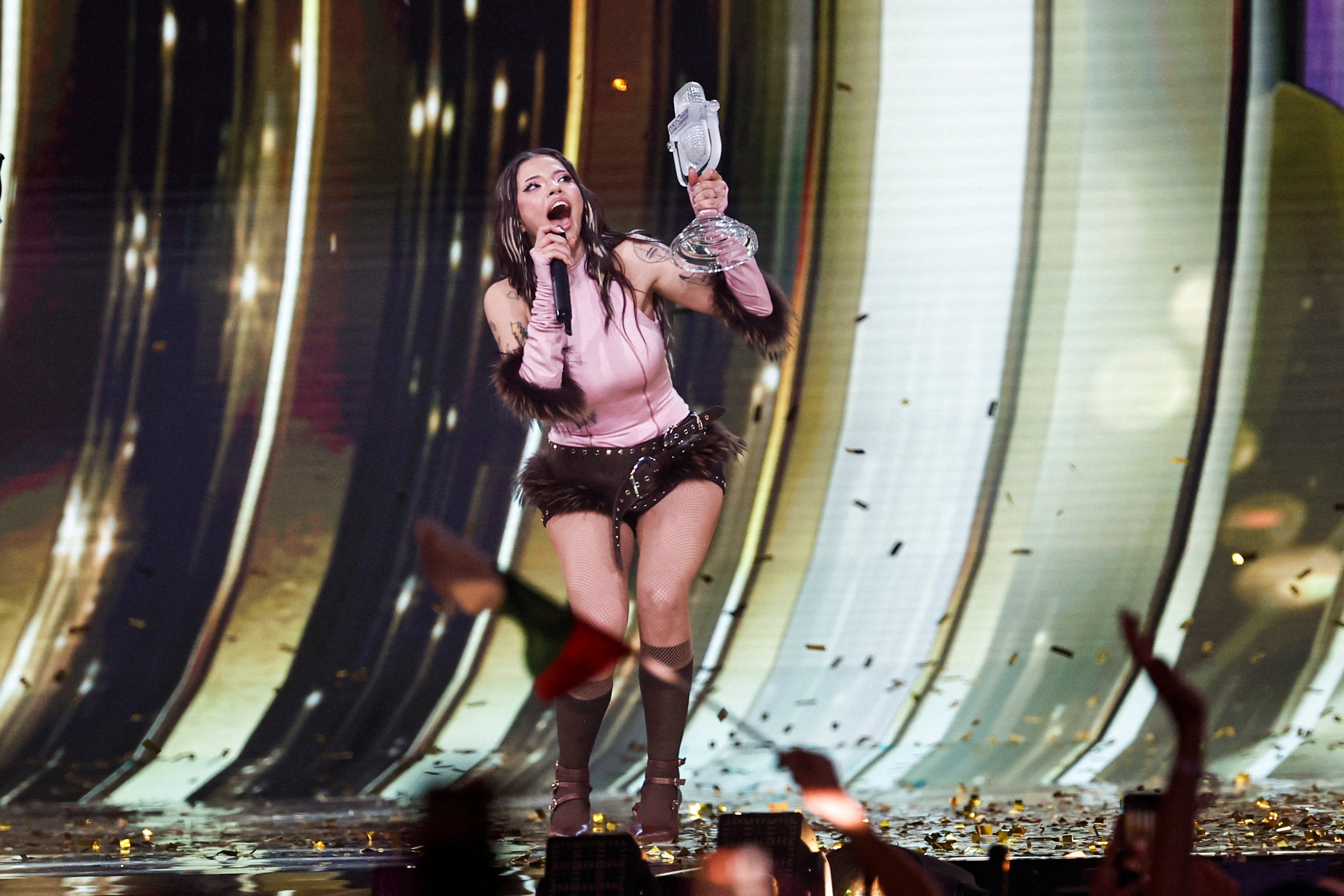
The Inspiration Behind “Bangaranga”
DARA continued to elaborate on the inspiration behind “Bangaranga.” She wanted a song that could resonate with audiences worldwide, hitting them physically before intellectually. “When I think about what it truly is for me, at its deepest level, I keep coming back to the kukeri – the ancient Bulgarian ritual where men dress in extraordinary costumes of bells and fur and animal masks, and move through villages at the start of the year making the most ferocious noise imaginable. The purpose is to scare the bad spirits away.”
DARA first gained attention in Bulgaria after finishing third on the Bulgarian X Factor when she was just 16. She was signed to a record label and released music in both Bulgarian and English. Her career has been marked by a string of number one singles in her home country, and her latest album, ADHDARA, was inspired by her adult diagnosis with ADHD.
“That album was about owning every contradictory part of yourself: the chaos, the sensitivity, the fire,” she said. “It was terrifying and liberating in equal measure. And now here I am, taking all of that to Eurovision in Vienna, representing Bulgaria. I still find it hard to believe… in the best possible way.”