The Symbiotic Tech Relationship Between the US and China
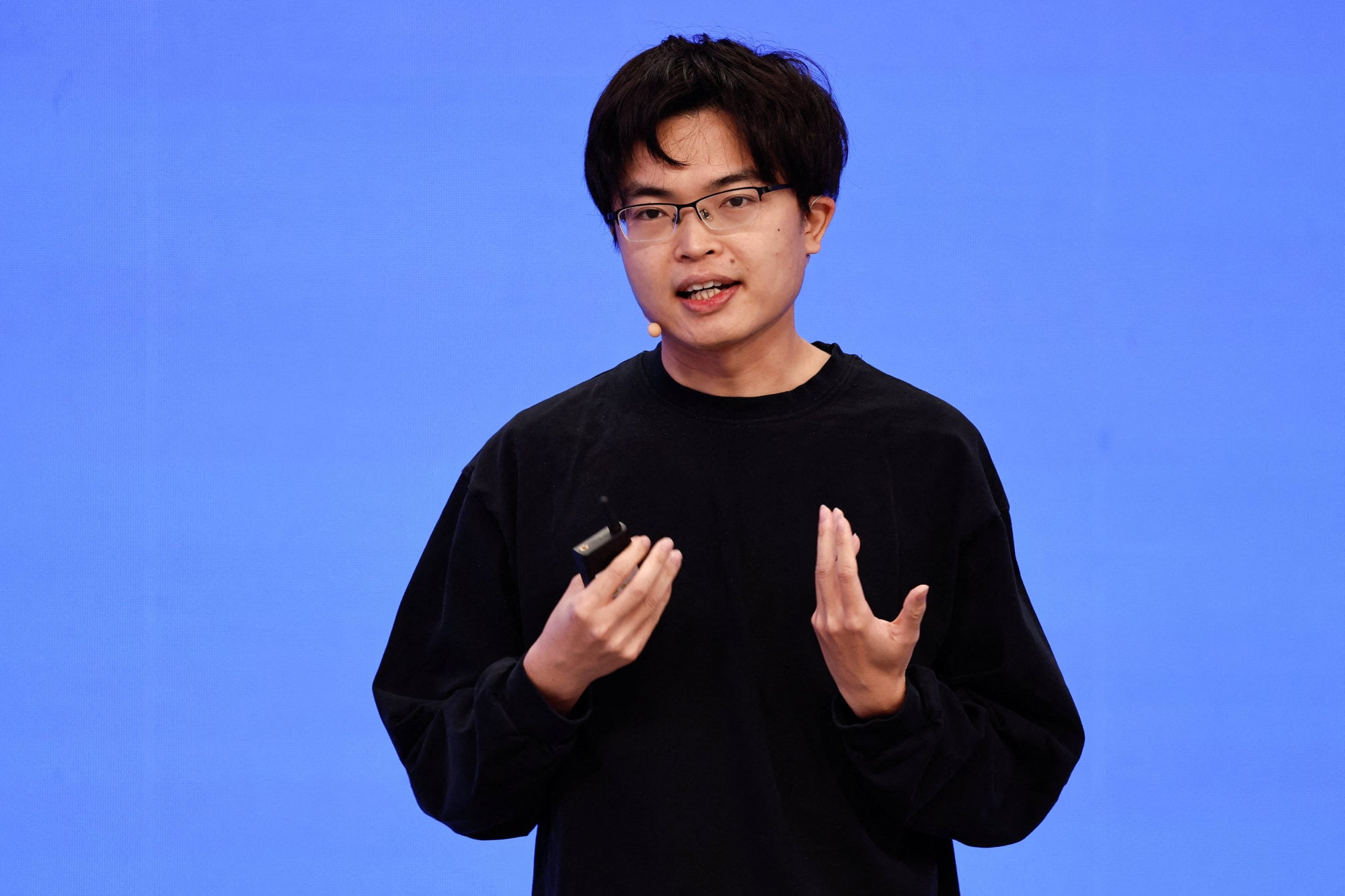
At Nvidia’s GPU Technology Conference (GTC) in San Jose, California, a surprise guest speaker emerged: Yang Zhilin, the founder of Beijing-based Moonshot AI. This event, known for its focus on cutting-edge technology, saw Yang present his company’s work on the Kimi family of foundational artificial intelligence models. Despite the growing tensions between the US and China over AI competition, which some have compared to an “arms race,” Yang’s appearance at this American-led event was notable.
Yang, a doctoral graduate from Carnegie Mellon University, delivered a similar presentation just weeks later at China’s state-backed Zhongguancun Forum in Beijing. Attendees included high-ranking officials such as Beijing Mayor Yin Yong and Ding Xuexiang, a member of the Politburo Standing Committee. This dual presentation highlighted the complex interplay between the two tech ecosystems.
Kyle Chan, a fellow at the Brookings Institution think tank, noted that this event was part of a broader trend of convergence between US and Chinese AI ecosystems. He pointed out that while geopolitical tensions exist, various factors are pulling these systems together.
Nvidia, a key player in the semiconductor industry, is at the forefront of this convergence. As the world’s leading designer of advanced chips, it has seen explosive demand for its Blackwell and Rubin chips. However, since 2022, US export controls have restricted Nvidia from selling its most advanced chips in China, despite surging demand from Chinese tech giants.
Despite this, Chinese AI companies still rely on Nvidia chips for training cutting-edge models. In his GTC presentation, Yang outlined how Moonshot’s latest model, Kimi K2.5, was trained using Nvidia’s H800 GPUs, a chip customized to comply with US export controls.
The two speeches given 9,500 kilometers apart stressed similar points: the belief in industry “scaling laws” and the application of these principles to a new era of AI agents. These agents are expected to be more computationally demanding than chatbots.
“We hope to engage in more international collaborations to promote Chinese technology and products globally,” Yang said after his Beijing presentation.
Yang’s growing prominence comes as Moonshot’s Kimi models have become one of China’s most recognized open-source models globally. Their powerful creative writing and coding abilities have made them popular among developers worldwide.
Kevin Xu, founder of Interconnected Capital, emphasized that the proliferation of open-source AI technology has been a major driver of US-China AI convergence. Unlike proprietary systems favored by top US players like OpenAI and Anthropic, open-source Chinese models can be freely downloaded and customized.
“The convergence, where the two ecosystems are building on top of each other, has always been there,” Xu said. “But the geopolitical climate makes the admission of that less favorable, especially for US companies who are doing it.”
A recent example is Cursor, a leading AI coding start-up in Silicon Valley, which admitted that its latest product was built on Kimi 2.5 after initial lack of transparency prompted backlash within the AI community.
Wang Tiezhen, Asia-Pacific head at open-source AI platform Hugging Face, noted that it is difficult to know the full extent of Silicon Valley’s adoption of Chinese AI models and research. Leading US players remain tight-lipped about their proprietary systems, while the free-for-all nature of open-source makes it challenging to track usage.
“I think China is effectively exporting open-source models and know-how to the US,” he said, giving the example of the group relative policy optimization algorithm for reinforcement learning training of AI models pioneered by DeepSeek.
Nvidia has also made open-source a key tenet of its strategy. At GTC, it announced new open-source software across the entire tech stack, from algorithms to toolchains, as it looks to make itself an indispensable part of frontier AI developments.
One of its new releases was NemoClaw, open-source security software to support OpenClaw, the open-source AI agent tool sponsored by OpenAI that was swiftly embraced by Chinese tech giants.
Chan mentioned that there are still powerful forces driving US-China tech decoupling. The US “big three” of OpenAI, Anthropic, and Google, which bar mainland Chinese users from accessing their AI services, recently accused Chinese companies of “stealing” their model outputs through a controversial practice called distillation.
There is also growing uncertainty about collaboration at the most basic level, after Chinese professional bodies called for a boycott of NeurIPS, a major annual AI industry conference organized by a US-based foundation that moved to restrict US-sanctioned Chinese entities from participating.
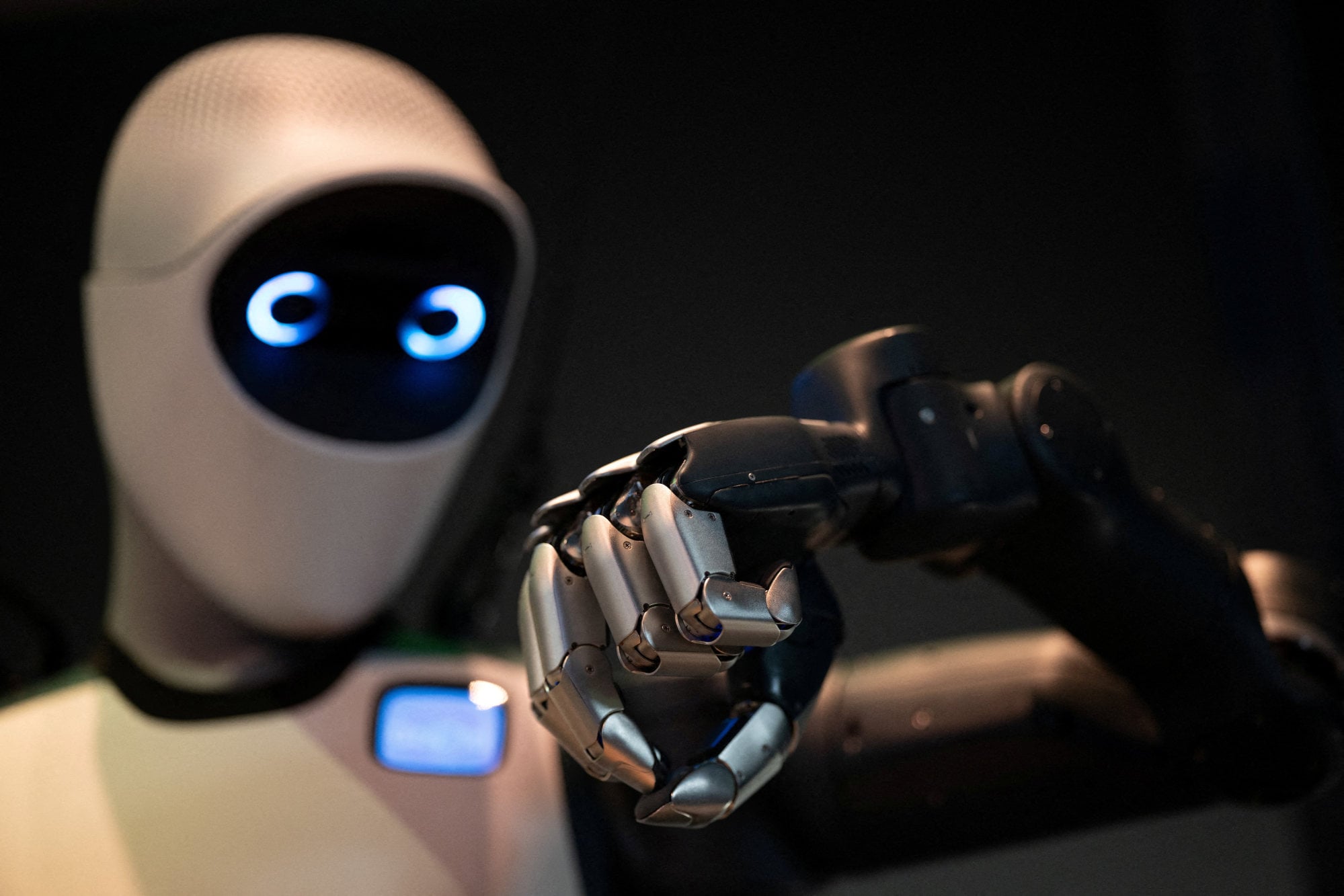
Tracy Ji, founding managing partner of Meridian Capital, noted that many robots in Silicon Valley still need to source components from China due to the lack of a complete industrial chain. She also highlighted the importance of Hong Kong as a bridge between the two regions.
The prospects for such new layers of convergence remain unclear. A highly anticipated meeting between President Xi Jinping and US President Donald Trump in Beijing next month is expected to have major implications for AI competition, including the possibility of further loosening of restrictions on US chip giants such as Nvidia wanting to sell to Chinese buyers.
Chan added that uncertainties remain regarding how Chinese officials view such convergence, especially after the use of Anthropic’s Claude models in recent US military operations in Iran and Venezuela.
Beijing has already signaled its concerns about Meta’s $2 billion acquisition of AI agent start-up Manus, which led to the imposition of exit bans on two of Manus’ Singapore-based co-founders who returned to China last month. Officials have also shown reluctance to fully open the country’s door to Nvidia chips, with China making self-reliance across the entire tech stack a top priority in the five-year plan approved last month.
Nonetheless, Chan believes that Beijing will continue to support open-source AI while keeping a close eye on national security implications. He emphasized that Chinese policymakers aim to move as fast as possible to make AI useful in their economy and society, which would mean leaning into open source and having a more collaborative ecosystem.
“Maybe if a single US company suddenly became far better than everyone else, then that could be a wake-up call where China would then want to concentrate resources in a nationally coordinated effort.”