New AFL Chair Pledges Humility and Collaboration in Game’s Evolution
The Australian Football League (AFL) has a new leader at the helm, with Craig Drummond stepping into the role of AFL Chair. In his inaugural address, Drummond has made a clear commitment to fostering a more collaborative and respectful relationship with AFL clubs and, crucially, with the game’s passionate fanbase. He aims to guide the league through its next phase of growth, ensuring that the core values and traditions of Australian Rules Football remain at the forefront.
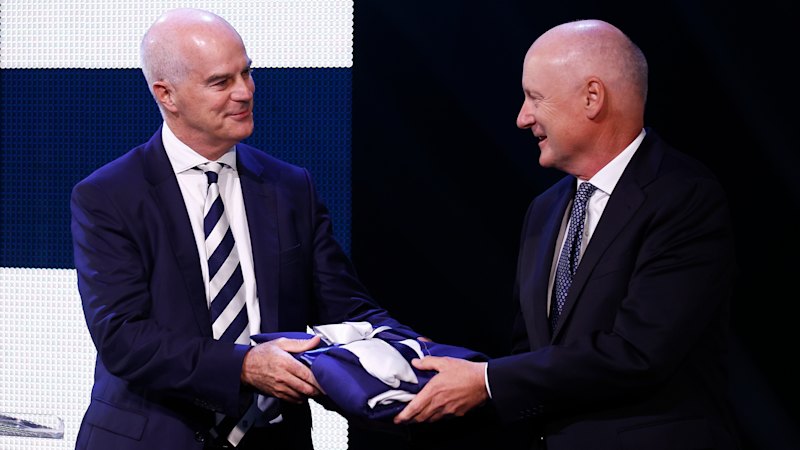
Drummond, who officially took the reins from outgoing Chair Richard Goyder at the league’s annual general meeting in Sydney, emphasised a stark departure from any perceived arrogance or hubris within the AFL Commission and executive. His vision, encapsulated by the mantra “football, fans and future,” signals a dedicated focus on the sport itself, the people who love it, and its ongoing development.
“I want it to be very clear that there will not be any hubris or arrogance from the AFL Commission or AFL executive,” Drummond stated. “I do believe we are in great shape, but we are in a changing world and changing landscape.”
His extensive experience as the President of the Geelong Football Club from 2021 to 2024, and his 13-year tenure on the Cats’ board, has provided him with invaluable insights into the operational expertise residing within individual clubs. Drummond expressed a strong desire for the AFL to actively harness this knowledge.
“I am not saying we are always going to agree on every issue, but we listen to those folks, and we look for a bigger contribution and a bigger set of collaboration with our clubs,” he explained. This approach signals a move towards a more integrated partnership, acknowledging that clubs are often closest to the pulse of the game and its supporters.
Navigating Club Relations and Key Decisions
Drummond’s appointment followed a protracted nominations process that, according to reports, had generated some frustration among several clubs. The past year has seen numerous AFL decisions draw criticism from clubs, prompting CEO Andrew Dillon to bolster the executive ranks with individuals possessing direct club experience. The recruitment of Sydney CEO Tom Harley and Brisbane Lions CEO Greg Swann to significant AFL executive roles was a testament to this strategic shift.
Drummond acknowledged the inherent dynamics of the AFL structure. “There should be a natural tension between the AFL Commission and the clubs,” he said. “We have to take into account what is best for the game and what is best for the fans as a collective, and that won’t always correlate with what is best for an individual club.” This statement highlights the delicate balancing act the AFL faces in making decisions that serve the broader interests of the sport while also considering the unique needs of each of its 18 clubs.
One pressing issue on the agenda is the timing of the Grand Final. Drummond confirmed that a decision would be made “as soon as possible.” However, he remained non-committal on a specific start time, emphasising the need to thoroughly analyse data. This analysis will encompass the potential impact of a night Grand Final on the quality of the game, as well as the diverse perspectives of fans and broadcasters.
Commitment to the Game and Talent Pathways
Drummond underscored his deep-seated passion for Australian Rules Football, stating that his affection for the sport transcends his long-standing support for the Geelong Cats, a team he has followed for six decades. He intends to spend considerable time engaging with clubs directly to gain a deeper understanding of their operational realities and viewpoints. Crucially, he also made it clear that “the clubs are running the clubs,” reinforcing the importance of their autonomy and expertise.
Significant changes are anticipated regarding the rules governing club access to father-son, academy graduates, and the bidding system. These adjustments are expected to be communicated to clubs before the commencement of the upcoming season. CEO Andrew Dillon highlighted the necessity of striking a balance between the imperative to grow the game and the principles of equalisation. The overarching philosophy, he indicated, is that “a fair price” must be paid to secure talented players.
Clubs are bracing for a scenario where they may need to surrender two draft picks to match a bid for a father-son or academy graduate. This potential shift has raised concerns, particularly for clubs like Carlton and Port Adelaide, regarding their future access to promising young players such as Cody Walker and Doug Cochrane. Furthermore, there is an expectation that the compensation awarded for losing a player through free agency will no longer involve a top-10 draft selection. While these draft-related matters were discussed, a final resolution is not anticipated for several weeks.
Honouring Contributions to the Game
In a significant announcement, Drummond revealed that former Footscray and Brisbane champion Michael McLean would be formally recognised during Sir Doug Nicholls Round for his substantial contributions to Australian Rules Football. McLean, an Indigenous Australian recruited from Darwin, played a pivotal role in the establishment of the racial vilification rule. This crucial rule was introduced in the aftermath of star Essendon player Michael Long experiencing racial abuse during a match against Collingwood in 1995, a watershed moment in the sport’s history. This recognition underscores the AFL’s commitment to acknowledging the diverse legacies that have shaped the game.