The Changing Religious Landscape in German Cities
In recent years, Germany has witnessed a significant transformation in its religious landscape. Many traditional Christian churches are being abandoned or repurposed, while new places of worship for other faiths are emerging across the country. This shift is driven by immigration and the growing diversity of communities, particularly in urban centers.
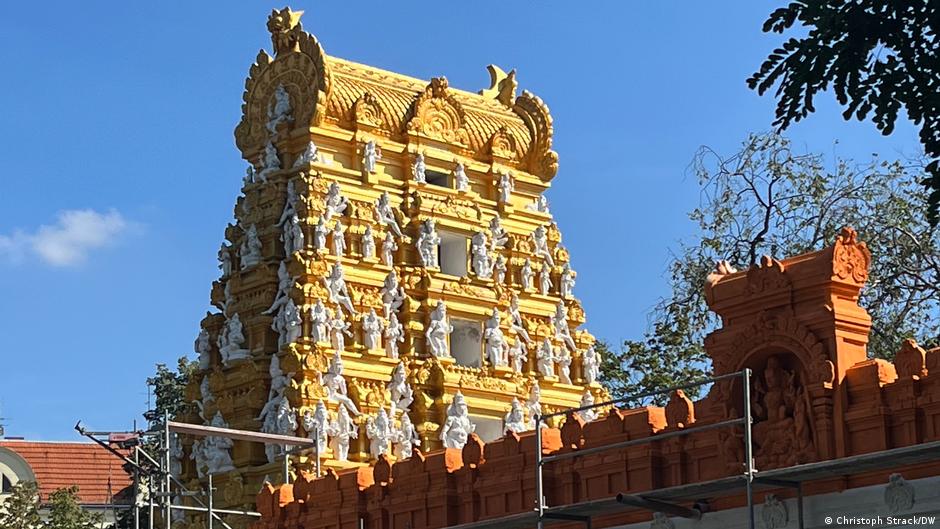
Erlangen, a city in northern Bavaria with a population of 119,000, serves as a prime example of this change. Here, preparations are underway for a new synagogue, supported by the state of Bavaria, which has provided land near the university. At the same time, the city’s two major mosques are planning expansions. In one of the suburbs, an association has purchased land to build a Shiva-Vishnu temple for the Hindu community.
Silvia Klein, head of Erlangen’s Department of Integration and Diversity, highlights the city’s rich cultural and religious mix. She points to the “Hindu Tempel Franken” association, which has raised funds through donations, loans, and its own resources to purchase land for the temple. Construction is expected to begin no later than 2027.
Erlangen has a large Indian student population, with over 2,000 students from India at the university. The Indian community is now the largest non-German group in the city. This reflects a broader trend: religious diversity is becoming more visible in German cities.
While established churches like Catholic and Protestant ones remain, they are facing declining numbers. Only 44% of Germans identify as Christian today, down from over half just a few years ago. As a result, many churches are being closed, repurposed, or scaled back.
The Coptic Church in Erlangen provides another example of this shift. Three years ago, it took over a former Catholic church, renaming it the Coptic Orthodox Church dedicated to St. Mary and the Holy Apostles. According to Coptic deacon Ragai Edward Matta, the congregation has grown from 18 families to around 60 families, with over 200 members. More students have also joined the community.
Germany is home to a growing number of Muslims, Orthodox Christians, Jews, Buddhists, Bahá’ís, and Hindus. While exact numbers are difficult to determine, estimates suggest that over 5.3 million Muslims lived in Germany in 2020, and about 3.8 million Orthodox Christians were present in 2024.
New Houses of Worship Across German Cities
As religious diversity increases, so does the construction of new houses of worship. In Berlin-Mitte, Buddhist nuns opened a prominent new temple in the summer of 2024. Nationally, there are roughly 20 Buddhist monasteries.
In June 2026, the largest Hindu temple in Germany will open in Berlin. The project, started in 2004 and begun in 2010, was driven by Vilwanathan Krishnamurthy, who emphasized the importance of having a religious center for young people. The number of Berlin residents with Indian citizenship has increased tenfold between 2014 and 2024, reaching over 41,000.
In Erlangen, several committed members of the Hindu community work as engineers or managers, including at Siemens. In Berlin, Amazon is a common employer. Donation levels have also risen in recent years.
Hindu temples are becoming more common across Germany. Frankfurt am Main alone has more than half a dozen smaller temple spaces, while Cologne, Hamburg, Munich, and Berlin all have multiple temples representing various traditions and origins, such as Indian, Tamil, and Afghan communities.
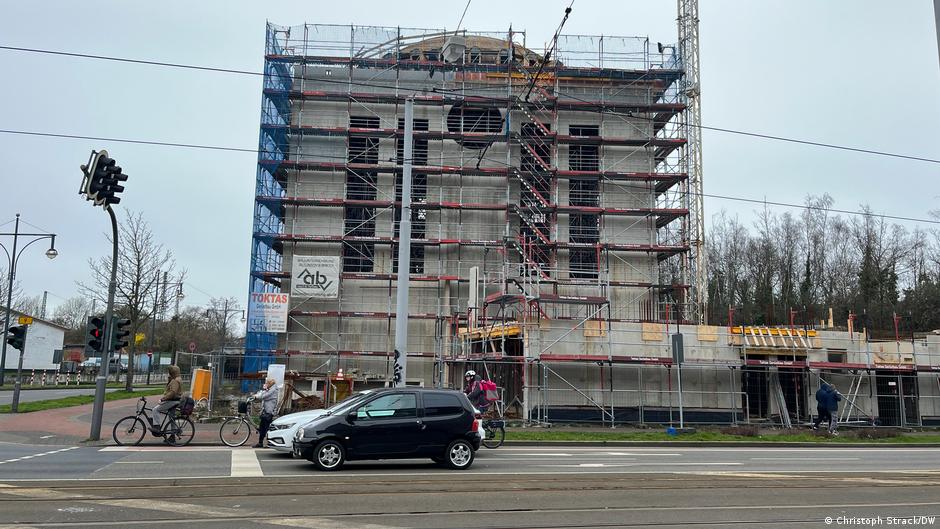
The Turkish-Islamic Union for Religious Affairs (DITIB) reports 862 mosque congregations in Germany, many of which are linked to the powerful Presidency of Religious Affairs in Ankara. However, some projects have faced delays. For instance, a planned mosque in Krefeld, once considered the third-largest in the country, has remained unfinished for years.
The Ahmadiyya community, which originates from Pakistan, opens several mosques in Germany each year. Unlike DITIB, it emphasizes openness and free speech. A building in Nordhorn was opened in December 2025, and construction is ongoing in Husum. Some projects involve taking over buildings previously owned by churches.
Growing Muslim Communities and Jewish Initiatives
Visitors to the Erfurt mosque often include school classes and seniors, showing the interest in these new spaces. The independent “Peace Mosque” in Erlangen is expanding, offering services in German and welcoming worshippers from diverse backgrounds.
Jewish communities are also seeing growth. New synagogues have been built in Magdeburg (2023) and Potsdam (2024), ensuring Jewish houses of prayer in all German state capitals. In Erlangen, the long-awaited new synagogue is gaining momentum, while the Chabad community in Berlin plans a major expansion. Liberal Jewish communities in Munich are also working on construction plans.
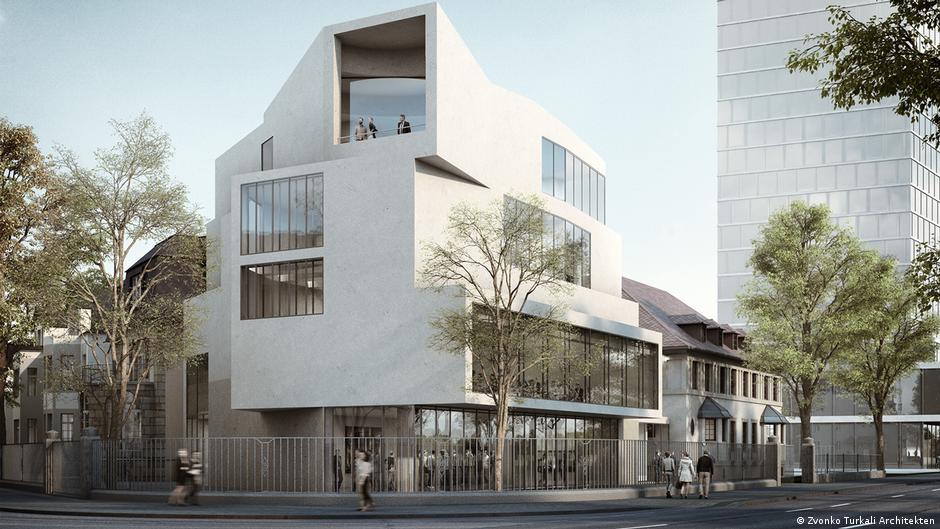
A powerful symbol of Jewish life in Germany is the upcoming “Jewish Academy” in Frankfurt, set to open in November 2026. Combining a historic villa with a modern Bauhaus-inspired building, the complex represents a significant investment in Jewish cultural and educational life.
Orthodox congregations are also growing. While many take over unused churches, new constructions are becoming more common. In Butzbach, Hesse, the “St. Peter & Paul Parish” opened in June 2024, marking the first newly built church of the Antiochian Orthodox Metropolis of Germany and Central Europe.
Many Orthodox communities, including those from Syria, Greece, Russia, Romania, and Serbia, are taking over vacant church buildings. However, new constructions face challenges due to German construction laws. In Vilshofen an der Donau, the Romanian Orthodox Church has been waiting for approval for nearly three years, causing frustration among the parishioners.