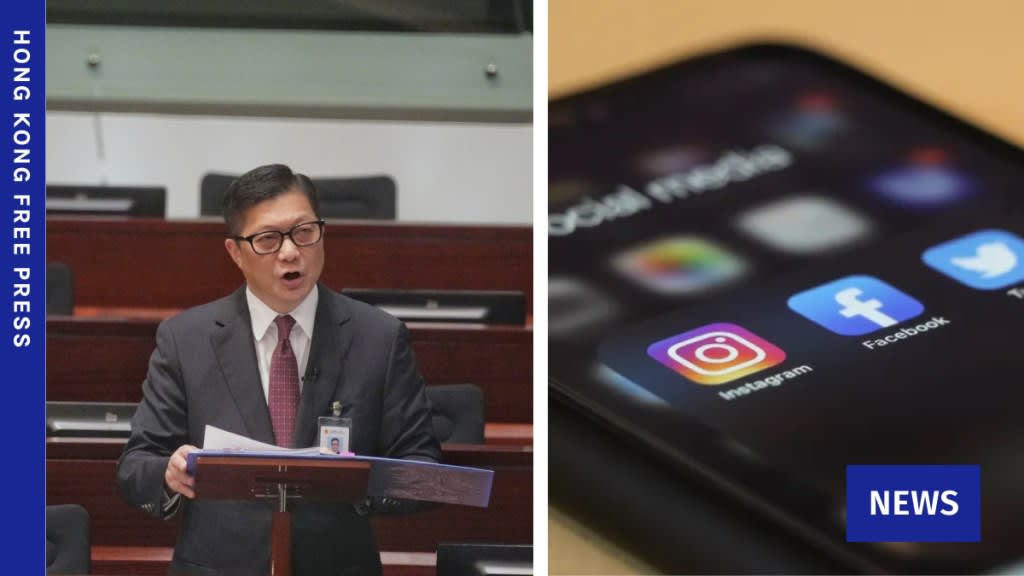
Authorities Clarify National Security Law Powers Amidst Public Privacy Concerns
Recent amendments to national security legislation have sparked widespread debate and concern regarding individual privacy, particularly concerning police powers to access electronic devices. Security Chief Chris Tang has issued clarifications, aiming to dispel what he describes as “false and misleading” claims circulating about the extent of these new powers.
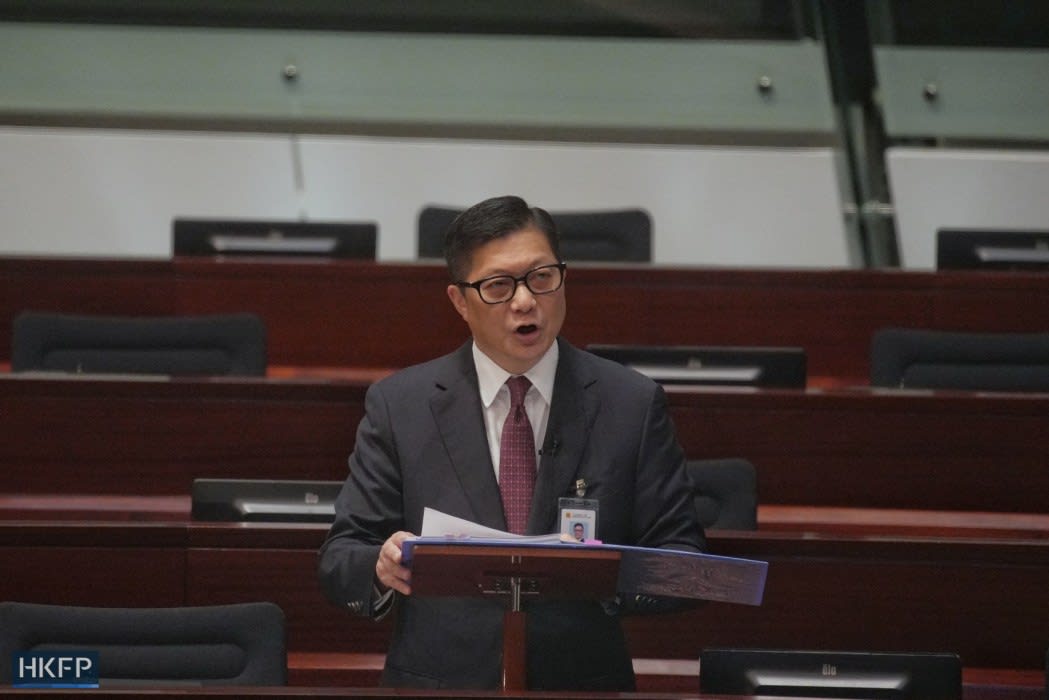
The core of the public’s apprehension stems from the possibility that law enforcement officials might be able to stop individuals on the street and demand their mobile phone passwords. Addressing these concerns directly in the Legislative Council (LegCo) on Tuesday, Tang stated that such a scenario is not an accurate representation of the new requirements.
Warrant Requirements for Device Access
According to Tang, the prevailing protocol under the updated national security framework necessitates that police obtain a court warrant. This warrant must cite specific “national security reasons” before law enforcement can lawfully request individuals suspected of endangering national security to surrender their mobile phone passwords. This measure is intended to provide a legal safeguard and ensure that access to personal data is not arbitrary.
However, the interpretation of these powers has been further nuanced by the Acting Secretary for Justice, Horace Cheung. Cheung indicated that in “extreme, exceptional” circumstances, a departure from the warrant requirement might be permissible. This exception would apply if a national security offense is deemed so “imminent and obvious” that there is insufficient time for the police to secure a warrant. This provision suggests a degree of flexibility to address urgent and critical situations that could pose an immediate threat.

New Rules and Expanded Authority
These official statements follow the government’s gazetting of amendments to the “implementation rules” of the Beijing-imposed national security law on Monday. The amendments not only introduce the password requirement but also grant several new powers to various authorities involved in national security enforcement.
Under the revised rules, police are empowered to compel individuals under national security investigation to provide passwords or decryption keys for their electronic devices. Furthermore, the scope of this authority extends to individuals who are believed to possess knowledge of the password or the method to decrypt a device under investigation. Such individuals can be legally obliged to disclose this information.
Penalties for Non-Compliance
The consequences for failing to comply with these directives are significant. Individuals who refuse to provide passwords or decryption methods as required could face a penalty of up to one year in prison and a fine of HK$100,000.
The severity of these penalties has been a point of discussion within the legislative council. Chris Ip, a lawmaker affiliated with the pro-Beijing Democratic Alliance for the Betterment and Progress of Hong Kong, questioned whether the stipulated penalty is sufficiently deterrent. Ip highlighted a potential disparity: a suspect who cooperates and provides their phone password, thereby aiding the investigation, could potentially face a much longer prison sentence of up to 10 years under other provisions related to national security offenses. Conversely, refusing to provide the password carries a maximum of one year.
Technological Capabilities and Enforcement
Addressing the practicalities of accessing digital information, Tang asserted that authorities possess the technological capabilities to unlock mobile phones. While acknowledging that this process may require time, he emphasized that it does not ultimately obstruct the collection of evidence. This statement suggests a confidence in the technical proficiency of law enforcement to overcome digital security measures.
Expanded Role for Customs Officers
Beyond the police, the new rules also confer additional powers upon customs officers. They are now authorized to freeze or confiscate assets that are deemed to be linked to national security crimes. Additionally, customs officers can now forfeit “articles that have seditious intention.”
The rationale behind granting these powers to customs, an agency not directly part of the police’s National Security Department, was questioned by Dominic Lee, a pro-Beijing lawmaker from the New People’s Party. Lee sought clarification on why customs officers are authorized to confiscate items with seditious intent.

Tang explained that in past instances where Customs intercepted materials containing seditious content, it was necessary to involve the police to formally seize or confiscate them. He stated that the current process requires further “optimisation” to enable Customs to manage such matters independently, thereby streamlining the enforcement process and allowing for quicker action against seditious materials. This adjustment aims to enhance the efficiency and autonomy of customs operations in national security contexts.