EU Parliament Approves Landmark Trade Deal with Conditions
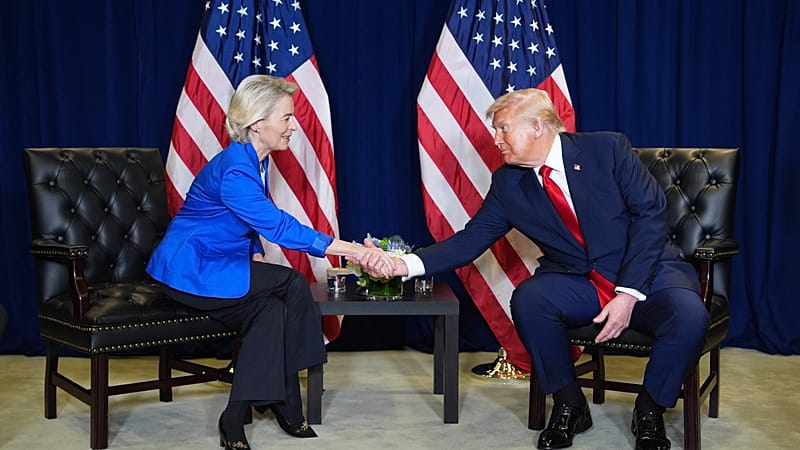
European Union lawmakers have given their backing to a significant trade agreement with the United States, a pact initially forged in Turnberry, Scotland, in 2025. The approval, however, comes with a stringent set of conditions designed to safeguard the EU’s interests, particularly in light of ongoing trade tensions and potential future protectionist measures from Washington.
The vote saw a substantial majority of political groups in the European Parliament lend their support, with 417 votes in favour, 154 against, and 71 abstentions. This broad endorsement signals a collective desire to move forward with the agreement, which aims to reduce EU tariffs on a wide array of US industrial goods to zero.
The path to approval was not without its hurdles. Both the European Commission and Washington had been eager for the deal’s swift implementation. However, Members of the European Parliament (MEPs) had previously delayed their endorsement, citing concerns over trade disputes involving Greenland and recent US trade investigations. These investigations had fueled fears that the United States might unilaterally impose new tariffs, potentially undermining the spirit and balance of the agreement.
Initially met with criticism from some MEPs who deemed it unbalanced, and defended by the Commission as the most favourable achievable outcome, the deal’s core provisions involve the US maintaining tariffs on EU goods at 15%, while the EU commits to eliminating duties on the majority of US industrial products.
To address the concerns about potential future imbalances, MEPs have successfully integrated safeguards into the agreement. These measures are intended to rebalance the pact should new threats emerge, such as further protectionist actions by the US administration or any violations of the agreed-upon terms by the United States.
“Of course, that’s imbalanced, but if we could improve it, maybe we can live with it,” remarked Socialist German MEP Bernd Lange in the lead-up to the vote, reflecting a sentiment that compromise was necessary, provided robust protections were in place.
Safeguarding the Agreement: Key Conditions and Safeguards
The European Parliament is now set to collaborate with EU member states to solidify a common position and facilitate the tariff reductions. The newly introduced safeguards are expected to be a focal point of these discussions, with the first tripartite meeting scheduled for April 13th.
Key among these safeguards are:
- “Sunset Clause”: This provision stipulates that the trade deal will automatically expire in March 2028, unless both the EU and the US mutually agree to its extension. This provides a mechanism for periodic review and re-evaluation of the agreement’s effectiveness.
- “Sunrise Clause”: This crucial element makes the tariff preferences granted under the deal conditional upon the United States upholding its commitments made during the Turnberry negotiations. It ensures that the benefits of the agreement are directly tied to adherence to its foundational principles.
Parliament’s President, Roberta Metsola, underscored the significance of these additions following the vote. “The Parliament’s position in plenary on the deal received very broad support for the addition of strong safeguards,” she stated. “We act on an understanding that the 15% tariffs on most industrial goods is the ceiling and additional tariffs will not apply above this level.”
The impetus for these protective measures was amplified by recent developments. MEPs sought to shield the deal from the impact of new US tariffs after the Supreme Court’s February ruling that struck down certain 2025 US tariffs. This decision prompted the White House to impose new duties on EU goods and initiate an investigation into alleged unfair trade practices, which could have led to further tariff escalations.
Furthermore, MEPs have explicitly linked the tariff reductions on steel and aluminium to equivalent actions being taken by the United States, ensuring a reciprocal approach to these sensitive sectors. The Parliament’s firm stance highlights a commitment to a balanced and predictable trade relationship, one that is resilient to unilateral protectionist shifts.