Hanbit Nuclear Power Plant Faces Urgent Need for Spent Fuel Storage Expansion
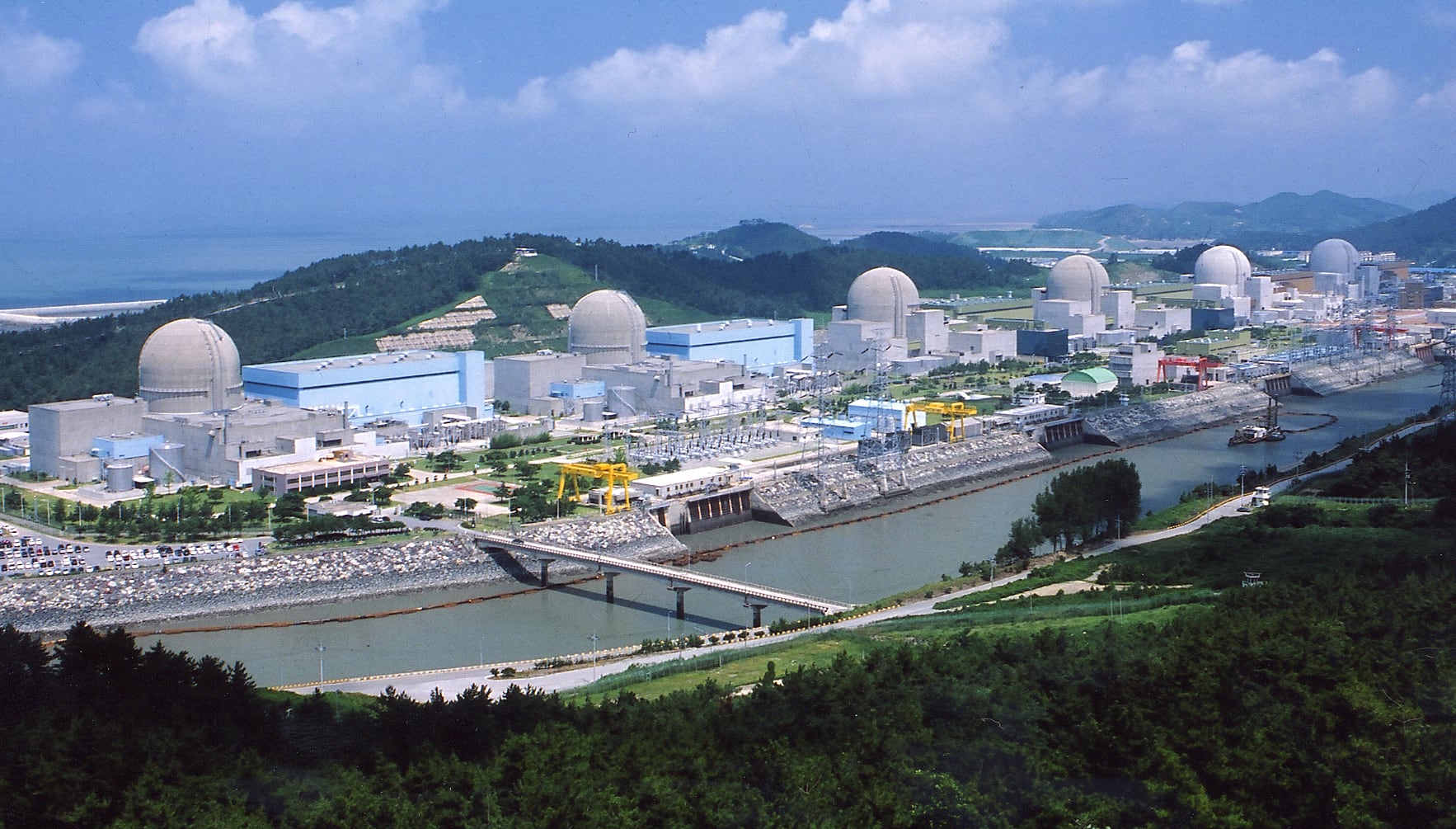
The Hanbit Nuclear Power Plant in Yeonggwang, Jeollanam-do, plays a crucial role in supplying power to the Honam Semiconductor Cluster. However, it is currently facing a significant challenge: the saturation of spent nuclear fuel storage space. The existing facilities are expected to reach full capacity by June 2030, which has prompted an urgent need for expansion. Despite this, construction procedures have been delayed by three years, with the first step only being taken last month.
In comparison, the Wolsong Nuclear Power Plant in Gyeongju took six years to complete a similar project. However, the Hanbit expansion must be completed within four years, presenting a greater challenge than just the timeline. Local opposition is a major hurdle, with residents of Yeonggwang County and Gochang County, North Jeolla Province, as well as regional civic groups, mobilizing to block the project.
According to Yeonggwang County, Korea Hydro & Nuclear Power (KHNP) publicly disclosed the draft facility plan for the Hanbit spent nuclear fuel storage expansion to residents of Yeonggwang and Gochang on the 17th of last month. The company began gathering opinions through resident briefings. Due to strong local opposition over safety and health concerns, the success of the project hinges on persuading residents and securing their consent.
As of March 2026, the utilization rate of Hanbit’s spent nuclear fuel storage exceeded 85%. Units 3 and 4 have surpassed 90%, nearing saturation. If no action is taken, the plant may have to halt operations by June 2030 due to a lack of storage space. KHNP initially estimated that the construction would take a minimum of seven years, starting design work in 2023. However, resident opposition, delays in special legislation, and local election politics pushed the formal procedures—including permits and public consultations—back by three years.
KHNP aims to complete the new facility by July 2030 after obtaining approvals from the High-Level Radioactive Waste Management Committee, Yeonggwang County’s construction permit, and the Nuclear Safety and Security Commission. However, energy industry experts warn that meeting the timeline is highly uncertain given the resident opposition and permitting delays.

Wolsong Took Six Years Amid Resident Opposition… Semiconductor Power Plans at Risk
While technical safety is critical for spent nuclear fuel storage facilities, overcoming local opposition is the greatest hurdle. Although legally not mandatory, ignoring public sentiment is difficult given the high-risk nature of storing radioactive materials. The Wolsong facility, completed in 2022, took six years from formal procedures to completion. The delay was attributed to addressing safety distrust and public consultations. Hanbit must achieve this in two-thirds the time.
Local civic groups in Honam remain resolute. Kim Jong-pil, head of the Gwangju Environmental Movement Alliance, stated, “If procedures do not properly reflect regional concerns beyond formal briefings, we will use all methods, including press conferences and legal action.” Blocking Yeonggwang County’s construction permit—a prerequisite for groundbreaking—is also under discussion. Kim Yong-guk, executive director of the Yeonggwang Nuclear Power Plant Safety Joint Action, said, “Residents will not allow the permit to proceed as is,” adding, “Criminal complaints against project officials are also being considered.” For the government racing against the clock, each remaining step risks further delays.
“We Will Block It by All Means”: Resident Opposition
The core of local resistance is distrust: “Won’t temporary storage facilities become de facto permanent ones?” The government’s roadmap includes an interim storage facility by 2050 and a permanent disposal site by 2060. However, residents fear that if national-level facilities are delayed, on-site storage will become permanent.
The civic group Nuclear-Free World Gwangju-Jeonnam held a rally at Jeonnam-Gwangju Special Metropolitan City’s 5.18 Democracy Square on the 6th, stating, “Even if the government plans permanent facilities, delays could turn ‘temporary’ storage into a permanent ‘nuclear waste dump.’ We must ask how much sacrifice is being demanded from residents.”
KHNP designed the new facility’s capacity to align almost exactly with needs until the 2050 interim storage launch. Once operational, Hanbit’s spent fuel will be relocated by 2061. However, local sentiment in Yeonggwang and Gochang remains skeptical. For instance, “No progress has been explained on selecting the interim site.” Discontent also arises from consultation processes that do not allow for explicit consent or opposition. Some residents argue, “Not allowing a yes/no vote means pushing the project regardless of public opinion.”
The Hanbit storage issue is directly tied to President Lee Jae Myung’s plan to supply power to the Honam Semiconductor Cluster. Semiconductor factories require stable 24/7 electricity, making the 5.9-gigawatt output from Hanbit’s Units 1–6 critical by 2030. However, Yeonggwang has historically shown stronger anti-nuclear sentiment than other regions. The ongoing continued operation process for Units 1 and 2 has already faced disruptions due to public hearings. If storage delays halt reactor operations, the semiconductor cluster’s power supply plan could collapse.
Taiwan’s Early Closure Due to Storage Delays
Overseas cases show the consequences of failing to persuade residents. Taiwan’s Kuosheng Unit 1, licensed until December 2021, closed early in July 2021 after storage saturation and permit delays for expansion. Despite repeated applications by Taiwan Power Company, New Taipei City’s local government never approved permits. The Taipei Times reported, “This was a failure to address public concerns about permanent nuclear waste.” Yeonggwang’s permit authority mirrors this structure. Storage saturation is not unique to Hanbit: Hanul in Uljin, North Gyeongsang Province, will reach capacity in 2031, and Kori in Busan in 2032. Hanbit’s progress will set a precedent nationwide.
Jeong Jae-hak, a professor of nuclear engineering at Kyung Hee University, stated, “Halting expensive nuclear assets due to storage shortages is absurd, but as seen in Taiwan, it is possible. To gain trust that on-site facilities are temporary, the government must accelerate the 2050 interim storage timeline and prove regional facilities won’t become permanent.”
월 5900원 멤버십, 신문 독자에게는 2900원, 조선멤버십
55000원 상당의 신문-잡지 8종 마음껏 보기, 조선멤버십
현금처럼 쓸 7000포인트 받아 알뜰한 쇼핑, 조선멤버십