A Persistent Crisis in the North
More than thirteen years have passed since I wrote a passionate letter to northern governors, highlighting the alarming rise in poverty and unemployment that was devastating the region. Today, I find myself once again compelled to address this critical issue, as the challenges remain unchanged. The same elite figures who were supposed to lead the north towards progress have instead chosen self-interest over genuine development.
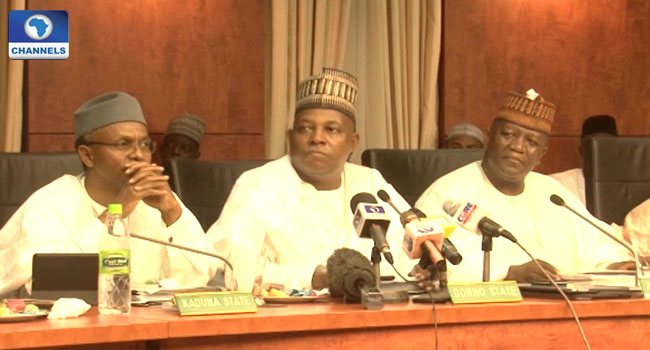
At a recent meeting of the Northern States Governors’ Forum (NSGF) held on Monday, March 30, 2026, in Abuja, the forum’s chairman, Gombe State Governor Muhammadu Inuwa Yahaya, linked the persistent insecurity in the north to poverty, illiteracy, and unemployment. This is a clear admission of failure and an acknowledgment of the obvious. The nineteen northern governors warned that achieving lasting peace in the region would remain elusive without urgent investment in education and economic opportunities.
In his opening remarks at the forum’s meeting, Governor Yahaya emphasized that insecurity in the north is deeply connected to underdevelopment and the increasing number of out-of-school children. He stressed that tackling illiteracy, poverty, and youth unemployment must be the foundation of any sustainable security strategy in the region. He also raised concerns about potential farmer-herder conflicts as the rainy season approaches, which could threaten agricultural productivity.
Before this collective declaration, Niger State Governor Mohammed Umaru Bago had already highlighted similar issues in May 2025. During a visit by members of syndicate 5 participating in the executive intelligence management course 18 of the National Institute for Security Studies, Abuja, Governor Bago stated that poverty and high levels of illiteracy are the root causes of insecurity in parts of the country. His assertion echoed the sentiments of many who have long recognized these challenges as critical for the north’s development.
These issues, which the NSGF is only now addressing, have been identified for years as areas that northern leaders must tackle if they truly intend to improve the region. Unfortunately, many leaders, especially in the past two decades of democratic rule, have ignored the warnings and suggestions from well-meaning individuals.
For instance, in 2013, this writer published a column titled “A Letter to Northern States Governors” in the newspaper philosofaith. The piece was serialized over two weeks and published on January 5 and 12, 2013. Some of the issues raised then are still relevant today, as the governors have failed to change the negative narratives surrounding their people. Excerpts from the article highlight the lack of infrastructure development, the shift from major exports like groundnut and cotton to poverty and destitution, and the prevalence of unskilled labor in the north.
The article also pointed out the presence of young boys from the north working as wheelbarrow pushers in major cities across Nigeria. It noted that such stereotypes are reinforced in Nollywood movies, where characters associated with security are often portrayed as northerners. These observations reveal that little has changed over the years.
In the second part of the article, the writer criticized the allocation of billions of naira to northern states without corresponding infrastructural development. The piece also contrasted the achievements of late Alhaji Sir Ahmadu Bello with the current state of affairs, highlighting the need for more effective leadership.
The writer urged leaders to fear Allah and view their positions as a public trust, praying that they would leave a positive legacy rather than a record of failure.
Key Issues Highlighted in the Article
- The persistent link between poverty, illiteracy, and insecurity in the north.
- The need for urgent investment in education and economic opportunities.
- Concerns about farmer-herder conflicts during the rainy season.
- The importance of addressing systemic issues like corruption and the appointment of political aides.
- The call for leaders to prioritize public service over self-interest.