The Local Nature of Politics
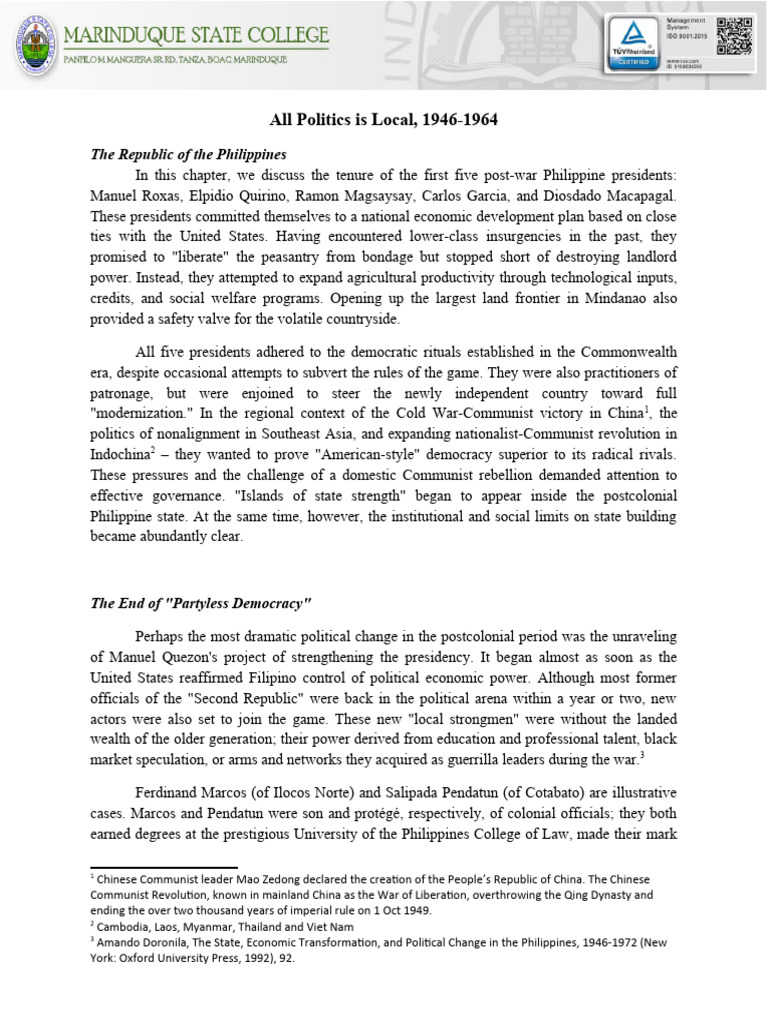
The adage “All politics is local” has long been associated with former U.S. Speaker Tip O’Neill. This saying holds particular relevance in a democratic, multi-party system where local concerns often drive political outcomes. In recent times, there seems to be a renewed focus on the importance of addressing pressing policy issues at the local level, and this trend is expected to play an even more significant role in upcoming elections.
The American system of government, rooted in federalism and democracy, was designed to allow for locally desired outcomes by decentralizing decision-making. This structure enables citizens to have a direct say in matters that affect their communities. The American founding fathers established this system, believing that even if decisions made by local communities might not always be as efficient as those made by professional bureaucrats, the benefits of local involvement were worth it.
In this system, each town selects its representatives from individuals they know personally. These representatives then choose a state representative from among themselves. State representatives, forming the Electoral College, go on to elect the president. This process involves a series of face-to-face decisions, where people can choose someone they have known for years. It represents a more localized form of democracy and a different style of political conversation.
Addressing Local Issues
The political conversation revolves around solving immediate issues such as insecurity, poverty, and other socio-economic challenges. It also includes promises to develop infrastructure and attract physical capital investments, among other development goals. The system is designed to prioritize voters, and politicians are expected to be present in their constituencies to justify their capabilities.
During general elections, politicians typically return to their constituencies. This is when they remember the importance of being on the ground to connect with the people facing these issues. The efforts to reconnect with constituents are often desperate, as politicians try to make a lasting impression before the election concludes.
The Power of Voters
Pessimists argue that once the political season ends, voters begin to chase after the elected leaders, reminding them of the principles of local politics. If their efforts to be heard fail, voters may resort to what is referred to as the “political nuclear button”: “We will meet at the polling unit.” In most cases, voters win by electing a different candidate. Thus, in practice, all politics can indeed be local.
However, it is important to note that not all politics is purely local. Politicians can be deceptive, and in many cases, political actions—whether local or national—are deeply personal. Loyalty, betrayal, manipulation, neutrality, mediation, tribal and ethnic affiliations, and even religious positions are often entangled in personal interests. Every compromise, favor, and burden carried by a politician is driven by self-interest, even if it is framed as public service.
The Personal Nature of Politics
My argument links the causes of changes in our political and democratic system to those who have altered it. Some may refer to them as the “old guard,” but it is crucial to distinguish them from the founding fathers of Nigeria, who remain beyond reproach.
The old guard understands that power is tied to viewing every mistake, loss, and missed opportunity as a direct political consequence. Nothing happens by chance, and nothing is neutral to these leaders. That is why they have survived various political cycles since 1999. They take everything personally, seeing any challenge to their influence as a threat. A culprit must be found, and it must not be the godfather.
Defections are seen as betrayals unless the defectors are themselves. Early-career politicians have no room for mistakes, unlearning, or relearning. They expect everyone who joins to be near-perfect except themselves. Even a small misstep toward the wrong camp becomes a matter of honor. They often label some as “cats with nine lives,” master strategists, or political godfathers.
Manipulation of the Political System
A relevant example is last weekend’s convention organized by a party faction in Abuja. Several political leaders attended the event to select the new leadership of the faction. These leaders are part of the once-largest opposition party in the country, many of whom were part of the political party that governed for 16 years. By 2027, the party will have been out of power for 12 years. Ideally, the party should challenge the ruling party in the 2027 elections. However, the convention was designed to support the ruling party’s leader, Tinubu, in his re-election bid. The political godfathers are well aware of this agenda and seem to agree with it.
Now, the godfathers are back to their various constituents. They will tell their respective voters to ignore what happened in Abuja and invest heavily in local elections with questionable credibility and low morale. They know this effort is futile, but it serves their interests. If the contestants behaved as they did at the national level, they would be treated with contempt and called hypocrites and betrayers.
These individuals have manipulated the democratic political system to serve their personal interests. Every event is twisted to benefit them, and the once-largest political party in the country is now treated like our refineries—kept afloat only for personal gain, never for the public good.
Conclusion
The political class is fully aware of the democratic system, its principles, and the processes involved. They understand that all politics is local, yet they manipulate the system to serve their own interests. This is the reality of modern politics.