Politician Fined for Election Law Violation Over Distorted Poll Data
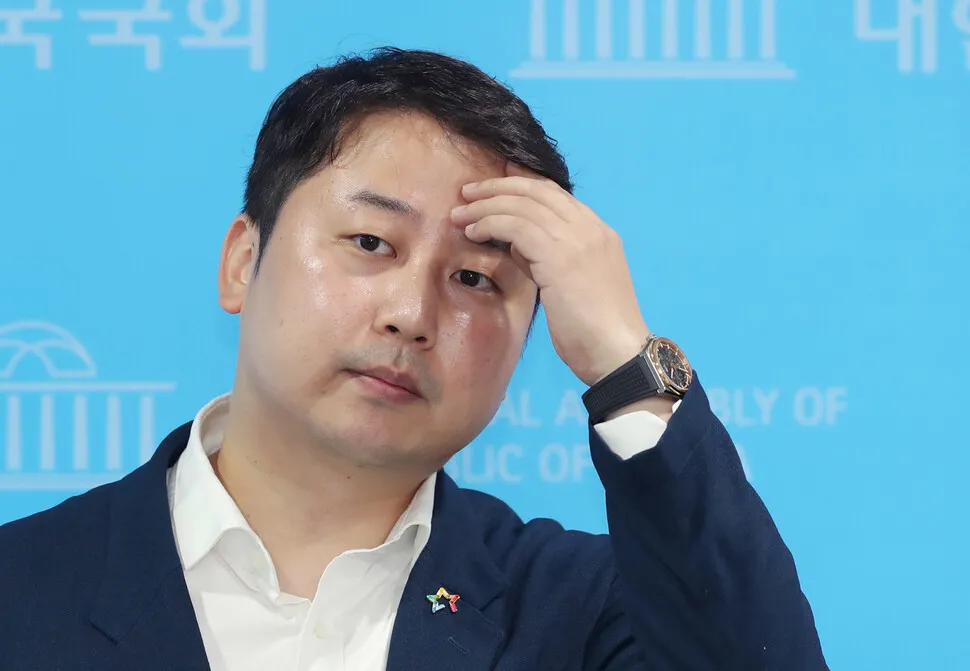
A prominent figure within South Korea’s People Power Party has been handed a significant fine for manipulating and disseminating opinion poll results during the recent general election. Jang Ye-chan, previously the deputy director of the party’s Yeouido Research Institute, received a penalty of 1,500,000 Korean won (approximately $1,100 USD) in a retrial at the Supreme Court. The court found him guilty of violating the Public Official Election Act.
The case centered on promotional materials distributed by Jang during the lead-up to the April 10, 2024, general election. The Busan High Court’s Criminal Division 1, presided over by Judge Kim Joo-ho, determined that Jang had deliberately distorted and publicized opinion poll data. This was achieved through the creation of promotional materials, which were subsequently shared on Facebook and sent via text message to residents in the Suyeong District.
The court’s ruling emphasized the clear intent behind Jang’s actions. “It is reasonable to conclude that the defendant distorted and publicized opinion poll results by producing promotional materials, posting them on Facebook, and sending them via text message to residents of Suyeong District,” the court stated. In determining the sentence, the judges took into account several factors, including the nature and content of the offense, Jang’s age and professional background, the broader election context, and the legal minimum fine for such a violation under election law, which is 1,500,000 Korean won even with leniency applied.
Following the verdict, Jang addressed the outcome, expressing his dissatisfaction with the ruling. “Although I find it unjust and unfair, I believe accepting it is the message a politician should leave for society,” he remarked. He announced his intention to temporarily step back from the central political arena but pledged to continue his commitment to the People Power Party and the conservative political movement through various media appearances and other contributions.
A crucial consequence of this conviction is the impact on Jang’s political future. A confirmed fine of 1,000,000 Korean won or more for violating the Public Official Election Act carries a direct penalty of disqualification from running for public office for a period of five years.
Jang’s political journey in the 22nd general election was already marked by controversy. He had initially secured the People Power Party’s nomination for the Suyeong District constituency. However, he was later disqualified from running under the party banner due to a “controversial remark.” Subsequently, Jang decided to contest the election as an independent candidate in the same district, ultimately losing to his opponents.
The core of the election law violation involved how Jang presented opinion poll data in the week preceding the vote. An opinion poll conducted at the time indicated Jang was in third place with 27.2% when voters were asked who they believed would win, irrespective of their own voting intentions. In contrast, Jang’s promotional materials highlighted a different aspect of the survey. He cited an 85.7% response rate from a separate question concerning the “electability of supported candidates,” and presented this information in a way that implied he was leading in an “election likelihood poll.”
The initial trial had found Jang guilty, citing intentional distortion and the dissemination of false statements. However, the appellate court had initially overturned this decision. The appellate court reasoned that while the promotional materials were deemed inappropriate, the combined percentages of the three candidates in the poll exceeded 100%, and a closer examination of the materials revealed the label “opinion poll hypothetical competition support base.” Based on this, the appellate court concluded that the results had not been distorted.
The Supreme Court, however, disagreed with the appellate court’s interpretation. Its focus was on the prominently displayed phrase, “Jang Ye-chan! 1st in election likelihood poll!” which appeared in the largest font at the top of Jang’s promotional materials. The Supreme Court argued that “General voters are likely to perceive that Jang ranked first in the electability category of the poll.” It further clarified that when assessing false statements under the Public Official Election Act, the overall impression conveyed to voters should be the decisive factor. The Supreme Court concluded that the lower court’s ruling had misinterpreted the legal definition of distorted poll results as defined by the Act.
In a separate matter, the Supreme Court upheld Jang’s acquittal on charges of falsifying academic credentials. During his candidate registration, Jang had listed his educational background as a “Bachelor of Music at Maastricht National Conservatory in the Netherlands,” despite having dropped out of the Faculty of Music at Zuyd University of Applied Sciences in the Netherlands. The lower court had previously ruled that while there were minor discrepancies and exaggerations in his stated education, these did not rise to the level of a false statement. The Supreme Court concurred with this judgment and dismissed the prosecution’s appeal.