Iran’s Escalating Attacks Disrupt Global Energy Markets and Shipping
In the week since a significant military conflict erupted, Iran’s retaliatory actions have sent shockwaves through global energy markets, disrupting supply chains and raising concerns about widespread economic instability. While Tehran has asserted that its targets are exclusively US and Israeli interests, the reality on the ground indicates a broader impact, with critical energy infrastructure and vital shipping lanes falling under attack.
Iran’s escalating aerial barrages across the Gulf, which began last Saturday, intensified with an attack on Azerbaijan on Thursday. These actions have not only rattled regional stability but have also had a tangible effect on the world’s energy supply, which underpins major global economies.
Impact on Global Energy Infrastructure:
The repercussions of Iran’s military posture have been swift and severe, particularly concerning the world’s reliance on Gulf energy resources:
-
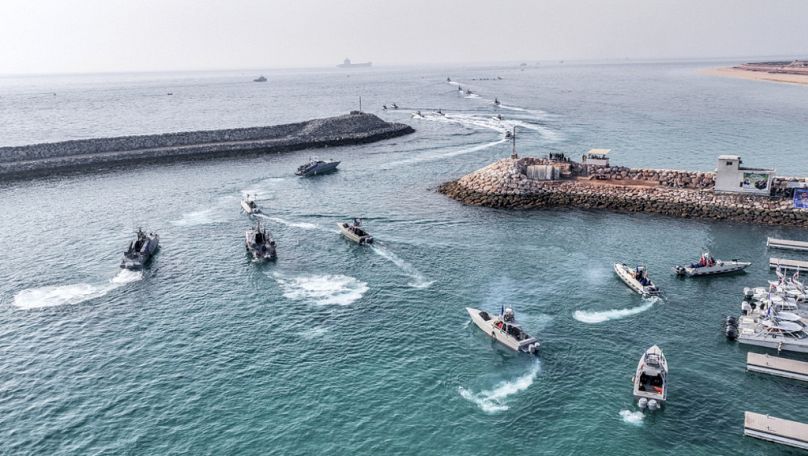
Disruption of Key Shipping Lanes: Iran’s actions have significantly impacted the Strait of Hormuz, a crucial chokepoint through which approximately 20% of global oil passes. Trade and logistics service Lloyd’s List reported that over 200 ships have been stranded due to these disruptions, creating bottlenecks and delays in the global oil trade.
-
Qatar’s LNG Production Halted: The world’s leading liquefied natural gas (LNG) producer, Qatar, was forced to halt its operations. Iranian drones targeted operational complexes in Mesaieed and Ras Laffan Industrial City, home to the world’s top LNG plant. This move has sent tremors through the global energy trade, leading to a sharp increase in LNG prices. Qatar’s LNG output, which accounts for about 20% of global supply, is vital for balancing demand in both Asian and European markets.
-
Saudi Arabian Refinery Shutdown: Following another wave of Iranian strikes, the world’s largest oil refinery in Saudi Arabia was compelled to cease operations. This further exacerbates the supply crunch and contributes to the upward pressure on oil prices.
-
Impact on Other Energy Sources: Beyond Saudi Arabia, Iraqi oil production has also been affected, and Israeli gas fields have experienced disruptions. Additionally, Dubai’s major ports, some of the largest globally, have reportedly faced operational challenges.
Widening Scope of Targets and Economic Concerns:
The UK Foreign Office, in an assessment on Friday, noted a shift in Iran’s targeting strategy. While the tempo of missile and drone attacks may have decreased from the initial days of the conflict, the range of targets has diversified, with an increasing emphasis on economic and energy-industry assets.
Qatar’s Energy Minister, Saad al-Kaabi, voiced grave concerns in an interview with the Financial Times, warning that the ongoing conflict “could bring down the economies of the world.” He elaborated on the potential consequences:
“If this war continues for a few weeks, GDP growth around the world will be impacted. Everybody’s energy price is going to go higher. There will be shortages of some products and there will be a chain reaction of factories that cannot supply.”
The Hormuz Bottleneck and Recession Fears:
Dr. Yousef Alshammari, president of the London College of Energy Economics, highlighted the critical role of the Strait of Hormuz. He stated that a sustained blockade of the strait could trigger a global recession.
“As we continue to go towards the summer, I believe the risks of global recession can be amplified,” Alshammari explained. “And then I think we can have a political pressure coming particularly from China which is the major consumer of Iranian oil. I don’t think China will stay silent here, and certainly the best-case scenario is that we have the Strait of Hormuz coming back on.”
While gas prices have already seen a significant increase, particularly in Europe, the rise in oil prices has been less pronounced than anticipated. Dr. Alshammari attributed this to a period of low demand and the continued ample supply in global oil markets.
Unclear Strategic Rationale Behind Some Attacks:
The pattern of some Iranian attacks has raised questions about their strategic coherence. Former US ambassador to Azerbaijan, Matthew Bryza, commented on strikes against Azerbaijan, Turkey, and Cyprus, suggesting they “don’t make much sense in terms of a coherent, rational military plan.”
Bryza found Iran’s drone attacks on Azerbaijan’s Nakhchivan region particularly perplexing. He noted that Azerbaijan’s President Ilham Aliyev had been one of the few world leaders to visit an Iranian embassy to offer condolences following the death of senior Iranian officials in the conflict. Furthermore, Aliyev had dispatched a plane to help evacuate Iranians from Beirut at Iran’s request, only for Iran to launch an attack on Azerbaijan hours later.
“And even as Azerbaijan’s president said, there was a call from Iran seeking Azerbaijan’s help to evacuate Iranians from Beirut,” Bryza recounted. “President Aliyev sent a plane and said, no, we’re not going to take any money for it. And then hours later, Iran attacked Azerbaijan. So, it makes no sense.”
Potential Motivations and Decentralized Command:
One theory suggests that Tehran might be attempting to destabilize societies and economies to pressure US President Donald Trump. The logic is that sustained supply chain disruptions and rising oil prices could negatively impact Republican support in upcoming midterm elections, potentially leading Trump to ease pressure on Iran.
However, Bryza also proposed a more likely explanation: the delegation of military command. Following a directive from Supreme Leader Khamenei to empower lower-level commanders in the event of senior officials’ deaths, these commanders might be making independent decisions that, while seemingly logical to them, lack a broader strategic sense.
“For whatever reason, they think (their decisions) makes sense, even if they don’t make sense in the grander scheme of things,” the former diplomat concluded.