
Microplastics: A New Suspect in the Rising Tide of Parkinson’s Disease?
A concerning new theory is emerging from scientific circles, suggesting a potential link between the escalating global prevalence of Parkinson’s disease and the pervasive presence of microplastics in our environment and bodies. This research proposes that nearly everyone could face an elevated risk of developing this debilitating neurological disorder.
Parkinson’s disease is a progressive and incurable condition that profoundly impacts an individual’s ability to control movement. It is characterized by tremors, muscle stiffness, and ultimately, severe disability. While genetic predispositions and environmental factors have long been recognized as contributors, a comprehensive review of over 100 studies by researchers in China points to microplastics as a potential, and previously underestimated, player.
The hypothesis is that these ubiquitous tiny plastic fragments, which daily enter our bodies through consumption of food and water, can accumulate within the brain. Once embedded, scientists warn, these plastic particles could initiate a cascade of events leading to the formation of toxic protein clumps, a hallmark pathology associated with Parkinson’s disease.
The researchers articulated their concerns in their review, stating, “With the intensification of global plastic pollution, the potential threats posed by micro- and nanoplastics to human health have become a major concern.” They further elaborated on the pathways of exposure: “[Microplastics] enter the organism through ingestion, inhalation, and skin contact, subsequently accumulating in multiple organs – particularly the brain.”
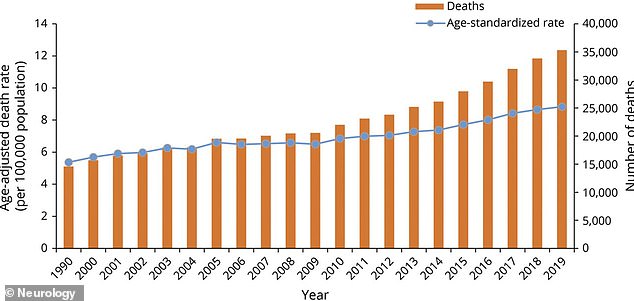
This warning arrives at a critical juncture. Global cases of Parkinson’s disease have more than doubled in the past quarter-century, with an estimated 8.9 million individuals currently living with the condition. In the United States alone, approximately 1.1 million people are believed to have been diagnosed, a figure projected to double by the year 2040.

This surge in Parkinson’s cases runs parallel to a dramatic increase in plastic levels in the environment. Significant accumulation of plastic debris began in the 1960s, and it is now found virtually everywhere in the U.S. environment. Current estimates suggest that the average American consumes approximately five grams of microplastics weekly – equivalent to a single spoonful. This amounts to 21 grams monthly, comparable to the weight of five casino dice, and a staggering 125 grams every six months, enough to fill a standard bowl of cornflakes.
The detrimental health effects of microplastic exposure are not entirely novel. Previous studies have already established links between these plastics and a range of health issues, including infertility, cancer, and developmental delays. Experts attribute these adverse outcomes to the capacity of microplastics to damage cells directly or interfere with crucial hormonal functions.
The origin of microplastics in the environment lies in the gradual degradation of larger plastic items, a process that occurs both during their use and once they are discarded.
The Mechanism of Microplastic Influence on the Brain
The scientific team, spearheaded by researchers from Gannan Medical University in southern China, defined microplastics as plastic fragments smaller than five millimeters, while nanoplastics are even tinier, measuring less than a thousandth of a millimeter. Their review highlights a critical concern: the potential for these minuscule particles to reach the brain and induce the formation of toxic alpha-synuclein protein clumps. These specific protein aggregates are a key pathological feature consistently observed in individuals diagnosed with Parkinson’s disease.

The review further cited compelling evidence suggesting that these plastic particles could instigate neuroinflammation, disrupt intercellular communication within the brain, and even act as carriers for toxic metals to infiltrate brain tissue. Such mechanisms, the researchers propose, could significantly elevate the risk of developing Parkinson’s disease.
This extensive analysis, published in the esteemed journal npj Parkinson’s Disease, involved the meticulous examination of over 100 studies, many of which were based on animal models or laboratory experiments.
Acknowledging Limitations and Future Directions
It is crucial for the scientists to emphasize that their current findings indicate an association, not a definitive causal link. They acknowledge that further rigorous research is imperative to substantiate their theory and fully understand the complex interplay between microplastics and Parkinson’s disease.
Understanding Parkinson’s Disease
Parkinson’s disease arises from the progressive loss of dopamine-producing neurons in specific areas of the brain. This neuronal degeneration disrupts normal brain activity, leading to the characteristic motor symptoms associated with the condition. The precise reasons for this cellular demise remain a subject of ongoing investigation. However, existing research suggests that the immune system may mistakenly target and eliminate these vital dopamine-producing cells. Factors such as genetic vulnerability, exposure to certain toxins, pesticides, and even contaminants in well water have been implicated as potential triggers.
Risk Factors and Emerging Concerns
Certain demographic groups face a higher predisposition to Parkinson’s disease. Individuals over the age of 60 and men are at a greater risk, with men being approximately 50 percent more likely to develop the condition than women.
Recent studies are also shedding light on environmental exposures that might increase risk. One study published earlier this month indicated that individuals who obtain their drinking water from newer groundwater sources may face a heightened risk due to the potential presence of more contaminants. Another paper from January raised concerns for golf enthusiasts, suggesting a possible increased risk from exposure to pesticides commonly used on golf courses.
Currently, there is no cure for Parkinson’s disease. However, medical interventions are available that can effectively manage symptoms and slow the progression of the condition. The ongoing research into potential environmental factors like microplastics offers a glimmer of hope for developing more targeted preventative strategies and therapeutic approaches in the future.