Lukashenka and Kim Jong-un Forge Closer Ties Amid Western Sanctions
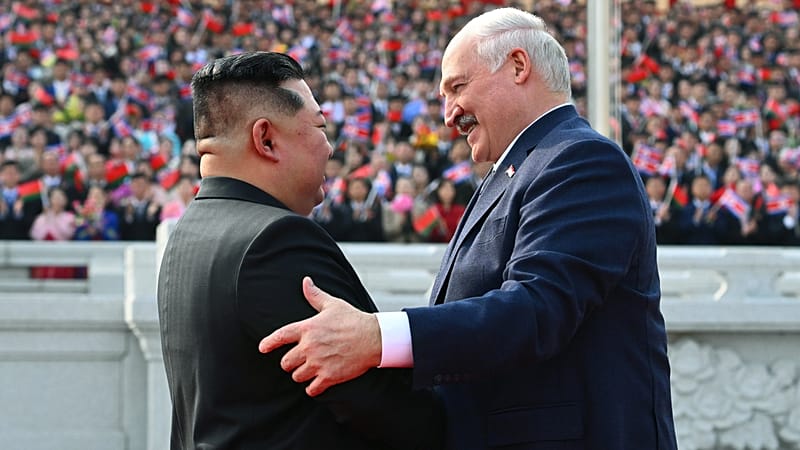
Belarusian President Aliaksandr Lukashenka concluded a significant visit to Pyongyang, solidifying an increasingly aligned front between the two nations. The trip, marked by a personal exchange of gifts and the signing of a new treaty, underscores a growing strategic partnership between regimes facing international pressure from the West.
During the high-profile visit, President Lukashenka presented North Korean leader Kim Jong-un with an automatic rifle. According to state media, Lukashenka jestingly remarked that the weapon might be useful “in case enemies appear.” This symbolic gesture comes as both leaders are navigating complex geopolitical landscapes, characterized by strained relations with Western powers and an increasingly robust alignment with Russia.
The centerpiece of the visit was the signing of a comprehensive “friendship and cooperation” treaty. Lukashenka described the document as “fundamental,” heralding a new era in bilateral relations. He acknowledged past limitations in close cooperation, attributing them partly to Belarus’s own shortcomings, but expressed genuine pleasure at the significant intensification of ties.
Kim Jong-un, in turn, conveyed “solidarity and full support” for Belarus, explicitly denouncing what he termed “unlawful pressure on Belarus from the West.” This sentiment echoes Pyongyang’s own rhetoric against perceived Western interference and sanctions.
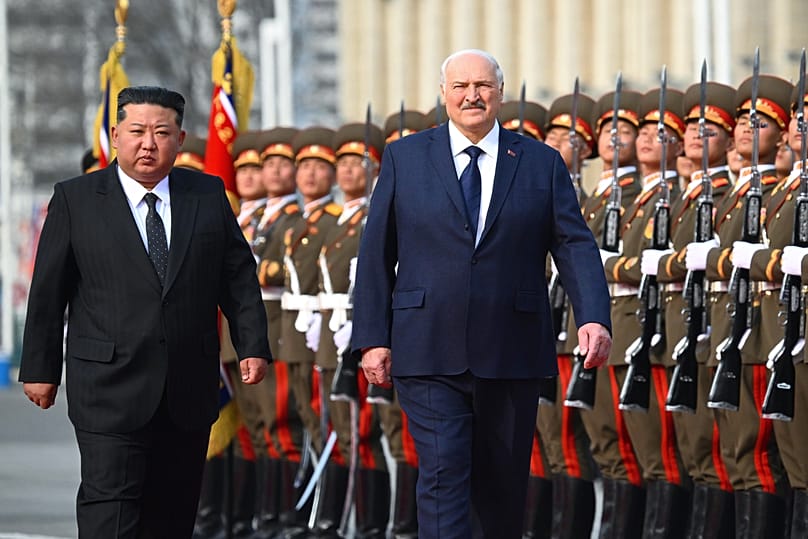
As part of the official itinerary, President Lukashenka paid his respects at the Liberation Monument, a memorial dedicated to Soviet soldiers. In a gesture with clear geopolitical implications, he laid flowers at the monument at the behest of Russian President Vladimir Putin. This act was framed as an expression of gratitude for Russia’s assistance in the ongoing conflict in Ukraine, further cementing the trilateral alignment between Belarus, North Korea, and Russia.
In a reciprocal exchange, Kim Jong-un presented Lukashenka with an elaborate mosaic vase. The artwork, featuring a portrait of the Belarusian leader, was reportedly crafted from approximately 30 seashells, highlighting a dedication to artisanal craftsmanship. The visit concluded with a personal send-off, as Kim Jong-un accompanied Lukashenka to the airport for a “warm farewell,” signaling the personal rapport established between the two leaders.
A Shared Stance Against Western Influence
The burgeoning alliance between Belarus and North Korea is rooted in a shared opposition to Western policies and sanctions. Both nations are currently subject to extensive international sanctions, and both regimes have faced accusations of significant human rights violations. This common ground has propelled their diplomatic and military cooperation to new heights.
Belarus has been a crucial strategic partner for Russia, particularly since the full-scale invasion of Ukraine in February 2022. President Lukashenka’s government permitted Russian forces to use Belarusian territory as a staging ground for the offensive and subsequently authorized the deployment of Russian tactical nuclear weapons within Belarus. This decision has significantly altered the security calculus in Eastern Europe.
President Lukashenka, who has been in power since 1994, has consistently demonstrated unwavering support for Moscow’s actions, positioning Belarus as a key ally in Russia’s geopolitical ambitions. The presence of Russian tactical nuclear weapons on Belarusian soil further underscores this close military integration.
North Korea, under Kim Jong-un, has also significantly reoriented its foreign policy towards Russia in recent years. Pyongyang has been a notable supplier of military hardware and personnel to support Russia’s war in Ukraine, portraying itself as a bulwark against what it perceives as American hegemony. This has led to a series of high-level engagements and agreements between Pyongyang and Moscow.
The strategic partnership agreement signed between Russia and North Korea in 2024 is particularly noteworthy. This pact obligates each nation to provide immediate military and other forms of assistance should the other face an armed attack. This mutual defense pact signals a deepening commitment to collective security and a clear message to potential adversaries.
Mutual Benefits and Emerging Dependencies
The intensified cooperation between Russia and North Korea is understood to be mutually beneficial. Analysts suggest that North Korea is receiving substantial financial aid, advanced military technology, and essential supplies of food and energy from Russia. This support is crucial for Pyongyang, helping it to reduce its long-standing dependence on China as its primary economic and political benefactor.
Similarly, the growing ties with Belarus provide North Korea with an additional avenue for international engagement and a potential buffer against Western isolation. For Belarus, the partnership offers a degree of diplomatic and economic support, as well as military backing, in the face of Western sanctions and political pressure.
The embrace of an authoritarian bloc, characterized by shared grievances against the West and a willingness to challenge the existing international order, marks a significant development in global geopolitics. The strengthening of the Belarus-North Korea axis, coupled with their deep alignment with Russia, points towards a more fragmented and potentially volatile international landscape. The ongoing interactions between these nations are being closely monitored by governments worldwide, as they signal a potential reshaping of regional and global power dynamics.