A Historic Rescue and Strategic Implications
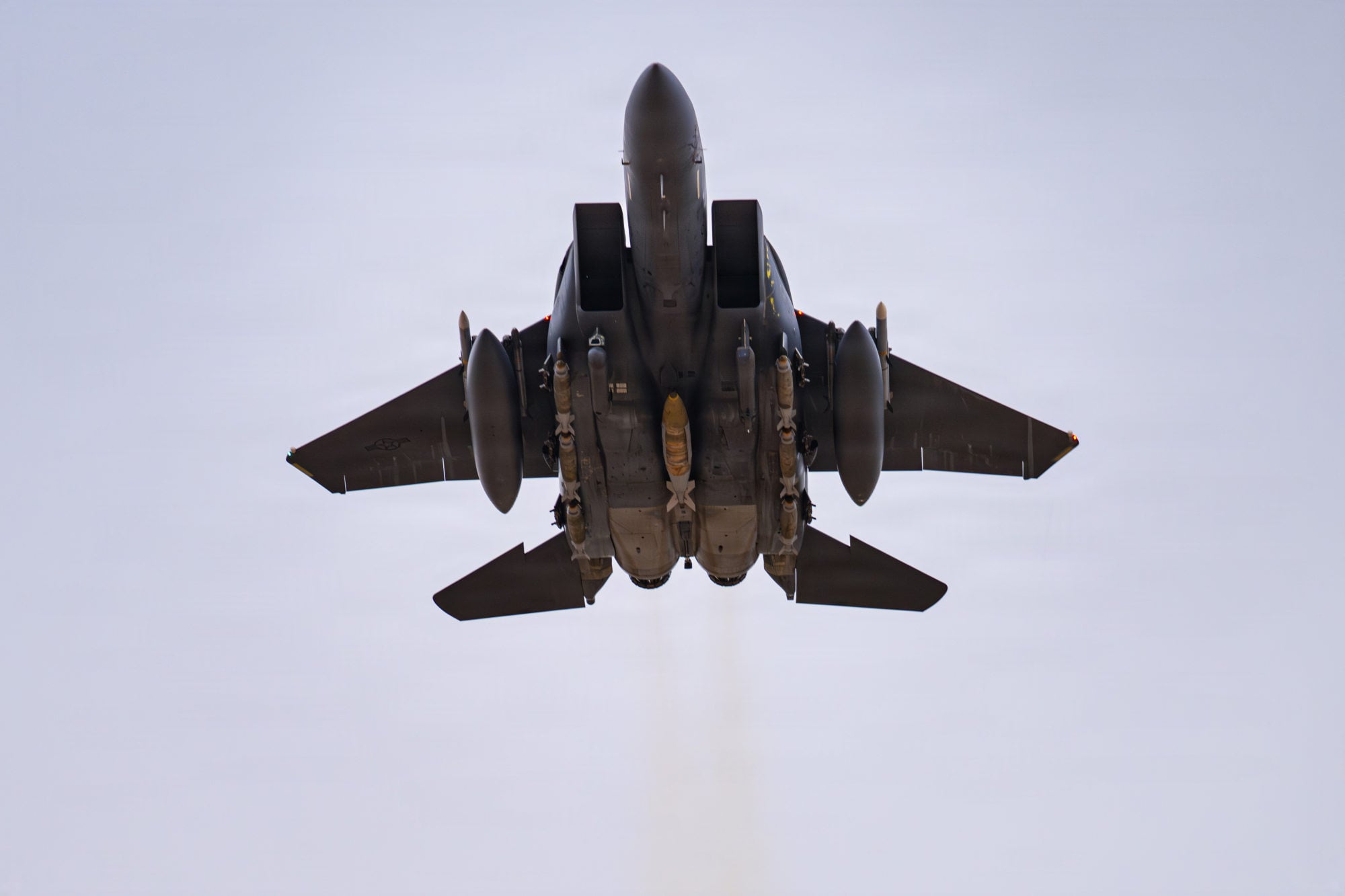
The recent rescue of a missing American crew member after Iran shot down an F-15E fighter jet has sparked significant discussions among military analysts around the world. According to former personnel from the People’s Liberation Army (PLA), this event not only boosts morale within Iran but also highlights its retained air-defence capabilities.
On Sunday, US President Donald Trump confirmed that the missing crew member — one of two on the fighter jet shot down over southern Iran on Friday — had been successfully rescued. This marks the first time a manned US aircraft has been shot down over Iran since the US-Israel war on the country began on February 28.
Trump praised the operation, stating that the US military had “pulled off one of the most daring search and rescue operations” in its history. He emphasized that the rescued airman was “safe and sound” despite being “seriously wounded.” The incident underscores the United States’ ability to conduct high-risk rescue missions under hostile conditions.
Both the US and Iran were actively searching for the missing air force officer after the F-15E fighter jet was brought down by Iran’s air-defence system, according to Iranian officials. Iranian state media released images of alleged debris near the southern city of Isfahan, following reports that the jet had been shot down.
The pilot of the aircraft was rescued shortly after the crash, but the weapons systems officer accompanying him remained missing. Tehran offered a reward to the Iranian public for information leading to the capture of the missing airman, highlighting the strategic value of such a prisoner.
Rescuing crew members from a jet downed in hostile territory is one of the riskiest and most complex military operations. It involves special operations teams, often accompanied by helicopters, to locate, support, and recover missing personnel before they are captured, all while potentially under enemy fire.
According to US media reports, the missing crew member ejected separately from the pilot and found himself alone in rugged, mountainous terrain. He evaded capture for more than 24 hours, climbing about 2,000 metres (7,000 feet) up a ridge line and hiding in a mountain crevice. After the rescue, he was transferred to Kuwait for medical treatment.
Trump stated that the CIA monitored the airman’s location and helped the Pentagon carry out the combat search and rescue (CSAR) mission. He also mentioned a deception campaign to convince Iranian forces that the airman was being moved by ground convoy elsewhere, drawing them away from the true extraction site.
While not all details of the mission have been disclosed, the CSAR mission reportedly involved a large number of special operations commandos, including the elite US Navy Seal Team Six and other troops. Trump said the US military sent dozens of aircraft into Iran, and the operation was carried out without loss of life.
Two US MC-130J Commando II transport aircraft intended to fly rescue crews out could not take off from sandy soil in a remote area inside Iran and were reportedly destroyed to keep them out of enemy hands. The commandos then flew out after three extra aircraft were sent.
Iran’s military also claimed to have brought down a US A-10 ground attack aircraft near the Strait of Hormuz, with US media reporting that the pilot of that plane was rescued.
Song Zhongping, a military commentator and former PLA instructor, noted that the complex maneuvers performed by the US military and the heavy cost it paid to extract the crew member demonstrated its comprehensive system for assessing and recovering personnel and casualties. He highlighted how the stalled aircraft “were completely destroyed to prevent leaks of classified information.”
Song added that even though Iran’s air-defence and anti-missile system had been damaged and fragmented, it still posed a significant threat to US and Israeli aircraft because many “such systems are now operating independently.” He emphasized that the incident highlights both technological and tactical challenges in high-stakes rescue operations.
Retired PLA senior colonel Zhou Bo, now a senior fellow with Tsinghua University’s Centre for International Security and Strategy, said the incident was an opportunity for both the US and Iran to “claim their own victories.” He noted that the US demonstrated precise information gathering, coordinated actions, and tactical deception in rescuing the airman. Meanwhile, Iran showed that it still possesses some air-defence capabilities, which can significantly change the perception that it has no air-defence capabilities.