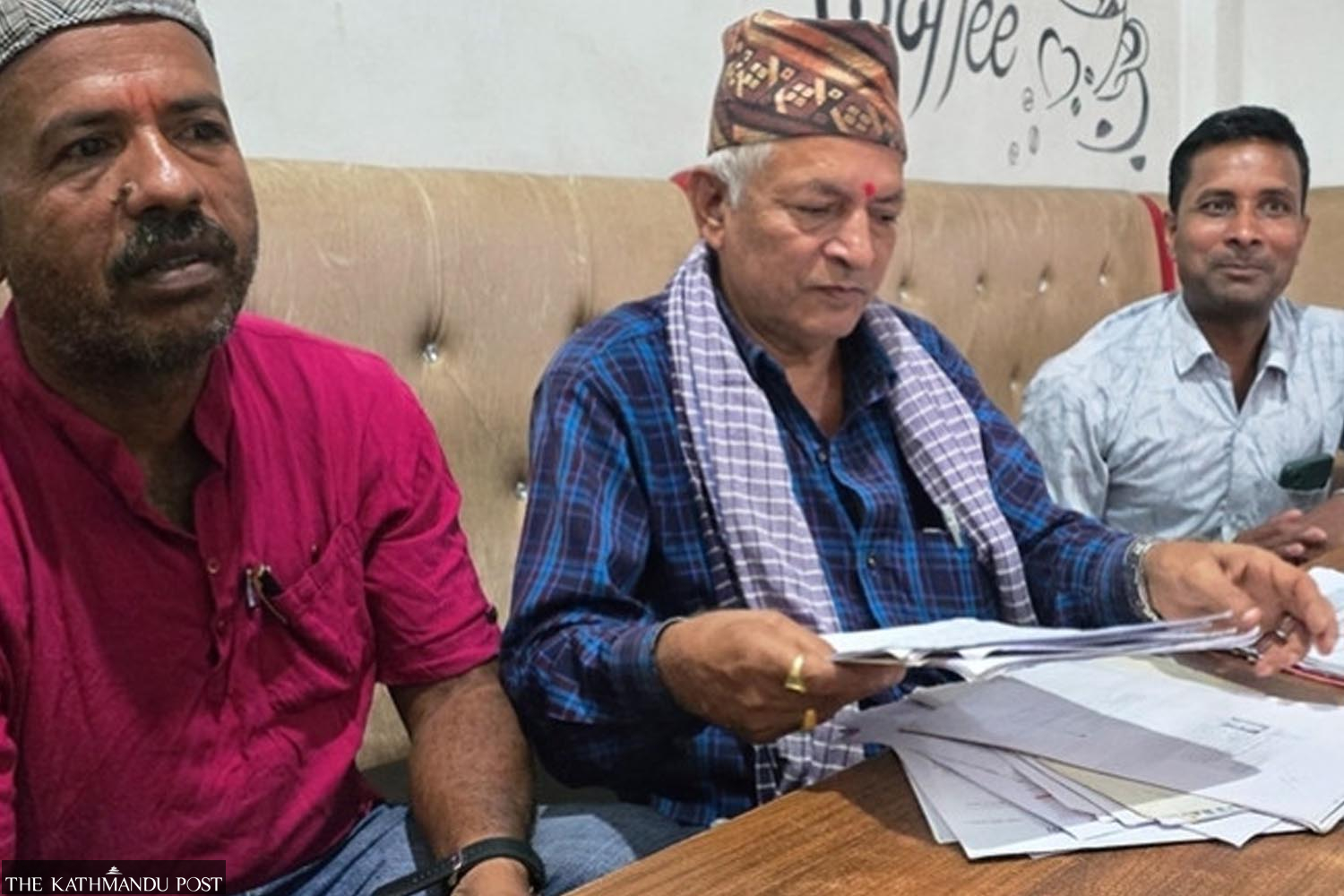
A Tragic Tale of Betrayal and Financial Exploitation
Arjun Phuyal, a 61-year-old man from Chandrapur Municipality-4, once owned a successful grocery shop in Chandranigahapur Chowk. His business thrived, and he enjoyed a steady income. However, his life took an unexpected turn when he formed a friendship with Rambabu Sah Kalwar, a neighboring cloth merchant. Their bond grew strong, and they decided to invest in land together.
In 2009, Phuyal purchased 10.5 kattha (0.359 hectares) of land in Chandrapur-5 by borrowing Rs2 million from Kalwar and adding Rs1 million of his own money. The land was divided into three plots, with one kept in Phuyal’s name and the other two registered under Kalwar’s. Over time, additional plots were transferred to Kalwar’s name. By 2011, Kalwar had taken over all the plots that were originally in Phuyal’s possession. According to their agreement, Kalwar was supposed to provide Phuyal with funds to buy land elsewhere, but this never happened. He also failed to return the Rs1 million that Phuyal had invested.
In January 2024, Kalwar filed a lawsuit against Phuyal, accusing him of robbing him of cash and gold. However, on April 13, 2024, the district court ruled that there was insufficient evidence to support the robbery charges. Despite this, Phuyal remains in a state of mental and financial distress, having lost years of hard-earned savings and his investments.
Phuyal has been tirelessly seeking justice for the past ten years, visiting various agencies without success. “Even after a decade, neither has the land been transferred to my name, nor has the money been returned,” he said. “I have been pushed to the streets—where should I go for justice? I invested all my assets in this land; now I am left with nothing.”
Feeling cheated, Phuyal has appealed to the local administration and people’s representatives. In 2023, the judicial committee of Chandrapur Municipality summoned Kalwar and directed him to return the land to Phuyal. However, Kalwar has continued to deny any financial dealings with him. Phuyal claims that Kalwar would lend money to many people and make them sign cheques and promissory notes, only to later use those documents to file lawsuits.
Police recently arrested Kalwar on charges of predatory lending and presented him before the court. He was released on bail of Rs 50,000.
A Pattern of Exploitation
Narayan Ghimire of Chandrapur-4 is another victim of Kalwar’s schemes. He borrowed Rs500,000 at interest from Kalwar but, after repaying Rs2.7 million—including interest—over several instalments, Kalwar filed a court case against him by filling in Rs2.3 million on a blank security cheque dated November 24, 2019. Ghimire claims that Kalwar had taken a blank cheque as security for the loan and later filled in a large amount to file the case.
“We approached the police, saying we had been wronged, but Kalwar sued us in court instead,” Ghimire said. He and others have been appealing to the police and administration for justice, but the situation remains unresolved.
Phuyal, Ghimire, and others are not alone. Around 7,000 residents across the district have filed complaints regarding loan sharking at the District Administration Office in Gaur, claiming they have been victimized by moneylenders.
Rambabu Mahato of Brindaban Municipality-2 also shared his experience. In 2017, he borrowed Rs500,000 from Kalwar at a monthly interest rate of 6 percent. In exchange, Kalwar made him sign a promissory note worth Rs2 million—four times the borrowed amount. Mahato repaid the amount along with Rs140,000 in interest within nearly four months. Bank statements show that he subsequently repaid a total of Rs1.6 million borrowed at different times. Most recently, in 2018, Mahato borrowed Rs2.4 million. In return, he provided five blank cheques as security, while Kalwar retained the earlier Rs2 million promissory note.
Transactions between the two continued. Within a span of two years, Mahato said he paid Rs5.4 million in principal and interest. However, after Kalwar refused to return the cheques and promissory notes, Mahato approached the police.
Phuyal, Mahato, and Ghimire filed complaints of predatory lending with the administration a year ago. “On one hand, there is 72 percent interest; on the other, Kalwar is skilled at seizing promissory notes and cheques,” Mahato said. “He has pushed us to the streets. There must be accountability.”
A complaint regarding dual citizenship has also been lodged against Kalwar. The District Administration Office said the matter is under investigation.
Systemic Issues and Lack of Justice
Although the government has criminalized loan sharking by amending the law, victims who have filed complaints with the District Administration Office and the police say they are frustrated at not receiving the expected justice. Victims claim that when they go to file complaints, the administration often pressures them to reach settlements.
Mahato alleges that loan sharks with access to administrative bodies receive political protection and influence officials through financial inducements, leaving genuine victims in the shadows. They further state that, in many instances, court verdicts have caused additional hardship.
According to the victims, when courts base their rulings primarily on documents allegedly manipulated by moneylenders in advance, victims end up losing their ancestral property. Finding all avenues for justice closed, loan shark victims had travelled to Kathmandu and staged sit-ins on multiple occasions.