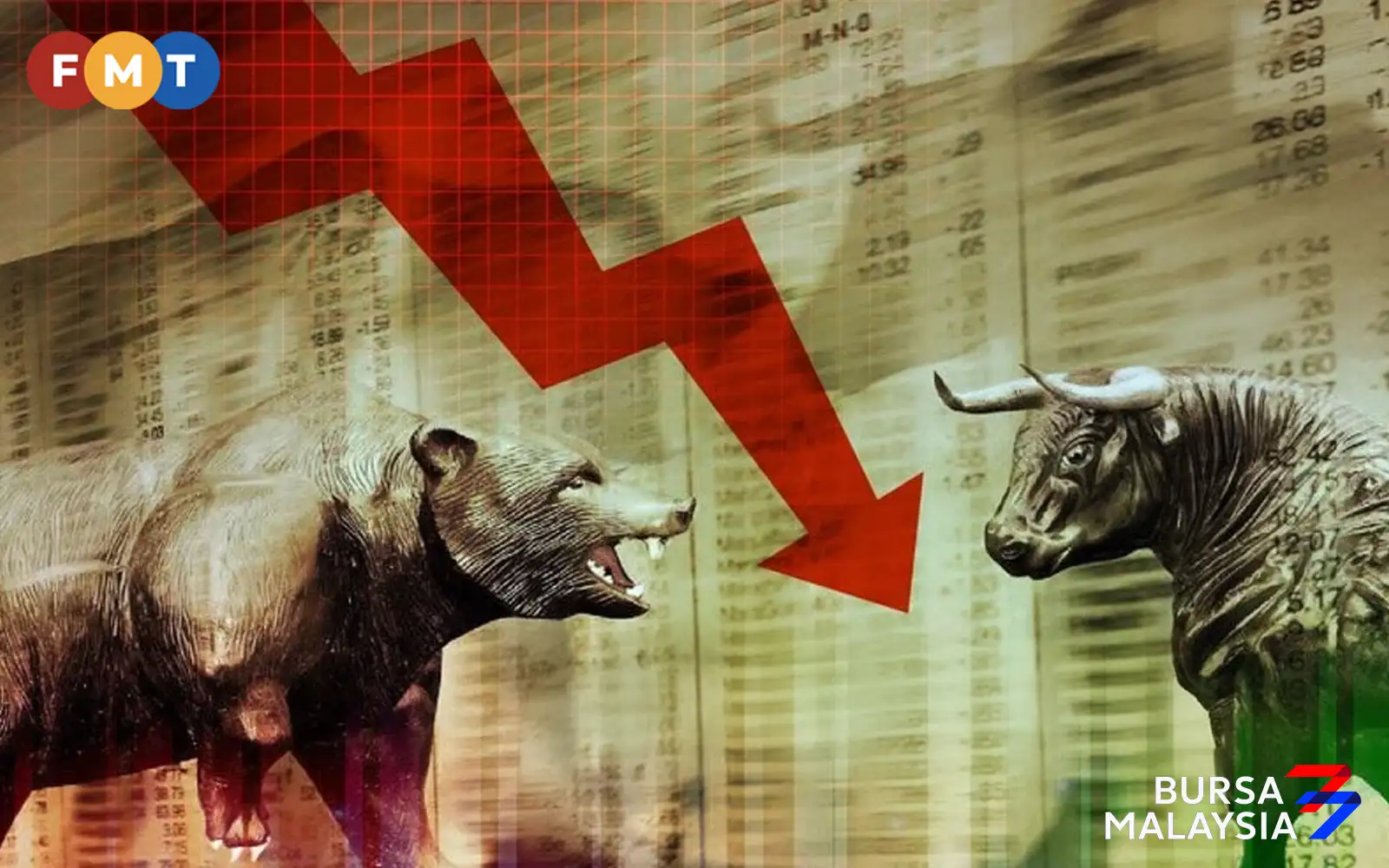
Malaysian Equities Open Modestly Lower, Reflecting Global Sentiment
Kuala Lumpur – Bursa Malaysia commenced its trading session on Wednesday with a slight dip, mirroring the subdued performance observed on Wall Street overnight. The benchmark FTSE Bursa Malaysia KLCI (FBM KLCI) saw a minor retreat in the early hours of trading, indicating a cautious start to the day for Malaysian investors.
At approximately 9:10 AM, the FBM KLCI recorded a decrease of 2.83 points, translating to a 0.16% decline from its closing figure of 1,711.95 on Tuesday. The index had initiated the trading day with an opening at 1,711.43, a marginal drop of 0.52 of-a-point. This initial movement suggested a prevailing bearish sentiment as the market opened its doors for the day’s transactions.
Market Breadth and Trading Activity
The broader market sentiment, as indicated by market breadth, leaned towards the negative. This means that more stocks were declining in value than advancing. Specifically, there were 293 stocks that experienced a decrease in price, compared to 128 stocks that saw an increase. This disparity highlights a prevailing trend of selling pressure across a significant portion of the listed companies.
Adding to the picture of market activity, 251 counters remained unchanged, indicating a period of consolidation or lack of significant trading interest for these particular stocks. Furthermore, a substantial number of counters, precisely 1,950, were reported as untraded. This could be attributed to various factors, including low trading volume, lack of investor interest, or specific market conditions affecting these stocks. In addition, 10 counters were suspended from trading, a measure typically taken for regulatory or corporate reasons that require further clarification or resolution.
Factors Influencing the Market
The dip in Bursa Malaysia’s opening performance is largely seen as a spillover effect from the overnight movements on major international stock exchanges, particularly Wall Street. Global market sentiment often plays a crucial role in influencing regional bourses, and the weaker performance in the United States likely contributed to the cautious approach adopted by investors in Malaysia.
Several factors could have contributed to the subdued performance on Wall Street, which in turn affected Bursa Malaysia:
- Economic Data Releases: Investors are constantly scrutinizing economic indicators for signs of inflation, interest rate changes, or potential economic slowdowns. Any data that suggests a less favourable economic outlook can trigger a sell-off.
- Corporate Earnings: The reporting season for corporate earnings is a critical period. Disappointing results or cautious guidance from major companies can have a ripple effect across the market.
- Geopolitical Developments: Unforeseen geopolitical events or escalating tensions can introduce uncertainty into the global financial landscape, leading investors to adopt a more risk-averse stance.
- Monetary Policy Signals: Statements or decisions from central banks regarding interest rates or quantitative easing/tightening policies are closely watched. Any indication of a more hawkish stance can lead to market corrections.
Sectoral Performance and Investor Focus
While the broader market experienced a slight downturn, it is important to note that specific sectors might have performed differently. Investors often rotate their investments based on sector-specific news, economic trends, and valuations. For instance, sectors that are more sensitive to global demand or commodity prices might exhibit greater volatility.
The underlying reasons for the negative market breadth, with losers significantly outnumbering gainers, suggest that investors might be reassessing their positions across a wide range of stocks. This could be driven by a general sense of caution rather than specific issues with individual companies. The high number of untraded counters also indicates that trading activity might be concentrated in a few key stocks, while many others are experiencing a lull.
Looking Ahead
As the trading day progresses, market participants will be closely observing the developments in regional and global markets, as well as any local news that could influence investor sentiment. The direction of the FBM KLCI will likely be shaped by a combination of these external factors and any domestic economic or corporate announcements.
The initial dip suggests a need for further positive catalysts to drive the market higher. Investors will be seeking clarity on economic prospects, corporate performance, and the broader geopolitical landscape to make informed investment decisions. The coming hours and days will reveal whether this opening weakness is a temporary blip or the beginning of a more sustained trend. The resilience of the Malaysian market will be tested as it navigates the prevailing global economic currents.