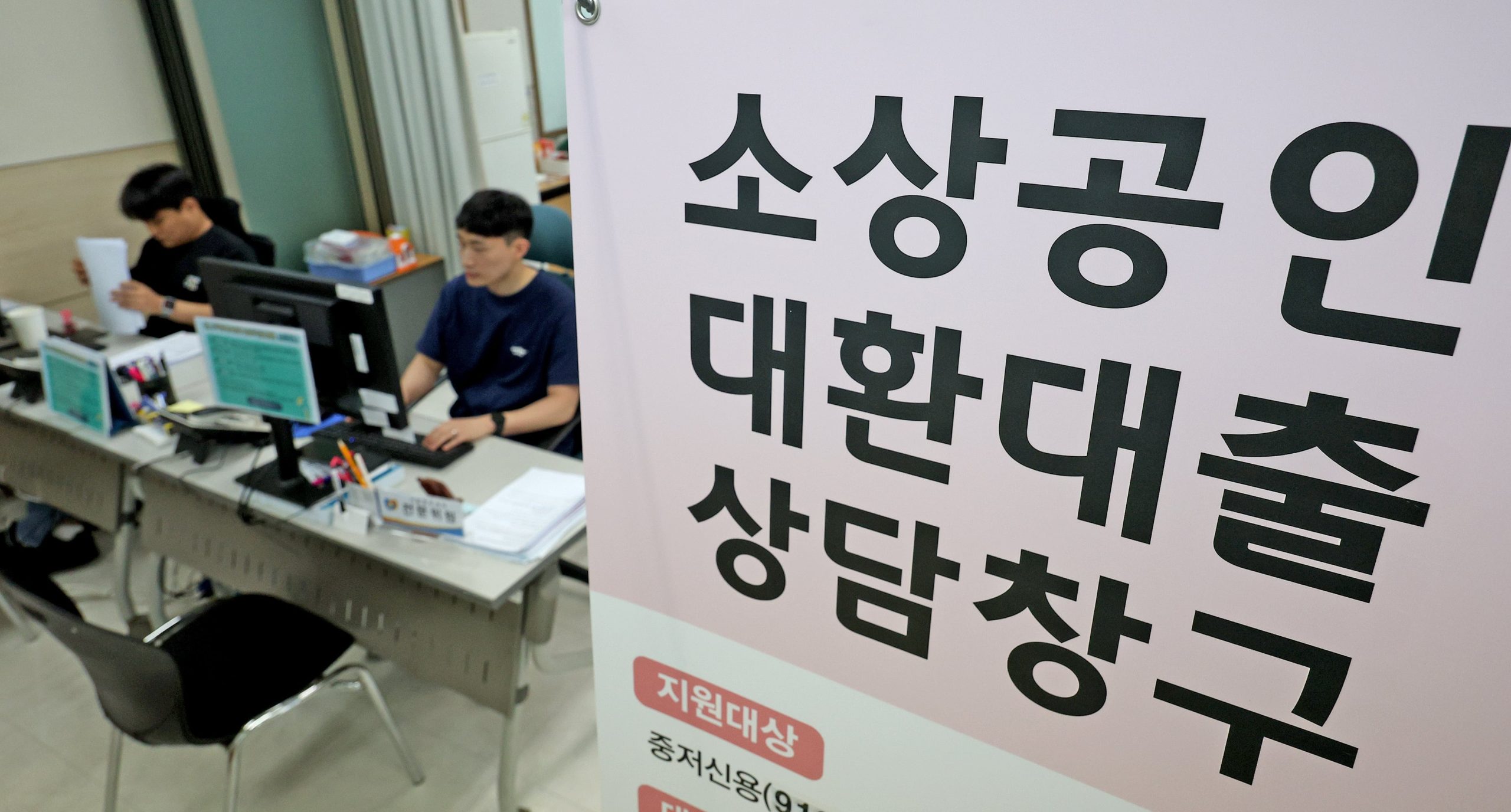
Low-Credit Borrowers Face Diminishing Options as High-Interest Lending Surges
Last year witnessed a significant contraction in the availability of credit loans for individuals with lower credit scores, a trend that has subsequently led to a marked increase in their reliance on more expensive, high-interest lending avenues. This shift, characterized by a notable decrease in traditional credit offerings and a corresponding rise in products like card loans and private lending, signals a tightening financial landscape for vulnerable borrowers.
According to data compiled by the Korea Credit Finance Association, the supply of credit loans specifically designated for low-credit borrowers—defined as those falling within the bottom 20% of creditworthiness based on KCB standards—experienced a substantial decline. In the preceding year, these loans amounted to 33.7 trillion Korean won. However, this figure plummeted by 11% to 30 trillion Korean won last year.
This reduction in credit for low-credit individuals was more pronounced than the overall decrease in credit loan supply. Across the board, the total supply of credit loans contracted by 9.1%, falling from 141.1 trillion Korean won to 128.2 trillion Korean won. The disproportionate reduction for low-credit borrowers indicates a strategic pivot by financial institutions to manage overall loan volumes. This approach often involves a more conservative stance on lending to segments deemed to carry a higher delinquency risk, a characteristic often associated with lower credit scores.
Sectoral Shifts in Loan Availability
The impact of this trend was felt across various financial sectors:
- Banks: Traditional banking institutions reduced their credit loan offerings to low-credit borrowers by a considerable 500 billion Korean won.
- Savings Banks and Card Companies: Both savings banks and card loan providers saw significant decreases in their supply of credit to this demographic, each reducing their offerings by 1.7 trillion Korean won.
This data illustrates a widespread tightening of credit access for those with lower credit profiles within more regulated financial institutions.
The Rise of High-Interest Alternatives
In stark contrast to the shrinking credit lines from mainstream lenders, private lenders—entities that often operate at or near the legal maximum annual interest rate of 20%—demonstrated an expansion in their lending activities. Last year, these private lenders increased their supply of loans to low-credit borrowers by 300 billion Korean won, bringing their total provision to 1.7 trillion Korean won.
This divergence in lending patterns has led to a significant shift in the composition of credit sources for low-credit borrowers. The proportion of credit loans sourced from card loans and private lending collectively rose to 58.3% of the total credit available to this group. This represents an increase of 2.3 percentage points compared to the previous year, when these high-interest sources accounted for 56% of the credit supply.
Concerns Over Loan Quality and Borrower Welfare
Financial analysts are expressing growing concern over the implications of this trend. The escalating share of high-interest loan products within the credit portfolio of low-credit borrowers is widely seen as a deterioration in the overall quality of these loans. This concentration in more expensive debt instruments can trap borrowers in cycles of debt, making it increasingly difficult to manage their financial obligations.
The shrinking availability of more affordable credit options forces individuals with lower credit scores to turn to lenders who charge significantly higher interest rates. This not only increases the cost of borrowing but also heightens the risk of default, potentially leading to further financial distress for an already vulnerable population. The trend underscores a critical need for greater access to responsible and affordable credit for all segments of society.