A Sweet Celebration: Unpacking the Global Love Affair with Waffles
The humble waffle, a culinary delight enjoyed across continents, has a dedicated day of international recognition, and its origins are as charming as its taste. International Waffle Day, celebrated annually on March 25th, traces its roots back to Sweden, where a linguistic quirk intertwined a religious observance with a beloved pastry.
The date of March 25th holds significance for Christians as the Feast of Annunciation, commemorating the archangel Gabriel’s visit to the Virgin Mary. This sacred occasion is also known as “Our Lady’s Day.” In Swedish, this translates to “vårfrudagen.” When spoken, “vårfrudagen” bears a striking resemblance to the Swedish word for waffle, “våffeldagen.” This phonetic similarity led to the day becoming unofficially known as Waffle Day in Sweden. Over time, the universal appeal of waffles propelled this Swedish tradition into a global celebration, even as the religious undertones have largely faded for many, replaced by a simple, sweet indulgence.
A World of Waffles: Diverse Delights for Every Palate
The enduring popularity of waffles is evident in the sheer variety found worldwide, offering countless ways to partake in this special day. Each region has put its unique stamp on the batter, creating distinct textures, flavors, and serving styles.
- Swedish Waffles: To honor the day’s origins, sampling a Swedish waffle is a must. These distinctive waffles are shaped like hearts and are typically served with fresh fruit, a dollop of whipped cream, or a scoop of ice cream. Unlike their Belgian counterparts, Swedish waffles do not contain yeast. This results in a thinner batter and a texture that leans more towards a pancake, offering a delicate and slightly chewy bite.
-
Stroopwafels: Hailing from the Netherlands, the stroopwafel is a delightful treat that lives up to its name, which translates to “syrup waffle.” This iconic Dutch confection consists of two thin, crisp waffle-like cookies ingeniously sandwiched together with a rich, gooey caramel syrup. The contrast between the crunchy exterior and the sweet, flowing interior is a textural masterpiece.
-
Egg or Bubble Waffles: From the vibrant street food scene of Hong Kong emerges the egg or bubble waffle, a truly unique creation. Characterized by its distinctive spherical “bubbles,” this waffle boasts a delightfully crisp texture and a subtle vanilla flavor. These bubbles can be enjoyed individually as bite-sized snacks, or the entire waffle can be molded into a cone, providing a perfect edible vessel for an array of delicious toppings.
Belgian Waffles: A Tale of Two Cities
While often broadly referred to as “Belgian waffles,” the most globally recognized variations actually stem from two distinct traditions within Belgium itself: the Brussels waffle and the Liège waffle. Understanding their differences reveals a fascinating insight into regional culinary preferences.
- Brussels Waffles: Though now an icon of the Belgian capital, the Brussels waffle’s origins can be traced back to Ghent. These waffles are typically rectangular, characterized by their light and airy texture, and possess a delicate sweetness. Their structure makes them ideal for a more elaborate presentation, often enjoyed as a sit-down meal.
- Liège Waffles: Named after the city in Belgium’s Wallonia region, the Liège waffle offers a contrasting experience. These waffles are round and are made from a denser dough. The key to their unique flavor and texture lies in the inclusion of Belgian pearl sugar, a key ingredient absent in Brussels waffles. This pearl sugar caramelizes during baking, imparting a distinct sweetness and a delightful crunch without the need for additional toppings.
Sebastien Nyssen, manager of the waffle shop Capoue, highlights the fundamental difference: “It’s already [has] enough sugar, and we don’t need to add anything to make it more tasty.” This inherent sweetness means Liège waffles are often savored on their own, making them a convenient and satisfying on-the-go treat.
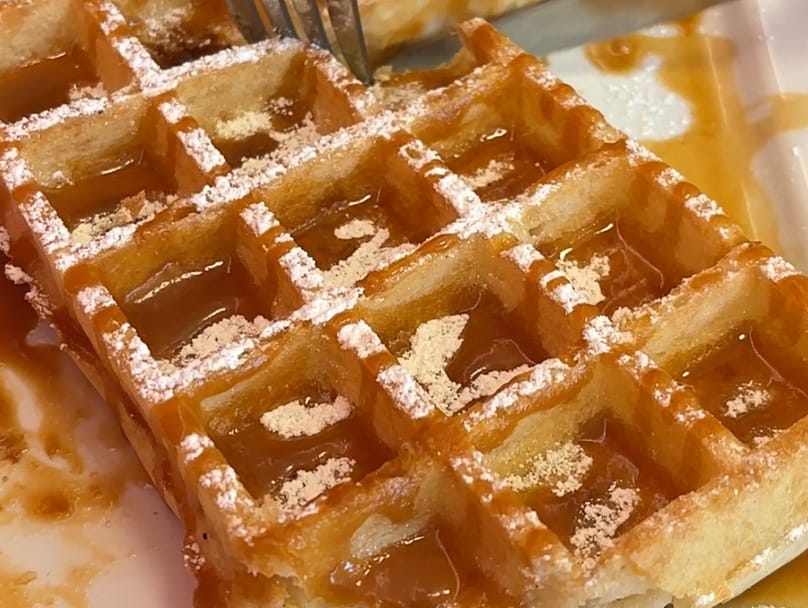
In contrast, the lighter and less intensely sweet Brussels waffle serves as a more versatile canvas for toppings. It is common to find Brussels waffles adorned with a dusting of powdered sugar, a generous swirl of whipped cream, decadent caramel or chocolate sauce, or even a scoop of luxurious ice cream. While Liège waffles are enjoyed for their self-contained perfection, Brussels waffles invite a more adventurous exploration of complementary flavors and textures.