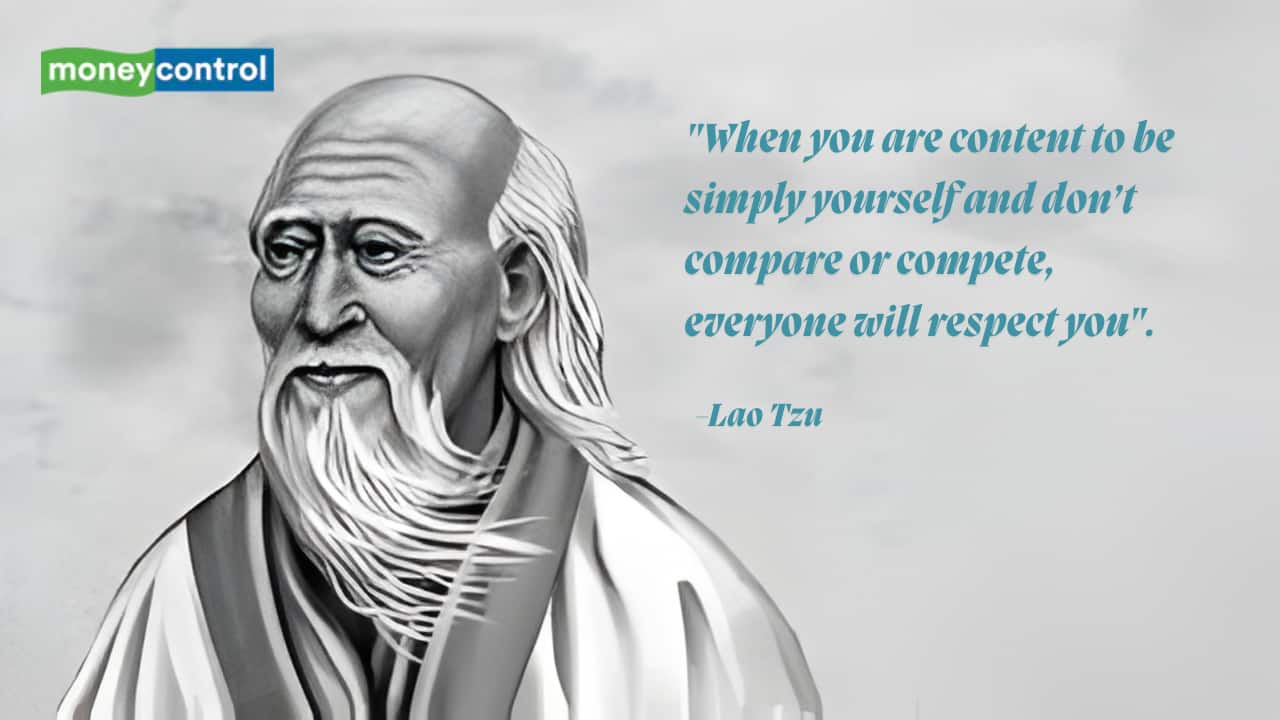
In today’s hyper-connected world, where social media feeds are a constant barrage of curated perfection and the pressure to outdo one another feels relentless, an age-old piece of wisdom from the ancient Chinese philosopher Lao Tzu resonates with profound relevance. He once wisely stated: “When you are content to be simply yourself and don’t compare or compete, everyone will respect you.” This seemingly simple observation cuts through the modern obsession with external validation and competition, reminding us that true respect isn’t earned by being “better” than others, but by cultivating a deep-seated harmony with oneself.
Deconstructing Lao Tzu’s Wisdom
At its core, Lao Tzu’s quote speaks to the power of self-acceptance and authenticity. It suggests that the moment we stop measuring our worth against the yardstick of others, we begin to reclaim our genuine identity. This philosophy liberates us from the exhausting cycle of constant self-proving and the perpetual need for external approval. It posits that respect isn’t something we chase; rather, it’s a natural consequence that blossoms from a state of inner equilibrium and self-possession. The quote serves as a subtle yet powerful warning against the insidious trap of comparison, a trap that often goes unnoticed in our daily lives.
The Digital Age: A Crucible for Comparison
The digital era has amplified the culture of comparison to an unprecedented degree. Social media platforms, by their very design, encourage us to present polished versions of our lives, often creating distorted realities that fuel envy and inadequacy in others. This is precisely where Lao Tzu’s philosophy offers a potent counter-narrative. It provides a much-needed antidote to the incessant cycle of comparison, urging individuals to shift their focus inward. Instead of being consumed by what others are doing or possessing, we are encouraged to concentrate on our own personal growth and to embrace our individuality without the added stress of keeping up with an illusory standard.
The Uniqueness of Inner Contentment
What makes this philosophy so remarkable is its sheer simplicity. It doesn’t demand grand gestures or Herculean efforts. Instead, it calls for sufficiency – a radical notion in a world that relentlessly champions competition and achievement as the ultimate measures of success. Lao Tzu’s perspective fundamentally redefines success, shifting its locus from external validation to the profound and enduring peace that comes from within. It’s about finding contentment in who you are, flaws and all, rather than constantly striving to be someone you think others want you to be.
Practical Application in Modern Life
So, how can we translate this ancient wisdom into tangible actions in our contemporary lives?
- Mindful Social Media Consumption: Consciously limit your time on social media, and when you are online, try to view content with a critical eye. Remind yourself that what you see is often a highlight reel, not the full picture.
- Focus on Personal Milestones: Shift your attention from tracking others’ successes to celebrating your own achievements, no matter how small they may seem. Keep a journal of your progress and acknowledge your efforts.
- Cultivate Self-Appreciation: Instead of scrutinising your perceived shortcomings, make a deliberate effort to recognise and appreciate your unique strengths and capabilities. Practice self-compassion.
- Embrace Imperfection: Understand that striving for perfection is a futile pursuit. Allow yourself to be human, to make mistakes, and to learn from them without harsh self-judgment.
- Nurture Inner Stability: Engage in practices that promote mental and emotional well-being, such as mindfulness, meditation, or spending time in nature. These activities can help build a strong inner foundation.
These seemingly small adjustments can pave the way for a more grounded, fulfilling, and ultimately, more respected existence, not by the fleeting opinions of others, but by the quiet, unwavering approval of your own true self.
The Legacy of Lao Tzu
Lao Tzu, a figure shrouded in the mists of ancient China, is believed to have lived during the 6th century BCE. He is widely recognised as the progenitor of Taoism (or Daoism), a philosophical and spiritual tradition that has profoundly shaped Chinese thought and culture. His teachings consistently challenge the prevailing contemporary mindset, which is often characterised by ceaseless ambition, the pursuit of material possessions, and a drive for dominance. In a world that often equates progress with accumulation and power, Lao Tzu’s emphasis on simplicity, contentment, and inner harmony offers a timeless and profoundly relevant alternative.