Strengthening Bilateral Ties Between Pakistan and the Kyrgyz Republic
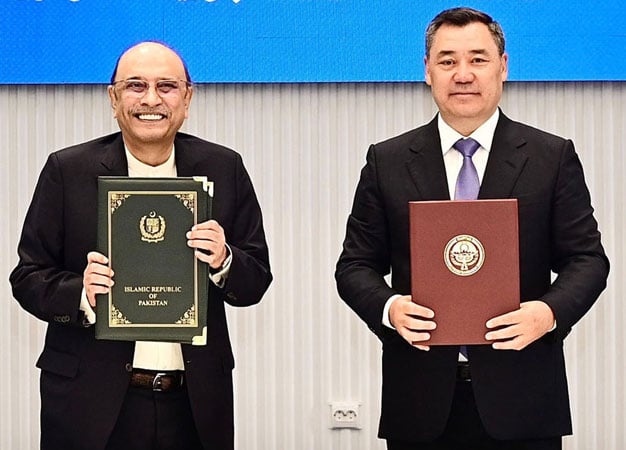
Pakistan and the Kyrgyz Republic have reaffirmed their strong commitment to building a strategic partnership, with a particular focus on deepening trade, economic, and investment cooperation between the two nations. This commitment was highlighted during the official visit of President Asif Ali Zardari to the Kyrgyz Republic from July 6 to 9, 2026, at the invitation of President Sadyr Zhaparov.
The discussions during the visit emphasized the importance of maintaining and enhancing bilateral relations. The joint statement released after the talks noted that the leaders held extensive and productive discussions in an atmosphere of traditional friendship, mutual trust, and deep understanding. They expressed satisfaction with the steady and positive development of Kyrgyz-Pakistani relations.
Both leaders reaffirmed their shared commitment to further deepening bilateral cooperation. They underlined the importance of implementing previous agreements reached during the state visit of the Kyrgyz President to Pakistan in December of the previous year. The two sides also recognized the need to maintain an active political dialogue and expand official contacts at the highest levels.
Expanding Cooperation and Economic Development
The presidents instructed their respective governments, ministries, and agencies to intensify joint efforts to implement all agreements. They called for immediate and practical measures aimed at developing robust trade, expanding investment activity, and fostering closer business ties. This includes enhancing inter-cooperation mechanisms, particularly focusing on improving the operational effectiveness of the Kyrgyz-Pakistani Intergovernmental Commission on Trade, Economic, Scientific, and Technical Cooperation.
A major focal point of the discussions was the potential for expanding cooperation in the energy sector. The leaders emphasized the importance of effectively and accelerating the implementation of the CASA-1000 Project, which serves as a vital infrastructural link connecting Central and South Asia.
In addition to energy, both sides identified significant potential for cooperation in fields such as mining, agriculture, textile and light industries, the halal industry, healthcare, and pharmaceuticals. In the pharmaceutical sector, they specifically highlighted medical education, regulatory harmonization, vaccine and biological product manufacturing, and joint ventures as key areas of focus. Both nations agreed to facilitate smoother market access through closer cooperation between their drug regulatory authorities.
Security and Global Issues
On matters of security, the two countries reaffirmed the importance of strengthening cooperation between their competent authorities in combating terrorism, extremism, illicit trafficking in narcotic drugs, organized crime, irregular migration, cybercrime, and other contemporary challenges. They condemned terrorist attacks in the region and beyond, emphasizing that peace and stability are critical for progress and prosperity.
The leaders agreed to work closely together at international forums, including the United Nations (UN), the Shanghai Cooperation Organization (SCO), and the Organization of Islamic Cooperation (OIC), to combat terrorism in all its forms.
Regarding global issues, the leaders noted that unilateral economic and financial sanctions are contrary to the purposes and principles of the UN Charter and other norms of international law. They pointed out that such actions adversely affect global food and energy security and hinder the achievement of the UN Sustainable Development Goals.
Recognition of Contributions and Future Collaboration
During the exchange, President Sadyr Zhaparov expressed his gratitude to the Pakistani side for its crucial support for the Kyrgyz Republic’s candidature in the election of non-permanent members of the UN Security Council for the 2027-2028 term. In response, President Asif Ali Zardari congratulated the Kyrgyz Republic on its successful election.
The Kyrgyz Republic commended Pakistan for its contributions to advancing international peace and security as a non-permanent member of the UN Security Council for the 2025-2026 term. It welcomed the unanimous adoption of UN Security Council Resolution 2788 (2025) on “Strengthening Mechanisms for Peaceful Settlement of Disputes” and Resolution 2823 (2026) on accountability for crimes against UN Peacekeepers.
The Kyrgyz Republic also praised Pakistan’s active mediation efforts for peace and stability in the Middle East. It welcomed the signing of the Islamabad Memorandum of Understanding (MoU), with both sides expressing hope that this agreement will lay a solid foundation for lasting peace and stability in the region and beyond.