Gold’s Unexpected Dip Amidst Middle Eastern Tensions: A Shifting Safe Haven Landscape
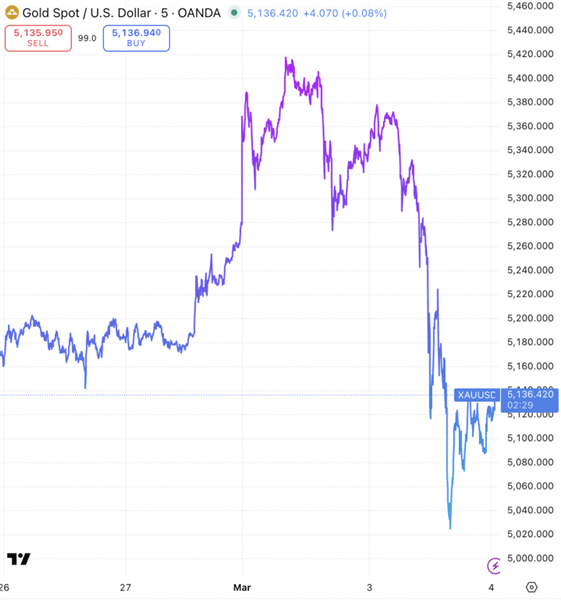
In a move that has surprised many market observers, gold futures have taken a downward turn in the past 24 hours, defying the traditional expectation of an ascent during escalating geopolitical conflict. The ongoing war in the Middle East, a scenario historically synonymous with a surge in gold prices, has instead seen the precious metal falter. This counterintuitive reaction suggests a complex interplay of factors influencing investor sentiment and the perceived value of traditional safe-haven assets.
Several theories are being floated to explain this anomaly. One prominent explanation is that a “war premium” has already been factored into gold’s price for some time. Investors may have anticipated such a conflict and adjusted their holdings accordingly, leaving little room for further upside. Another significant driver is the strengthening US dollar. A firmer dollar often diminishes the appeal of dollar-denominated assets like gold, as it makes them more expensive for holders of other currencies.
Looking at the five-day gold chart provides a clearer picture of this recent trend.
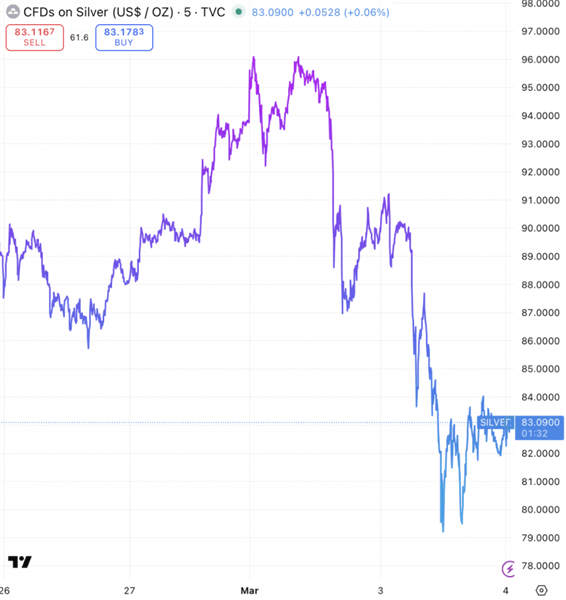
While these explanations hold water individually, the concurrent plunge in silver prices adds another layer to the puzzle. Silver, often seen as a more volatile cousin to gold, has also experienced a significant decline. However, this downturn in silver can largely be attributed to its tendency to track gold’s sentiment. The recent climb in silver was considered by some to be somewhat irrational, and its subsequent fall aligns with gold’s unexpected weakness.
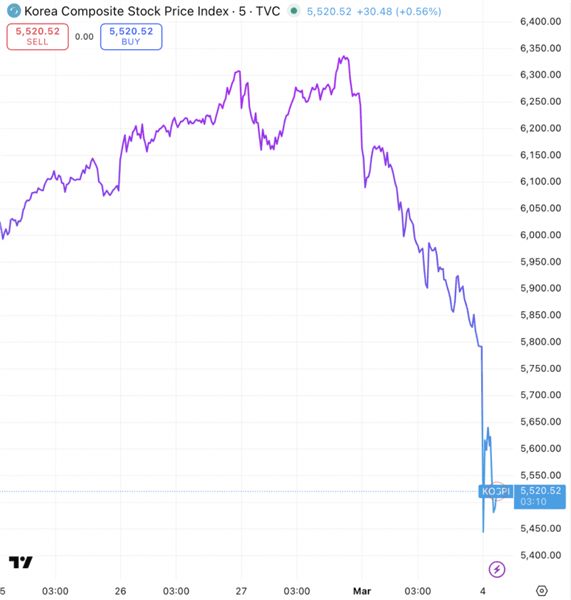
Beyond the precious metals, a broader pattern of momentum trades unwinding has emerged. The South Korean KOSPI index, often referred to as South Korea’s stock market, has also experienced a sharp decline. This index, which has been a popular momentum play in recent times, saw a significant drop of 7% at the open on Wednesday, and over the last five days, it has fallen by a staggering 11%. By 3 pm AEDT, the KOSPI had even experienced an intraday slump of up to 11%.
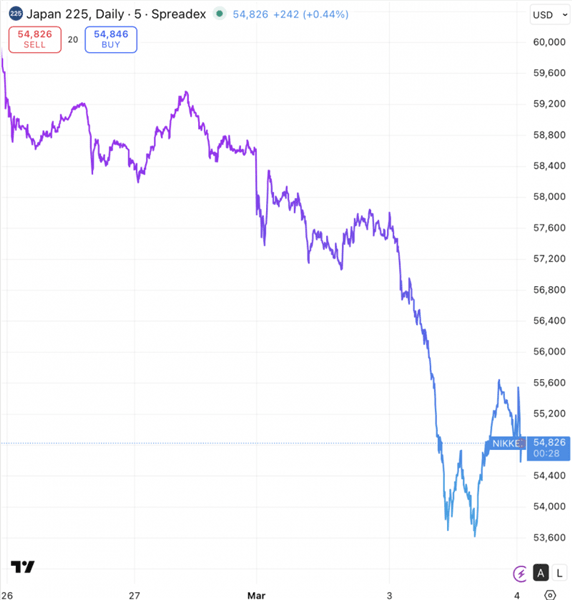
The ripple effect of this market sentiment is visible across other global indices. The Nikkei, Japan’s benchmark stock index, which had been enjoying a surge driven by a “Trump Trade” following the election of a new conservative, pro-Trump leader, has also seen its gains evaporate over the past five days.
In stark contrast to the declining fortunes of traditional safe havens and riskier assets, Bitcoin has managed to regain some ground. After an initial slump, the cryptocurrency has witnessed a revival amidst the Middle Eastern conflict. This performance raises intriguing questions about the evolving definition of a “safe bet” in times of global uncertainty. If crypto is proving to be a resilient asset while more established markets are faltering, it certainly warrants contemplation.
Returning to the primary driver of the current market narrative, gold’s decline is likely a confluence of a stronger US dollar and rising US Treasury yields. While higher Treasury yields might seem counterintuitive as a negative for gold, they signal a sell-off in bonds, with the increased yields designed to attract buyers. This sell-off is indicative of investor uncertainty regarding the long-term strength of the American economy.
The Role of US Treasuries and the Enduring Appeal of the Dollar
The current dynamic surrounding US Treasuries is particularly telling. The fact that yields are rising suggests investors are becoming less confident about the immediate future of the US economy, prompting a sell-off of existing bonds. The higher yields are essentially an incentive to draw in new capital, offering the prospect of more substantial long-term gains. This situation has a more pronounced impact on ultra-high-net-worth individuals and financial institutions than on the average retail investor.
However, these sophisticated investors are acutely aware of the value proposition presented by high yields. Crucially, the market currently does not perceive any imminent, dramatic collapse of the American economy. As the geopolitical situation in the Middle East unfolds, the predictable safety offered by US bonds and the US dollar is reasserting its irreplaceable appeal. This highlights a fundamental truth: in times of global turmoil, investors often gravitate towards perceived stability, even if that stability comes with less spectacular returns.
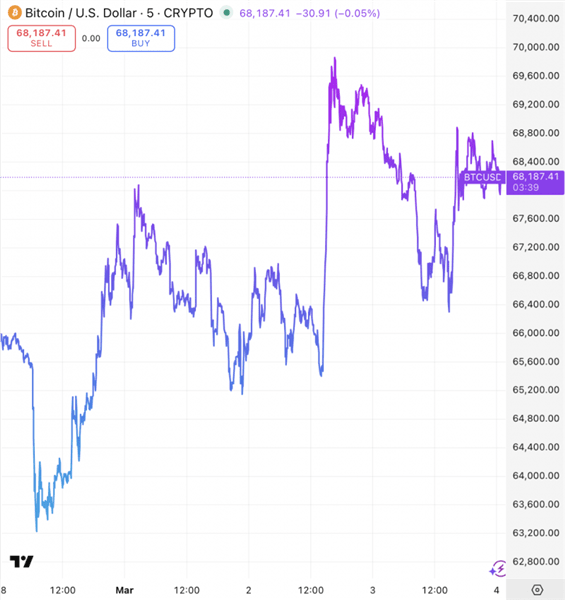
The market’s reaction to the Middle Eastern war, therefore, is not a simple case of “risk-off.” Instead, it’s a complex recalibration of risk and reward, where the traditional safe havens are being challenged by a stronger dollar and the allure of higher bond yields, while a new contender, Bitcoin, is making its presence felt in the safe-haven debate. The coming days and weeks will be crucial in determining whether this is a temporary blip or a more significant shift in the global investment landscape.