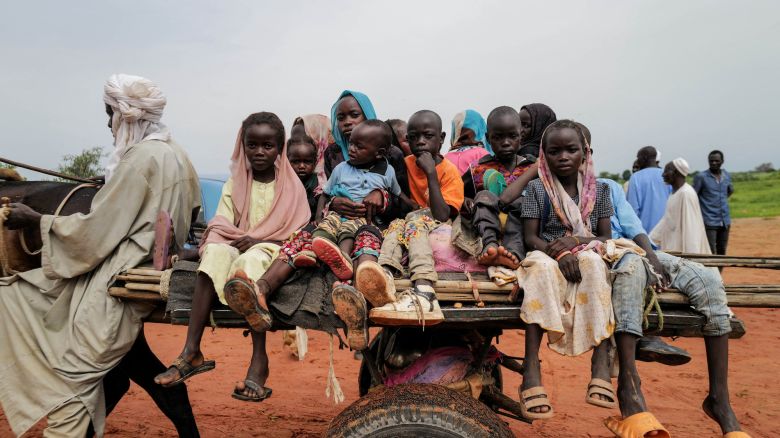
Sudan’s Children: A Generation at Risk Amidst Escalating Conflict
As the devastating conflict in Sudan enters its third year, the United Nations refugee agency (UNHCR) has issued a stark warning: at least 42,000 unaccompanied and separated children have been registered across Sudan and in neighbouring countries. This alarming figure underscores the profound human cost of the protracted war, which has left a generation of Sudanese children facing grave violations and stripped of their fundamental rights.
The impact on these young lives is multifaceted and severe. Beyond the immediate dangers of killing, maiming, and sexual violence, Sudanese children are being systematically denied access to education and essential medical care. This systematic deprivation has far-reaching consequences, not only for their immediate well-being but also for their future prospects and the long-term stability of the nation.
A System Under Strain: Humanitarian Response and Funding Gaps
The scale of displacement is staggering, with 4.5 million Sudanese forced to flee their homes and seek refuge in neighbouring countries. This mass exodus places immense pressure on already stretched humanitarian resources. Agencies on the ground are grappling with a critical lack of funding, which is severely hampering their ability to provide vital support.
The UNHCR’s plea for increased financial assistance highlights the urgency of the situation. Child protection operations for 2026 require an estimated $66 million. This figure is particularly concerning given the significant funding gap of 78% experienced in 2025, indicating a widening chasm between the needs of vulnerable children and the available resources.
The Erosion of Childhood: Education, Labour, and Exploitation
The deprivation of education for nearly 16 million children has had a devastating impact on their lives. The UNHCR report further cautions that this lack of schooling has pushed many young individuals into precarious situations, forcing them into informal labour and street vending simply to survive. This premature entry into the workforce robs them of their childhood and exposes them to further exploitation.
The risks faced by displaced children are amplified by a multitude of threats:
- Family Separation: The chaos of conflict and displacement frequently leads to the tragic separation of children from their families, leaving them vulnerable and alone.
- Recruitment by Armed Groups: Desperate and without protection, children are at a heightened risk of being recruited by armed factions, being forced to participate in violence and further entrenching the cycle of conflict.
- Child Labour: Economic hardship and the absence of educational opportunities drive children into exploitative labour conditions, often in dangerous environments.
- Forced Marriage: In many contexts, poverty and insecurity can lead to the forced marriage of young girls, robbing them of their agency and future.
These threats are further exacerbated by the pervasive psychological trauma that children endure. Witnessing violence, experiencing loss, and living in constant fear take a heavy toll on their mental health. Coupled with limited access to basic services such as clean water, sanitation, and healthcare, and the worsening insecurity, the future for many Sudanese children appears bleak. The vanishing livelihoods of their families leave them with few options, making them susceptible to the most dangerous forms of exploitation.
The UNHCR’s efforts to mitigate these risks include the operation of 119 child-friendly spaces across the region. These safe havens provide a crucial refuge, offering psychological support, recreational activities, and a sense of normalcy amidst the turmoil. Of these spaces, 88 are located in Chad, a country that has absorbed a significant number of Sudanese refugees, and 13 are operating within Sudan itself, demonstrating a commitment to reaching children even in the heart of the crisis.
However, these initiatives, while vital, are a drop in the ocean compared to the overwhelming needs. The international community faces a moral imperative to address the funding shortfalls and ensure that these vulnerable children are not forgotten. The future of Sudan hinges on the protection and well-being of its youngest citizens, and without immediate and sustained support, a generation risks being lost to the ravages of war.