China Urged to Develop Air-Based Interceptors to Counter Escalating Missile Threats
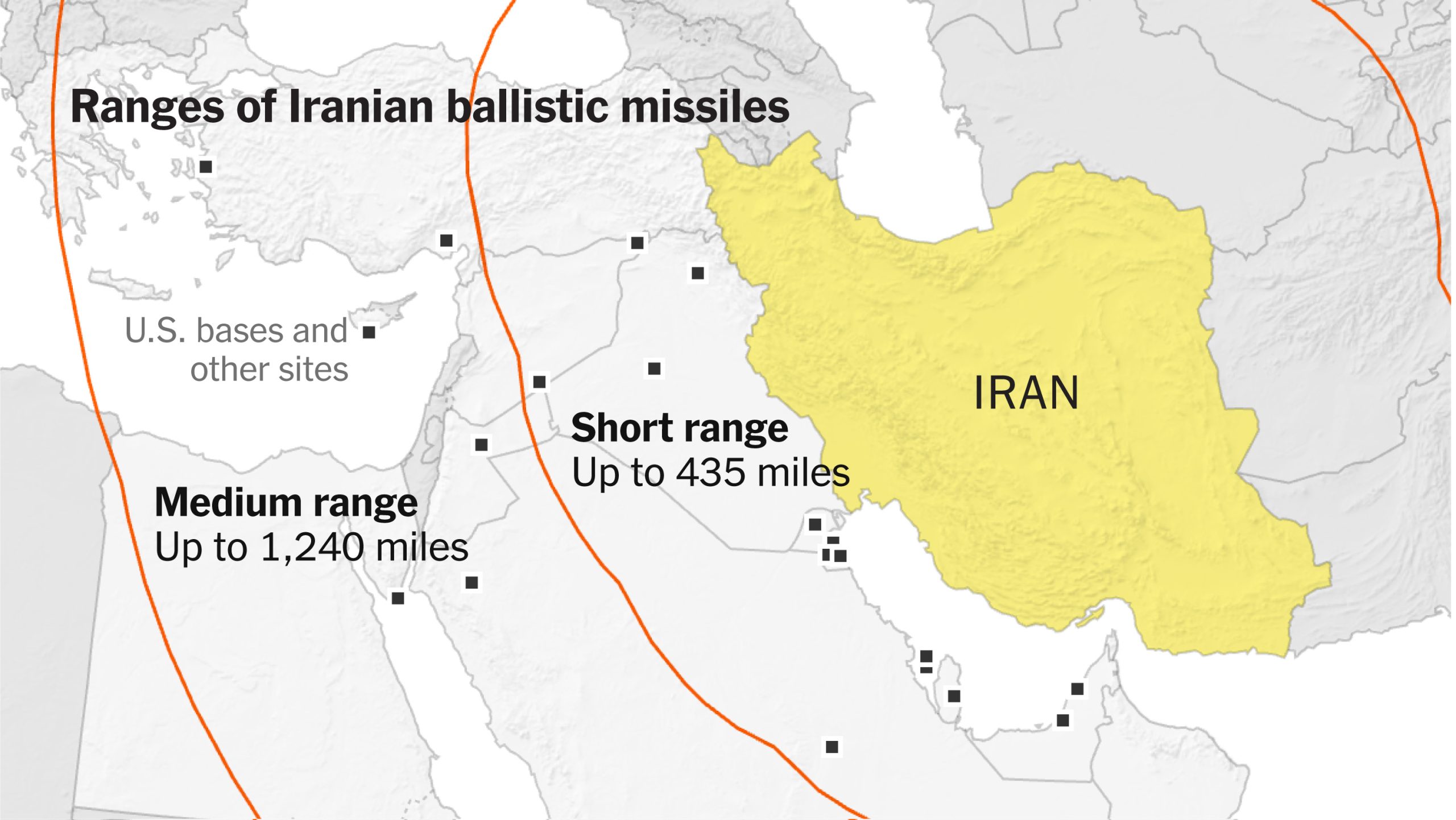
A prominent Chinese military magazine has advocated for the development of an air-based interceptor system to counter the growing missile threats posed by the United States and its regional allies, as well as by Taiwan and India. The recommendation, detailed in the March issue of Defence Review, draws insights from the recent conflicts in the Middle East, particularly highlighting the challenges Iran’s ballistic missiles have presented to existing missile defence capabilities.
The analysis within the journal suggests that current midcourse and terminal-phase missile defence systems are facing “nearly insurmountable challenges,” as evidenced by Iran’s ballistic missile performance in the region. This has led to the conclusion that boost-phase or ascent-phase interception, carried out by forward-deployed aircraft, is now a critical necessity. The proposed strategy involves deploying fighter jets and/or drones equipped with air-launched missile interceptors. These assets would be positioned within the “first island chain,” a strategic maritime region extending from Japan to the Philippines, with the objective of loitering and engaging enemy ballistic missiles shortly after their launch.
The boost phase of a ballistic missile’s flight is identified as a particularly opportune moment for interception. During this stage, missiles travel at slower speeds, possess limited manoeuvrability, and emit a strong infrared heat signature, making them more susceptible to tracking by interceptor systems. Furthermore, neutralizing a missile during its ascent phase would ensure that any debris or hazardous payload would fall back onto or near the launch site, thereby significantly minimizing collateral damage to the defending nation’s territory.
The journal’s analysis underscores that China has “long faced substantial missile threats… which currently remain extremely severe.” This necessitates the establishment of a “comprehensive, multilayered missile defence network capable of covering all flight phases of incoming ballistic missiles,” encompassing the boost, midcourse, and terminal stages.
Several developments have contributed to this strategic assessment:
- US Missile Deployments: The United States has recently deployed its Typhon missile system to the Philippines and Japan.
- Japanese Hypersonic Missile Program: Japan is reportedly planning the mass production of its Hyper Velocity Gliding Projectile, a hypersonic glide missile, later this year.
- Taiwanese Arsenal: Taiwan possesses indigenously developed systems and US-supplied weaponry, such as the Army Tactical Missile System, which are capable of striking targets along China’s mainland coast and even deep inland.
- South Korean Missiles: South Korea’s Hyunmoo family of ballistic missiles can already reach all of North Korea, a treaty ally of Beijing, and extend into parts of northeastern China.
- Indian Missile Capabilities: To China’s west, India’s Agni series of ballistic missiles can target major Chinese cities, including Beijing and Shanghai.
The article further notes the potential for a larger-scale missile threat in the event of a conflict involving allied US-Japan forces in the Taiwan Strait. Japanese Prime Minister Sanae Takaichi has previously hinted at the possibility of military intervention in such a scenario. In such an expanded battlespace within the Eastern Theatre, the People’s Liberation Army would be required to counter a more significant missile threat.
Given the concentration of high-value political, economic, and military targets along China’s vulnerable coastal regions, the journal argues that existing ground- and sea-based missile defence systems, despite their numbers and capabilities, are insufficient to provide adequate protection.
The author of the analysis, identified as “Tian Ying,” posits that the PLA is capable of achieving air superiority over the first island chain. This capability, the article suggests, should be leveraged by deploying stealth fighters, such as the J-20 and J-35, and long-endurance drones to intercept ballistic missiles during their boost phase.
For an immediate interceptor solution, the researcher proposes modifying the existing PL-15 long-range air-to-air missile. This modification would involve adding a second-stage booster and an infrared imaging seeker, creating a “low-cost, high-speed” interceptor that would be compatible with China’s current fighter fleet.
Looking towards the mid-to-long term, the article highlights the potential of large, long-endurance drones, similar to those showcased in China’s Victory Day parade. These drones could serve as stealthy loitering platforms, capable of either intercepting or detecting enemy ballistic missiles.
Beijing views Taiwan as an integral part of China, to be reunified by force if necessary. While most nations, including the United States, do not formally recognize Taiwan as an independent state, Washington maintains a policy of opposing any forceful attempt to take the self-governed island and is committed to supplying it with defensive weaponry.