Hungary Faces Scrutiny Over Alleged Russia Leaks, Calls for Exclusion from Key Discussions Mount
Explosive allegations have placed Hungary at the centre of a significant diplomatic storm, with claims suggesting that Foreign Minister Péter Szijjártó engaged in briefings with Russian counterpart Sergey Lavrov both before and after private European Union meetings. These revelations have prompted calls for Hungary’s exclusion from sensitive EU discussions, with former European Commission President José Manuel Barroso advocating for decisive action if Budapest fails to provide satisfactory clarifications.
The Hungarian government has attempted to downplay the seriousness of the accusations, asserting that it routinely engages with “partner” countries on European issues that impact their bilateral relations, characterizing such interactions as standard practice. However, the European Commission has publicly stated that the allegations are “greatly concerning.”
The context of these allegations is particularly sensitive given Russia’s status as the most sanctioned country within the EU due to its invasion of Ukraine. Moscow is widely regarded as a hostile actor threatening European security, and the confidentiality of EU meetings is paramount.
Former Commission Chief Demands Action
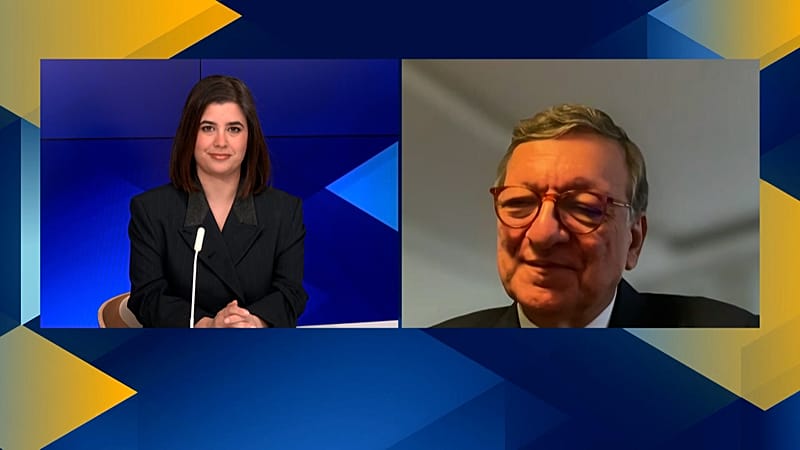
José Manuel Barroso, who served as President of the European Commission from 2004 to 2014, described the allegations as “disturbing.” He emphasized that this is an urgent matter requiring the attention of the President of the European Council. Barroso stated that if Hungary does not adequately address the concerns raised, the European Council President possesses the authority to convene meetings excluding Hungary. He underscored that member states are bound by a fundamental principle of decency in their dealings.


Legal and Political Ramifications
Barroso further highlighted that EU treaties provide for infringement procedures in cases of serious breaches of trust. He specifically referenced the principle of sincere cooperation enshrined in Article 4 of the treaties, which mandates that all member states must act in good faith and avoid actions detrimental to the collective interest of the Union.
“From a legal point of view, the EU can launch an infringement (procedure) if there is a violation of Article 4 of the Lisbon Treaty,” Barroso explained.
However, he also pointed out that beyond legal measures, a political approach could be more impactful. By demonstrating that other countries can proceed politically without a member state that allegedly disregards basic principles, a stronger message could be sent.
Dissatisfaction with Hungarian Explanations
The former Commission chief expressed his view that the clarifications offered by the Hungarian government have been insufficient. He specifically challenged the justification that engaging with other nations, such as the United States, as suggested by Szijjártó, is a suitable explanation for the alleged communications with Russia.
“The fact that he put Washington and Moscow at the same level, it’s quite strange and raises very important matters of loyalty among member states,” Barroso commented, suggesting that such a comparison raises serious questions about Hungary’s commitment to EU solidarity.

Broader Diplomatic Reaction
European diplomats, speaking anonymously in the wake of the scandal that erupted following reports of Szijjártó’s alleged regular communication with Lavrov, even during EU meetings, described the allegations as “shocking but hardly surprising.” This sentiment stems from the perceived existing political and business ties between Hungary and Russia.
The EU’s High Representative for Foreign Affairs and Security Policy, Kaja Kallas, has formally requested a comprehensive explanation from Hungary. The European Commission has echoed this demand for clarification. Polish Prime Minister Donald Tusk has publicly condemned the situation, calling it a “disgrace.” Budapest, meanwhile, continues to deny holding any conversations with Russian officials during EU meetings.
The ongoing scrutiny underscores the profound implications of these alleged leaks for the unity and trust within the European Union, particularly in the current geopolitical climate. The response from EU leadership will be closely watched as it navigates this complex diplomatic challenge.