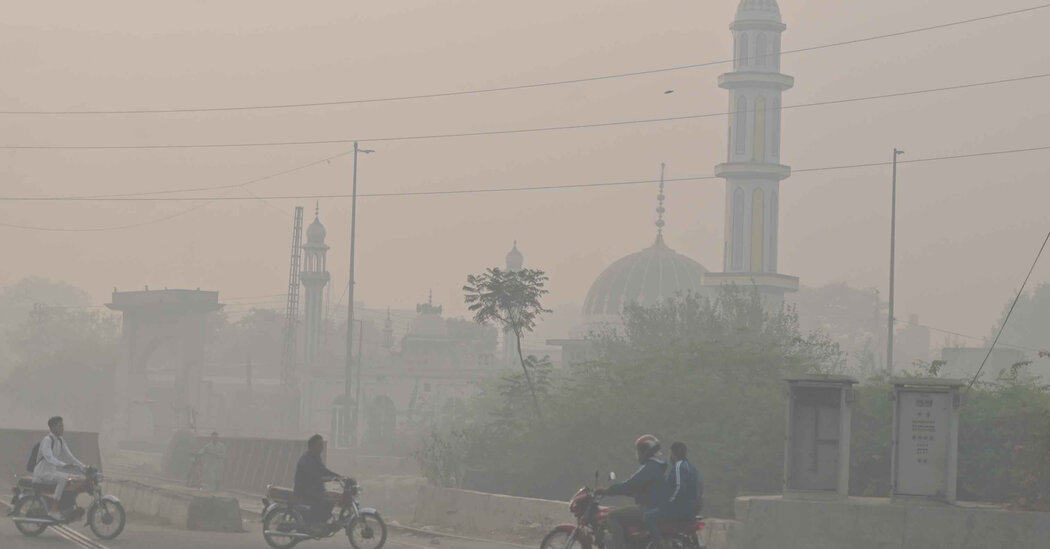
Pakistan Tops Global Air Pollution Rankings as WHO Guidelines Widely Missed
A recent comprehensive report has identified Pakistan as the most polluted country in the world for 2025. Air quality data revealed that the nation experienced levels of fine particulate matter (PM2.5) that were an alarming 13 times higher than the safety limits recommended by the World Health Organization (WHO). This stark finding underscores a persistent global challenge in achieving breathable air.
The annual assessment, compiled by IQAir, paints a grim picture of air quality worldwide. While there was a slight improvement in the number of countries meeting WHO guidelines, the vast majority of the globe continues to struggle. Only 13 countries and territories managed to keep their average PM2.5 concentrations within the recommended threshold of 5 micrograms per cubic metre. This represents an increase from seven countries in the previous year, offering a sliver of positive news. However, this positive trend is overshadowed by the fact that a staggering 130 out of 143 monitored regions failed to meet the essential guideline.
Global Air Quality: A Tiered Perspective
The report further details the severity of pollution by ranking countries based on their PM2.5 levels. Following Pakistan, Bangladesh and Tajikistan were identified as the second and third most polluted countries, respectively. Chad, which held the unenviable top spot in the prior year, has now dropped to fourth place. However, experts have issued a cautionary note regarding this apparent improvement in Chad’s air quality, suggesting that potential limitations in data availability might have influenced its revised ranking.
Data Challenges Impact Global Air Quality Assessments
A significant factor impacting the accuracy and completeness of the latest air quality report is the discontinuation of a crucial monitoring program. The United States Department of State ceased its large-scale air quality monitoring initiative in March, a program that had been instrumental in gathering readings from US embassies and consulates across the globe. This cessation has led to a noticeable gap in data collection, particularly in regions known for high pollution levels. Consequently, several countries, including Burundi, Turkmenistan, and Togo, were excluded from the 2025 report due to insufficient data to provide a reliable assessment.
Cities Bear the Brunt of Air Pollution
At the urban level, the situation is equally concerning. The report highlighted Loni in India as the city with the highest pollution levels globally. Hotan in China followed closely behind. Disturbingly, the analysis revealed that all of the world’s 25 most polluted cities are concentrated within three countries: India, Pakistan, and China. This geographical concentration points to specific regional environmental and industrial factors contributing to extreme air quality degradation.
Globally, the trend in urban air quality compliance with WHO standards has seen a decline. In 2025, only 14 percent of cities met the WHO’s air quality standards, a decrease from 17 percent in the previous year. This downward trend is exacerbated by various factors, including the impact of large-scale wildfires. For instance, significant wildfire events in Canada during 2025 contributed to elevated pollution levels not only across the United States but also extended their reach to parts of Europe, demonstrating the transboundary nature of air pollution.
Pockets of Progress Amidst Widespread Concerns
Despite the overarching negative trends, there are notable exceptions where air quality has either been maintained or demonstrably improved. Several nations successfully adhered to the WHO air quality standards, including Australia, Iceland, Estonia, and Panama. These countries serve as examples of effective environmental management and policy implementation.
Furthermore, some nations have witnessed substantial improvements in their air quality. Laos, Cambodia, and Indonesia, for example, experienced noticeable positive shifts. These improvements are largely attributed to favourable weather conditions, including wetter and windier patterns associated with La Niña weather phenomena. Additionally, Mongolia recorded a significant reduction in PM2.5 levels, with a remarkable 31 percent drop.
A Mixed Global Picture: Reductions and Deterioration
In summation, the 2025 air quality report reveals a mixed global picture. While 75 countries managed to reduce their pollution levels, a substantial 54 countries experienced a deterioration in their air quality. This disparity highlights the complex and multifaceted nature of air pollution, influenced by a combination of geographical, meteorological, industrial, and policy-related factors. The report serves as a critical call to action, emphasizing the urgent need for concerted global efforts to mitigate air pollution and protect public health.