Lebanon’s Displaced: A Precarious Existence on Beirut’s Waterfront
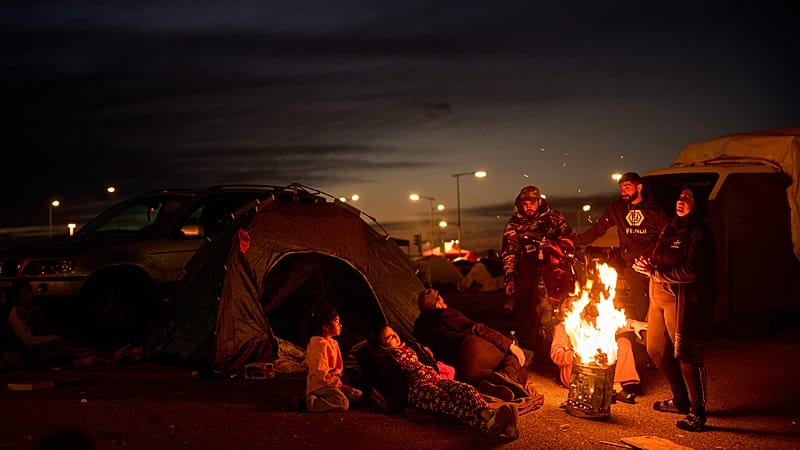
Thousands of Lebanese citizens find themselves in a state of profound uncertainty, living in makeshift tents along Beirut’s Bial waterfront. Their days are marked by sleeping on pavements, a stark absence of adequate water and sanitation, and a dim prospect of returning to their homes after fleeing intensified Israeli strikes. The conflict, which saw fighting escalate between Hezbollah militants and Israel, has forced families from their homes, with air strikes impacting border villages, towns in southern Lebanon, Beirut’s southern suburbs, and areas in the north and east of the country.
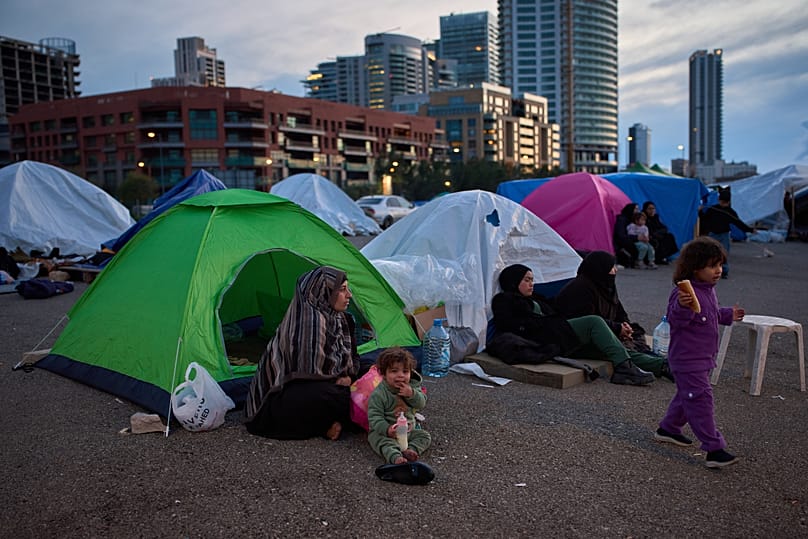
Euronews visited this impromptu encampment, where a patchwork of tents in various colours and sizes are secured against the elements by stones, ropes, and rudimentary tools. Families are crammed into incredibly tight spaces, with clothes strung on ropes stretched between metal poles serving as a makeshift drying area. Small, designated corners function as impromptu kitchens, where fires are lit to prepare meager meals.
The anxiety for the future is palpable. Many families, understandably wary of further repercussions, declined to be photographed or appear on camera. They expressed deep concern, stating that the sheer scale of destruction wrought by Israeli strikes renders the idea of returning home a distant and uncertain prospect. “Even if the war stops, where would we go back to?” one displaced individual lamented, articulating the profound existential question facing countless others.
A State’s Perceived Absence Amidst Suffering
The sentiment among the displaced is that while a state apparatus exists, its presence is largely unfelt in their hour of need. Mohammed Daghman, who fled his home in Nabatiyeh, articulated this frustration. He believes that officials are fully aware of the unfolding crisis but remain conspicuously inactive. “Officials hear, see and know, but they close their ears so they don’t hear, put a black curtain in front of their eyes, and remain silent,” Daghman stated.
He continued, his voice heavy with disappointment, “I wish as a citizen that they would take a simple look at the reality, to see the magnitude of the suffering. There is a state. But it’s absent. It is strong only on the weak and the poor.” This perception is reinforced by the fact that most of the support reaching the displaced comes not from official channels, but from individual initiatives and community-driven campaigns.
The Scramble for Survival and Basic Necessities
The initial displacement was often a chaotic and hurried affair. Mahdi Omar, who was forced to leave his home in Beirut’s southern suburbs, described the panic that ensued when shelling began. “No one was able to prepare their belongings or take them with them. There was a state of panic as soon as the shelling started on the southern suburbs, so we left in a hurry,” Omar recounted.
The immediate needs are stark and pressing. “We need foodstuffs, cleaning materials and sanitation facilities. If the situation continues like this, cases of scabies may start to appear, and lice may spread among the children,” Omar warned, highlighting the severe health risks posed by the current living conditions. The lack of clean water, inadequate sanitation facilities, and the pervasive humidity create a breeding ground for disease, posing significant health challenges to an already vulnerable population.
Grassroots Resilience and Mutual Support
In the face of official neglect, a powerful sense of community resilience has emerged. Mustafa Atoui, displaced from the southern town of Siddiqin, observed that people are actively supporting each other, transcending any sectarian divides. “The tasks that should have been carried out by the state are now being carried out by the people themselves, as everyone stands by each other regardless of their sectarian affiliations,” Atoui explained.
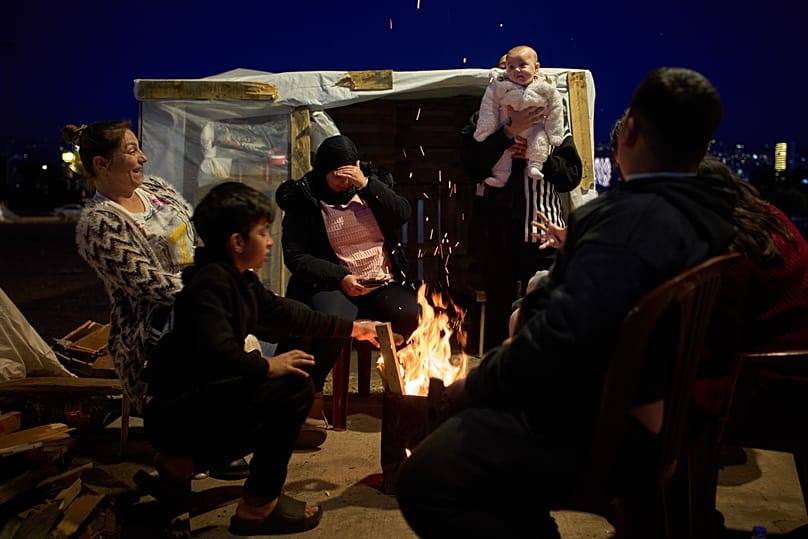
The displacement has left many with nothing. Numerous individuals were unable to retrieve their personal belongings during their hasty departures. Compounding this, shelters are overflowing as a significant number of people from the south and the Bekaa Valley have been compelled to flee their homes. Consequently, the primary flow of aid reaching the displaced is predominantly from individual donors or small, local associations. The scale of official support, when compared to the magnitude of the crisis, remains alarmingly limited.
The ongoing conflict has left a landscape of devastation. Homes are damaged, villages are partially or entirely destroyed, and critical infrastructure lies in ruins. This widespread destruction significantly complicates any contemplation of returning home, even if the fighting were to cease. The displaced are no longer primarily concerned with the end date of the war; their focus has shifted to the fundamental question of when, or if, a return will even be possible.
The priorities of these families have undergone a drastic transformation. The waiting game for the bombing to stop has been replaced by an urgent search for educational opportunities for their children, the hope of finding temporary work, and the daily struggle for survival, day by day. According to the United Nations’ International Organisation for Migration (IOM), the recent Israeli actions against Hezbollah have resulted in the displacement of approximately one million Lebanese citizens, underscoring the immense human cost of the ongoing conflict.