Aviation Industry Reels as Middle East Conflict Sparks Fuel Price Surge and Route Cuts
A burgeoning conflict in the Middle East, ignited by a U.S. airstrike on Iran late last month, has sent shockwaves through the global aviation industry, pushing international aviation fuel prices to more than double their pre-war levels. This dramatic surge, coupled with a persistently high exchange rate, is forcing airlines to confront escalating operational costs, leading to significant route reductions and a heightened sense of crisis within the sector.
For airlines, aviation fuel represents a substantial portion of their total expenditures, typically accounting for 20–30%. Consequently, the current price volatility directly impacts profitability, with many carriers experiencing growing losses on every flight. This burden is further exacerbated by a weak domestic currency, with the exchange rate hovering around 1,500 Korean won to the U.S. dollar. Essential expenses such as aircraft lease fees and maintenance, which are denominated in dollars, have become considerably more expensive, intensifying the financial strain.
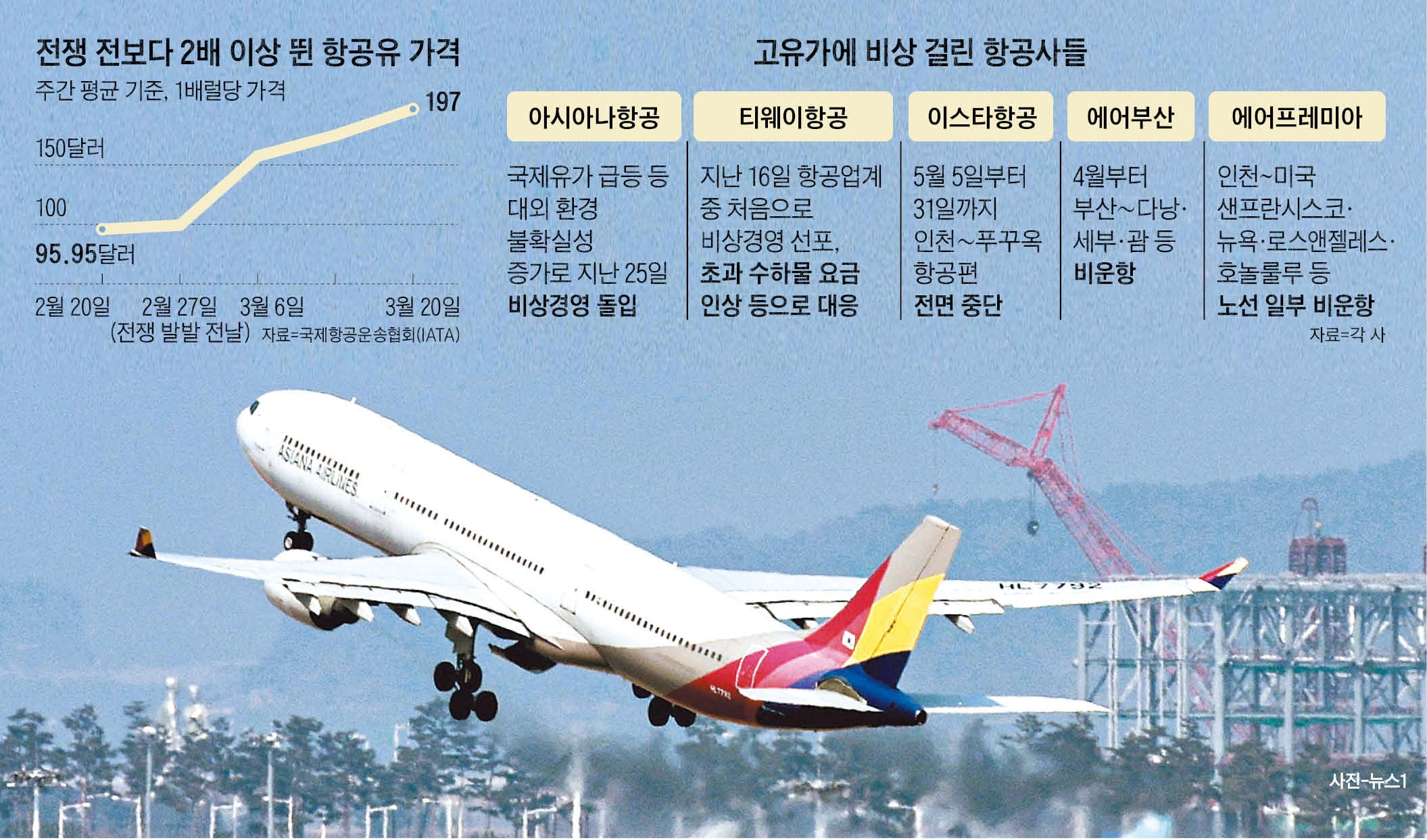
The ramifications are already being felt by consumers, as airlines are progressively scaling back their operations. This includes not only less popular routes but also previously in-demand destinations such as Phu Quoc and Da Nang in Vietnam, and New York in the United States. The situation has become so severe that T’way Air, the nation’s second-largest low-cost carrier (LCC), declared a state of emergency management on the 16th, marking the first such declaration in the industry. Following suit, major carrier Asiana Airlines entered emergency management on the 25th, underscoring the widespread nature of the crisis. The successive route suspensions are causing significant disruption for travelers who had planned leisure or business trips around the early May holiday period.
Airlines Grapple with the Full Impact of the Middle East War
The gravity of the situation was underscored by Asiana Airlines’ announcement on the 25th, stating, “We are entering emergency management to proactively respond to the crisis. We will review the overall cost structure across all sectors and strengthen our profit-centered operational stance.” This move by Asiana, which is currently undergoing integration with industry leader Korean Air, has amplified concerns within the aviation sector. T’way Air’s earlier declaration of emergency management on the 16th further solidified the industry’s perception of an acute crisis.
The primary driver behind these drastic measures is the unprecedented rise in aviation fuel prices. According to Singapore’s weekly average, the cost of aviation fuel has soared to $197 per barrel, a stark increase from the pre-war level of approximately $90 per barrel. This more than doubling of fuel costs coincides with a depreciating domestic currency, with the exchange rate surpassing 1,500 Korean won per dollar for the first time on the 19th and showing no immediate signs of recovery.
While larger airlines, such as Korean Air, with substantial fuel trading volumes, can mitigate some of the impact through “fuel hedging” – purchasing fuel at pre-agreed prices – LCCs, with their more limited financial resources, are directly absorbing the full brunt of the escalating fuel costs.
Strategic Route Reductions and Cost-Saving Measures
In response to the financial pressures, most airlines are implementing route reductions as a key strategy. Eastar Jet, for instance, has decided to completely suspend its Incheon-Phu Quoc flights for the entirety of May. Air Premia has also significantly curtailed its North American operations, canceling 26 Incheon-Los Angeles (LA) flights, 6 Incheon-Honolulu flights, 8 Incheon-San Francisco flights, and 2 New York flights between April and May. These long-haul routes were previously considered flagship offerings for the airline, highlighting the severity of the current situation that necessitates such drastic cuts. Jeju Air, the leading LCC, is also reportedly reviewing the possibility of further suspending some of its Southeast Asian routes. Beyond route adjustments, T’way Air is exploring increased excess baggage fees as a means to offset mounting losses. An insider from the aviation industry commented, “Even if not officially declared, it is highly probable that several airlines have already initiated company-wide spending cuts and reduced investments.”
The Vietnamese Factor: Additional Fuel Surcharges
The financial strain is not confined to domestic carriers; major Asian countries are also grappling with the sharp increase in aviation fuel prices, which is contributing to route adjustments. A notable example involves a Vietnamese aviation fuel supplier that has recently notified airlines of a substantial price hike. Airlines operating routes to Vietnam often refuel at local airports for their return journeys. Under the new terms, they are being asked to pay an additional approximately 95 cents (around 1,400 Korean won) per gallon for aviation fuel, effective next month. This surcharge translates to millions of Korean won in additional costs per one-way trip, separate from the base fuel price. Industry sources suggest this is a consequence of Vietnam facing its own tight fuel supply, leading to what is effectively being described as a storage fee for unused contracted fuel volumes. Vietjet Air, a Vietnamese LCC, has also responded by canceling several key routes to Korea, including Nha Trang, Da Nang, and Phu Quoc, since April.