Israel Signals Potential Long-Term Occupation in Southern Lebanon Amid Escalating Conflict
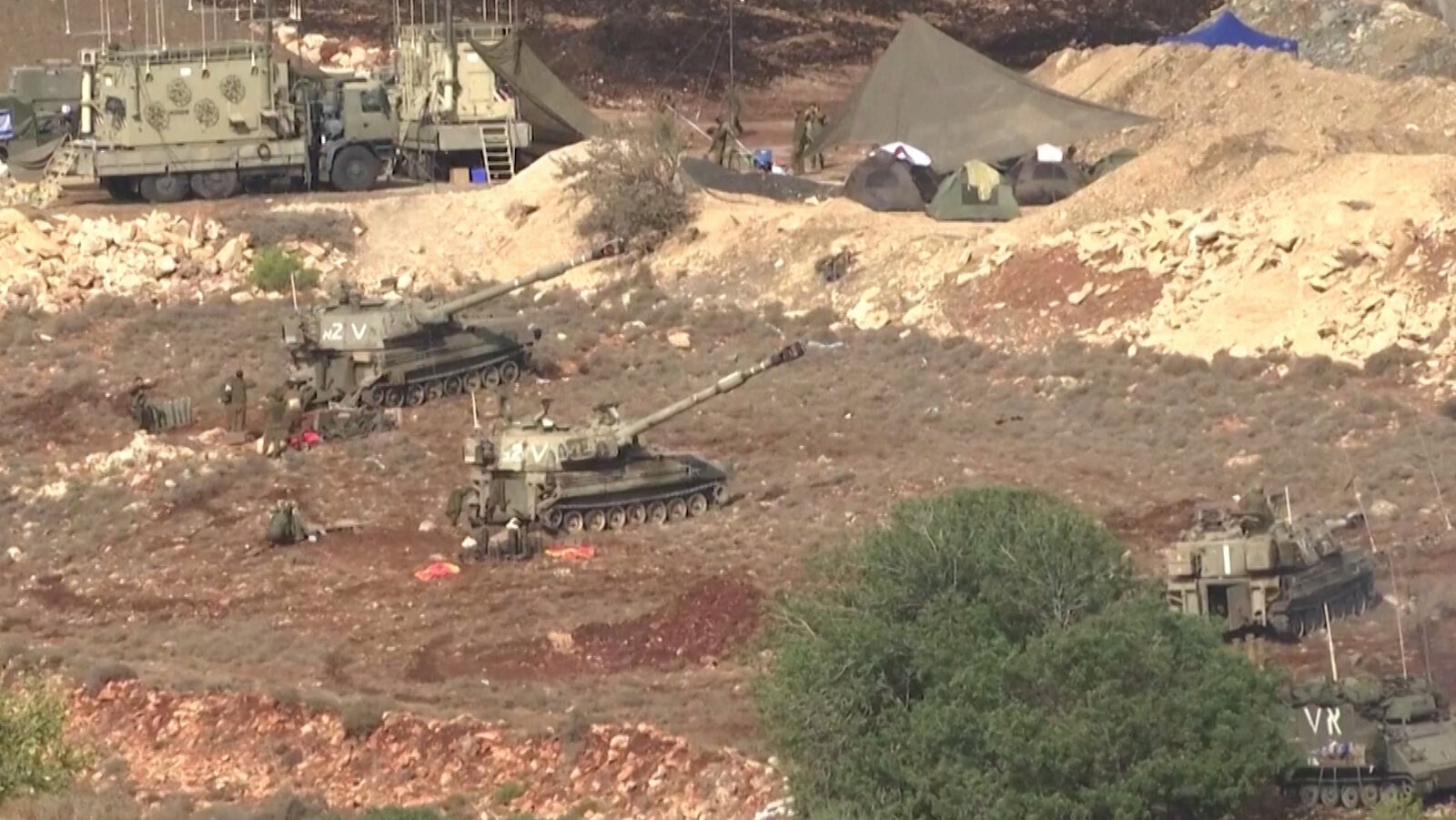
As the conflict between Israel and Hezbollah intensifies, with Israel undertaking mass evacuations and deploying ground troops deeper into Lebanese territory, Israeli leaders are increasingly hinting at a prolonged occupation. This potential strategy appears to be modeled on the extensive military campaign and subsequent control established in much of Gaza following Hamas’s October 7, 2023, attack.
Israel asserts that its objective is to establish a zone of control within southern Lebanon, effectively depopulating the border region to safeguard its own northern communities from daily rocket barrages, a response to Hezbollah’s engagement in the wider regional conflict. This prospect has fueled widespread fear among Lebanese citizens, who anticipate the open-ended displacement of over a million people, the destruction of their homes, and the permanent loss of territory.
Establishing a “Security Zone” Along the Litani River
Israel’s Defense Minister, Israel Katz, recently articulated plans to create a “security zone” extending to the Litani River, a significant distance of up to 30 kilometers from the border in certain areas. He indicated that Israeli forces would demolish homes claimed to be utilized by militants, with residents prohibited from returning until northern Israel is deemed secure.
Katz explicitly stated that this campaign would mirror the operations in Gaza, where Israeli forces have systematically flattened and largely depopulated significant portions of the Palestinian territory. He reiterated Israel’s stance that it will not withdraw from Gaza until Hamas disarms, a condition tied to a U.S.-brokered ceasefire agreement. “We have ordered an acceleration in the destruction of Lebanese homes in contact-line villages to neutralize threats to Israeli communities, in accordance with the model of Beit Hanoun and Rafah in Gaza,” Katz remarked, referencing border towns that have been largely obliterated.
A Cycle of Conflict and Displacement
Following a ceasefire in 2024 that ended Israel’s previous engagement with Hezbollah, Israeli forces withdrew from southern Lebanon, retaining control over five strategic hilltops along the border. Upon their return, Lebanese residents discovered widespread destruction of homes, infrastructure, and entire villages. Israel maintained that it had dismantled Hezbollah infrastructure that could have been used for attacks similar to those on October 7, and continued to target what it described as militant sites with near-daily strikes after the truce.
Hezbollah resumed its attacks after Israel and the United States initiated hostilities with Iran on February 28, accusing Israel of repeated ceasefire violations. Israel, in turn, blamed the Lebanese government for failing to uphold its commitment to disarm Hezbollah, despite Israel’s own unprecedented measures to criminalize the group.
The most recent escalation has seen Israel launch extensive air raids across Lebanon, resulting in the deaths of over 1,000 individuals, predominantly outside the immediate border area, and displacing more than a million people. Israel has issued evacuation warnings to residents across a broad swathe of southern Lebanon, extending from the border to the Zahrani River, approximately 55 kilometers away. The Israeli military has confirmed limited ground operations, while political leaders are articulating more far-reaching objectives.
Bezalel Smotrich, Israel’s far-right finance minister and a member of the Security Cabinet, has advocated for a “fundamental change” to conclude the current conflict. “The Litani must be our new border with the state of Lebanon,” he declared.
Echoes of Past Occupations
Israel’s involvement in southern Lebanon is not unprecedented. The country invaded in 1982 during Lebanon’s civil war. Hezbollah, founded in the same year, subsequently waged a guerrilla campaign that ultimately compelled Israel to withdraw in 2000.
In the current conflict, Israel has targeted seven bridges over the Litani River, which marks the northern boundary of a United Nations-patrolled buffer zone established in previous conflict resolutions. Israel contends that Hezbollah has been utilizing these bridges for the movement of fighters and weaponry, and asserts its military will control all remaining crossings.
Intense fighting has also erupted in the town of Khiam, the potential fall of which would sever the southern region from Lebanon’s eastern Bekaa Valley, another area with a significant Hezbollah presence.
Following the bombing of the bridges, Lebanese President Joseph Aoun accused Israel of aiming to isolate the south from the rest of the country to “establish a buffer zone, entrench the reality of occupation, and pursue Israeli expansion within Lebanese territories.”
UN peacekeepers have reported that the bombing of bridges and ongoing clashes are impeding their operations and endangering personnel. “This is the closest fighting activity we have seen to our positions,” stated Kandice Ardel, spokesperson for the UN mission known as UNIFIL. “Bullets, fragments, and shrapnel have hit buildings and open areas inside our headquarters.” Ardel also noted that peacekeepers at observation posts have observed an increased presence of Israeli troops and “engineering assets,” although no new military positions have been observed being constructed.
Degrees of Control and Uncertain Futures
Mohanad Hage Ali, a senior fellow at the Carnegie Middle East think tank in Beirut, suggests that Israel has already implemented “different shades” of control. “The first line of borders is a no-man zone. This is basically a large parking lot that is facing Israel,” he described. “There is nothing there, no movement, nothing at all.”
Movement for Lebanese civilians is further restricted to the north. During last year’s olive harvest, farmers faced significant challenges reaching their groves due to regular Israeli strikes, requiring accompaniment by Lebanese troops and UNIFIL peacekeepers who coordinated with Israeli forces.
Sarit Zehavi, founder and president of the Alma Institute and a retired Israeli military officer, anticipates that Israel will likely establish a more extensive zone of control extending further north. She acknowledges the possibility of a protracted Israeli presence in southern Lebanon, noting that Israel may not be able to decisively defeat Hezbollah. “But the other alternative is to take the risk that we will be slaughtered. It’s as simple as that,” she commented, highlighting the perceived security imperative.
A Diplomatic Impasse
Despite Lebanon’s government breaking a long-standing taboo by proposing direct talks with Israel and taking measures against Hezbollah, including criminalizing its activities and claiming to have dismantled numerous military positions, there is no clear diplomatic path forward. Neither the United States nor Israel has indicated an interest in such negotiations, with their focus remaining on the broader conflict involving Iran.
Should negotiations materialize, Israel might demand substantial concessions in exchange for relinquishing territories acquired through force, a modern iteration of the long-standing “land for peace” principle. Israel’s past actions, such as seizing parts of Syria and currently engaging in discussions with the Syrian government regarding security arrangements, and its stated intention to maintain control over half of Gaza until Hamas disarms, underscore its strategic approach.
Meanwhile, Lebanese citizens displaced from their homes find themselves in a state of uncertainty, with many harboring fears of never being able to return. Elias Konsol and his neighbors fled the Christian border village of Alma al-Shaab with assistance from UNIFIL. He was reunited with his mother, who was overcome with emotion, at a church near Beirut where funeral services were being held for a resident killed in an Israeli strike. Konsol asserted that his village was free of weapons and Hezbollah fighters, yet they were still compelled to evacuate. “We no longer know our fate,” he lamented. “We don’t know if we will see our homes and village again.”